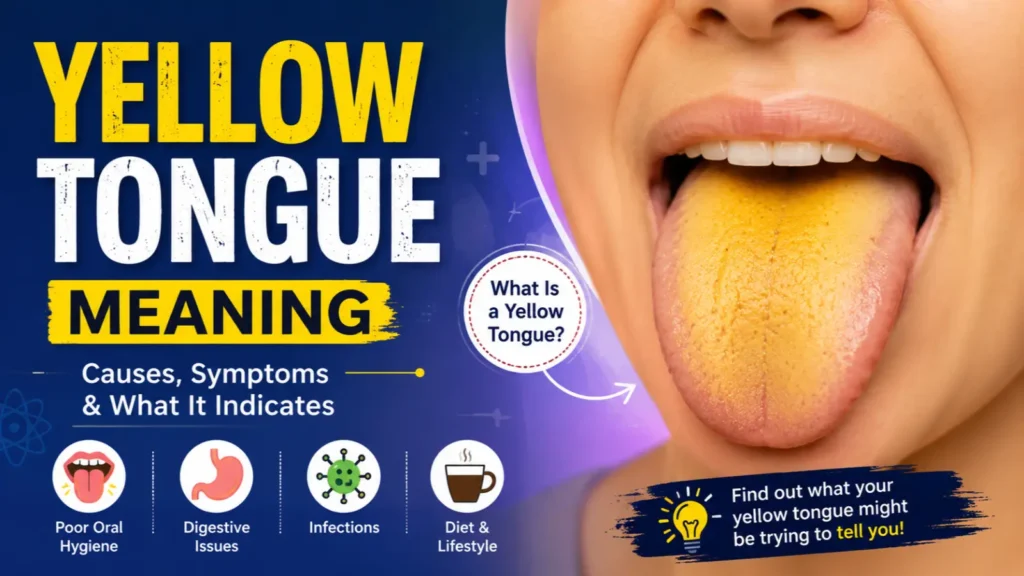
Have you ever looked in the mirror and noticed that your tongue looks a little yellow instead of its usual pink color? It can be surprising — and honestly, a bit worrying. Your tongue is like a tiny health dashboard inside your mouth, and changes in its appearance can tell you a lot.
The yellow tongue meaning usually refers to a yellow coating or discoloration that appears on the tongue’s surface. In many cases, it is linked to simple things like bacteria buildup, dehydration, food stains, or oral hygiene habits. It does not always mean something is wrong.
However, a yellow tongue can sometimes point to underlying issues that deserve attention. Understanding the possible causes can help you decide whether you simply need better mouth care or whether you should talk to a healthcare professional.
This updated 2026 guide explains what a yellow tongue means, why it happens, how to fix it, common mistakes people make, and when this unusual tongue color may require medical advice.
What Does Yellow Tongue Mean?
A yellow tongue describes a yellowish coating, film, or discoloration that appears on the surface of the tongue. The color usually comes from a mixture of bacteria, dead skin cells, food particles, and other substances that collect on tiny bumps called papillae.
Unlike a natural tongue color change caused by genetics or harmless variation, a yellow coating often develops because something has changed in your mouth environment.
Quick Answer Box
Yellow tongue meaning: A yellow tongue usually means your tongue has developed a yellow coating caused by bacteria buildup, dry mouth, staining foods, smoking, or poor oral hygiene. Most cases are harmless and improve with regular cleaning, hydration, and healthy mouth-care habits.
Why Does the Tongue Turn Yellow?
Your tongue naturally contains thousands of tiny structures that help you taste food. These structures can trap bacteria and particles throughout the day.
When those materials build up, they may create a yellow appearance.
Common causes include:
1. Poor Oral Hygiene
Not cleaning your tongue regularly allows bacteria and debris to collect. Even people who brush their teeth twice daily may forget that the tongue also needs attention.
A simple tongue-cleaning routine can make a noticeable difference.
2. Bacteria Buildup
Your mouth contains millions of bacteria. Most are harmless, but excessive buildup can create a coating that changes your tongue’s appearance.
This is one of the most common explanations behind a yellow-coated tongue.
3. Dehydration and Dry Mouth
Saliva helps wash away bacteria and food particles. When your mouth becomes dry, those materials stay longer on the tongue.
Signs of dry mouth may include:
- Sticky feeling in the mouth
- Bad breath
- Difficulty swallowing
- Increased thirst
4. Food and Drinks
Some foods and beverages contain strong pigments that can temporarily stain your tongue.
Examples include:
- Coffee
- Tea
- Turmeric-based foods
- Colored candies
- Certain spices
5. Smoking or Tobacco Use
Smoking can change the natural appearance of the tongue by encouraging buildup and staining. Tobacco also affects overall oral health.
6. Certain Medications
Some medications can affect saliva production or change the balance of bacteria inside your mouth.
A dry mouth caused by medication can indirectly contribute to a yellow coating.
How Does Yellow Tongue Develop Over Time?
A yellow tongue often starts gradually.
At first, you may notice a slight yellow tint. As bacteria and debris increase, the coating may become thicker or more noticeable.
Factors that can speed up buildup include:
- Skipping tongue cleaning
- Drinking too little water
- Eating many staining foods
- Smoking
- Poor dental routines
The good news? Many cases improve once the cause is addressed.
How to Get Rid of a Yellow Tongue
If you notice a yellow coating on your tongue, the solution often starts with improving your daily oral care habits. Most cases are not permanent and can improve with simple changes.
Here are practical ways to reduce yellow tongue buildup:
1. Clean Your Tongue Daily
Your toothbrush is not only for your teeth. Gently brushing your tongue or using a tongue scraper can remove bacteria, dead cells, and food particles.
A good routine:
- Brush your teeth twice daily
- Clean your tongue once daily
- Rinse your mouth after meals
- Replace your toothbrush regularly
Avoid scraping too aggressively because it can irritate the tongue’s surface.
2. Drink More Water
Hydration plays a major role in mouth health.
When your body lacks enough fluids, your mouth produces less saliva. Less saliva means fewer natural cleaning actions, allowing bacteria to collect.
Try to:
- Drink water throughout the day
- Limit excessive caffeine if it causes dryness
- Keep your mouth moist, especially during hot weather
3. Improve Your Oral Hygiene Routine
A healthy mouth requires more than brushing.
A complete routine includes:
✅ Brushing teeth properly
✅ Flossing regularly
✅ Cleaning the tongue
✅ Visiting a dentist when needed
Many people focus only on their teeth and forget that the tongue can hold bacteria too.
4. Reduce Staining Foods and Habits
Certain foods are harmless but can temporarily change tongue color.
If you notice discoloration after consuming:
- Coffee
- Black tea
- Spices
- Artificial food colors
Try rinsing your mouth afterward.
Smoking and tobacco use should also be avoided because they can contribute to tongue discoloration and other oral health problems.
5. Treat Dry Mouth
If your mouth often feels dry, consider these tips:
- Drink enough water
- Chew sugar-free gum to stimulate saliva
- Avoid alcohol-based mouthwashes if they increase dryness
- Discuss medication side effects with a healthcare provider
A dry mouth creates an environment where bacteria can grow more easily.
Real Conversation Examples About Yellow Tongue Situations
Although yellow tongue meaning is mainly a health-related search term rather than internet slang, people often discuss it casually in messages when they notice a change.
Here are realistic examples:
Example 1: Between Friends
Alex: “Hey, I noticed my tongue looks yellow today. Is that normal?”
Sam: “Mine does that sometimes after coffee. Try cleaning your tongue and drinking more water.”
Meaning:
The person is asking for reassurance, and the reply suggests a common harmless cause.
Example 2: Family Chat
Mom: “Your little brother has a yellow coating on his tongue. Should we worry?”
Dad: “Let’s improve his brushing routine first and check if it goes away.”
Meaning:
Family members often notice tongue changes and want to know whether they require medical attention.
Example 3: Work Break Conversation
Employee: “My mouth feels weird lately, and my tongue looks yellow.”
Coworker: “Maybe you’re dehydrated. You’ve been drinking coffee all morning.”
Meaning:
The conversation connects lifestyle habits with temporary tongue changes.
Example 4: Online Health Forum
User: “Why is my tongue yellow even though I brush every day?”
Reply: “It can happen from dry mouth, foods, bacteria buildup, or medications. If it doesn’t improve, ask a dentist.”
Meaning:
The response avoids assuming one cause and explains possible reasons.
Example 5: Parent and Teen Conversation
Teen: “My tongue looks yellow after eating spicy noodles.”
Parent: “That’s probably from the food coloring or spices. Drink water and brush later.”
Meaning:
Temporary staining is common and usually not a health concern.
Common Mistakes & Misunderstandings About Yellow Tongue
Many people search for yellow tongue meaning because they immediately assume the worst. But not every color change signals a serious problem.
Here are common misunderstandings:
Mistake 1: Thinking Every Yellow Tongue Means Illness
A yellow tongue does not automatically mean you have a disease.
Temporary causes like:
- Food stains
- Dehydration
- Poor tongue cleaning
are much more common.
The key is noticing whether it disappears after improving your habits.
Mistake 2: Scrubbing Too Hard
Some people try to remove the yellow coating aggressively.
This can irritate the tongue and create discomfort.
Gentle cleaning works better than forceful scraping.
Mistake 3: Ignoring a Persistent Change
While many cases are harmless, a yellow tongue that lasts a long time should not be ignored.
Consider seeking professional advice if you experience:
- Pain
- Burning sensation
- Swelling
- Difficulty eating
- Unusual mouth sores
- A coating that does not improve
Generational and Cultural Differences
People from different age groups may interpret tongue changes differently.
Younger Generations
Many younger people search symptoms online first. A yellow tongue may lead them to social media platforms where users share personal experiences.
The benefit? Awareness increases.
The downside? Online advice can sometimes exaggerate harmless symptoms.
Older Generations
Older adults may connect tongue color changes with traditional health beliefs. Some may view it as a sign of digestion problems or internal imbalance.
While lifestyle factors can influence oral appearance, persistent symptoms should be evaluated using reliable medical guidance.
Yellow Tongue Across Different Situations and People
A yellow tongue can appear in different groups for different reasons.
| Group | Possible Reason |
|---|---|
| Children | Food coloring, poor brushing habits, dehydration |
| Teenagers | Diet, sugary drinks, oral hygiene habits |
| Adults | Coffee, smoking, medications, dry mouth |
| Older adults | Medication effects, reduced saliva production |
Is Yellow Tongue Normal?
A slightly yellow coating can be normal, especially after waking up.
During sleep, saliva production decreases, allowing bacteria and debris to collect.
A morning yellow tongue that improves after brushing is usually not concerning.
Is Yellow Tongue Contagious?
No. A yellow tongue itself is not contagious.
However, certain infections that affect the mouth can spread in specific situations, so unusual symptoms should be checked if they appear with pain or other signs.
Is Yellow Tongue Formal or Informal?
Unlike internet slang terms, “yellow tongue” is a health description used in:
- Medical conversations
- Dental discussions
- Online health searches
- Everyday conversations
It is appropriate in both casual and professional health contexts.
Related Oral Health Terms, Slang & Alternatives
When people search for yellow tongue meaning, they often look for related explanations about mouth appearance, hygiene, and tongue changes.
Here are useful related terms:
| Term | Meaning |
|---|---|
| Coated tongue | A tongue covered with a layer of bacteria, food particles, or dead cells. |
| White tongue | A pale or white coating on the tongue often linked to buildup, dryness, or other causes. |
| Black hairy tongue | A condition where tongue papillae become enlarged and appear dark or hairy. |
| Dry mouth | A condition where reduced saliva causes discomfort and more bacterial buildup. |
| Oral hygiene | Daily habits that keep teeth, gums, and tongue healthy. |
| Tongue scraper | A tool designed to remove coating and debris from the tongue surface. |
| Bad breath (halitosis) | Unpleasant mouth odor often connected with bacteria buildup. |
| Tongue discoloration | Any noticeable change from the tongue’s normal color. |
| Healthy tongue color | Usually pink or light red, although natural shades vary. |
| Mouth bacteria | Microorganisms in the mouth that can affect breath and tongue appearance. |
FAQs:
What does a yellow tongue mean?
A yellow tongue meaning usually refers to a yellow coating or discoloration on the tongue caused by bacteria, food particles, dead cells, dehydration, smoking, or certain medications. In most cases, it is temporary and improves with better oral hygiene. However, long-lasting changes should be checked by a healthcare professional.
Why is my tongue yellow but I brush my teeth?
Brushing your teeth does not always remove buildup from your tongue. Your tongue has tiny bumps that can trap bacteria, food particles, and dead cells.
Other possible reasons include:
- Dry mouth
- Coffee or tea stains
- Medication effects
- Smoking
- Diet choices
Adding tongue cleaning to your routine may help.
Is a yellow tongue a sign of infection?
A yellow tongue is not automatically a sign of infection. Most cases happen because of surface buildup rather than illness.
However, if yellow discoloration appears with:
- Pain
- Swelling
- Fever
- Mouth sores
- Difficulty swallowing
you should consider getting medical advice.
How long does a yellow tongue last?
The duration depends on the cause.
A yellow tongue caused by food stains, dehydration, or poor cleaning may improve within days after changing habits.
If the coating remains for several weeks despite good oral care, it is a good idea to speak with a dentist or healthcare provider.
Can dehydration make your tongue yellow?
Yes. Dehydration can contribute to a yellow tongue because your body produces less saliva.
Saliva naturally helps clean your mouth. When saliva levels drop, bacteria and dead cells can accumulate more easily, creating a yellow coating.
How can I make my tongue pink again?
To improve tongue appearance:
- Brush or scrape your tongue gently
- Drink enough water
- Maintain regular dental care
- Reduce tobacco use
- Limit staining foods if they affect you
Remember that natural tongue color varies from person to person.
Conclusion:
The yellow tongue meaning is usually connected to a yellow coating caused by everyday factors like bacteria buildup, dehydration, food stains, or oral hygiene habits.
For many people, improving mouth care, staying hydrated, and cleaning the tongue regularly can make the problem disappear.
A yellow tongue is often harmless, but your body sometimes uses small changes as signals. If the discoloration stays for a long time or comes with pain and other symptoms, professional advice is the safest choice.
Your tongue can reveal a lot about your daily habits so paying attention to small changes is a smart part of overall health care.
Have you ever noticed a yellow coating on your tongue? Share your experience or questions, and keep exploring more simple health explanations.

I’m Lina Roys, a passionate writer behind Storevian, where I make words, phrases, slang, and everyday expressions easy to understand. I create clear, engaging, and reader-friendly content to help people find the meanings they’re looking for, quickly and confidently.


