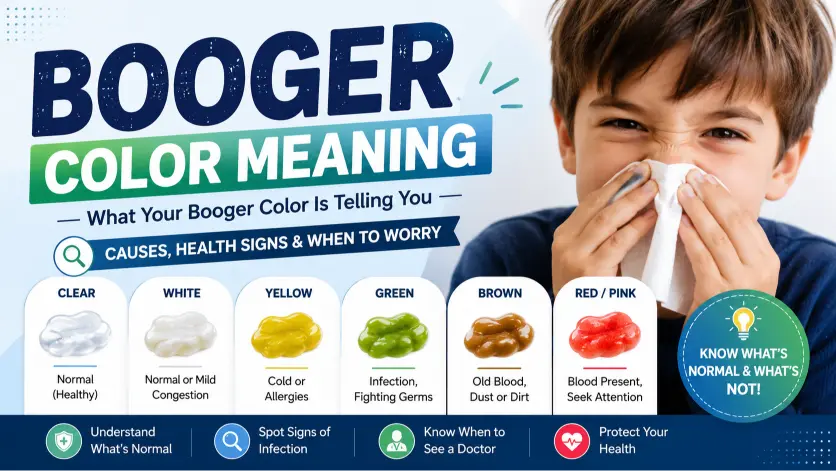
Ever looked at a tissue after blowing your nose and wondered, “Why are my boogers green today?” You’re definitely not alone.
Most people notice changes in their nasal mucus but aren’t sure what those colors actually mean. While a change in color can sometimes point to a cold or sinus infection, it doesn’t always mean you’re sick. Factors like allergies, dry air, pollution, dehydration, and even the weather can affect the appearance of your mucus.
Understanding booger color meaning can help you recognize what’s normal, identify possible health concerns, and know when it’s time to call a healthcare professional. The color, texture, and amount of mucus all provide useful clues about what’s happening inside your nose.
In this guide, you’ll discover what every common mucus color means, why it changes, when it’s harmless, and which symptoms deserve medical attention. We’ll also separate common myths from medical facts so you can make informed decisions about your health.
What Does Booger Color Meaning Mean?
Simply put, booger color meaning refers to the possible health information indicated by the color of your nasal mucus.
Your nose constantly produces mucus to:
- Trap bacteria and viruses
- Catch dust and allergens
- Keep nasal passages moist
- Protect your lungs
- Support your immune system
As your body reacts to infections, allergies, irritants, or dry conditions, the color and consistency of mucus may change.
Quick Answer
Booger color meaning helps explain what different mucus colors may indicate about your health. Clear mucus is usually normal, while white, yellow, green, red, brown, black, or pink mucus may suggest dehydration, irritation, allergies, infection, bleeding, or exposure to pollutants. Color alone doesn’t always diagnose an illness.
How Are Boogers Made?
Boogers start as mucus a slippery fluid produced by the lining of your nose and sinuses.
Every day, your body produces around 1–2 quarts (about 1–2 liters) of mucus, though most of it is swallowed without you noticing.
As mucus traps:
- dust
- pollen
- bacteria
- viruses
- smoke particles
- dead cells
it gradually thickens. When exposed to air inside your nose, it dries out and forms what we call a booger.
This natural process is actually an important part of your body’s defense system.
Booger Color Meaning Chart
| Booger Color | Usually Means | Should You Worry? |
|---|---|---|
| Clear | Healthy mucus or allergies | No |
| White | Mild congestion or dehydration | Usually not |
| Yellow | Immune system fighting infection | Monitor symptoms |
| Green | More immune cells present; infection possible | Sometimes |
| Pink | Small amount of blood mixed with mucus | Usually mild |
| Red | Nosebleed or irritated blood vessels | Sometimes |
| Brown | Old blood, dirt, or pollution | Usually not |
| Black | Smoke, heavy pollution, fungi (rare) | Yes, if persistent |
What Every Booger Color Means
Clear Boogers Meaning
Clear mucus is considered the healthiest and most common type.
It contains mostly water, proteins, salts, and antibodies that protect your respiratory system from germs and airborne particles.
Common causes
- Normal healthy nose
- Seasonal allergies
- Crying
- Spicy foods
- Cold weather
- Early stages of a viral infection
Should you worry?
No. Clear mucus usually means your nose is functioning normally.
White Boogers Meaning
White mucus often becomes thicker than clear mucus because the tissues inside your nose become swollen.
As airflow decreases, mucus loses moisture and appears cloudy or white.
Common causes
- Mild cold
- Nasal congestion
- Dry indoor air
- Dehydration
- Early sinus inflammation
What helps?
- Drink more water.
- Use a saline nasal spray.
- Run a humidifier if the air is dry.
Yellow Boogers Meaning
Yellow mucus usually appears when your immune system has started responding to a virus or bacteria.
White blood cells travel to the infected area and release enzymes that can give mucus a yellow tint.
Possible causes
- Common cold
- Mild sinus infection
- Recovering from a viral illness
Yellow mucus alone doesn’t necessarily mean you need antibiotics.
Green Boogers Meaning
Green mucus is one of the most misunderstood colors.
Many people assume green automatically means a bacterial infection. In reality, green mucus simply means your immune system is actively fighting germs.
The green color comes from enzymes found in white blood cells—not from bacteria themselves.
Common causes
- Viral cold
- Sinus infection
- Upper respiratory infection
- Longer-lasting inflammation
Should you see a doctor?
If green mucus lasts longer than 10–14 days, comes with severe facial pain, high fever, or worsening symptoms, consult a healthcare provider.
Pink Boogers Meaning
Pink mucus usually contains a very small amount of fresh blood.
This often happens because tiny blood vessels inside the nose break due to irritation.
Common causes
- Frequent nose blowing
- Dry winter air
- Allergies
- Minor nasal injury
Most cases resolve on their own.
Red Boogers Meaning
Bright red mucus means there’s more noticeable bleeding inside the nose.
Although it can look alarming, the cause is often minor.
Common causes
- Nosebleeds
- Dry nasal passages
- Nose picking
- Minor injuries
- Blood-thinning medications
Seek medical care if bleeding is heavy, frequent, or difficult to stop.
Brown Boogers Meaning
Brown mucus usually contains dried or older blood.
It may also appear after breathing in dirt, dust, smoke, or other environmental particles.
Common causes
- Old blood after a nosebleed
- Dust exposure
- Air pollution
- Smoking
This color often clears once the irritant is removed.
Black Boogers Meaning
Black mucus is uncommon and deserves closer attention.
While it can simply result from inhaling smoke, coal dust, or heavy pollution, persistent black mucus without an obvious explanation should be evaluated by a doctor.
Possible causes
- Heavy smoking
- Air pollution
- Coal or industrial dust
- Rare fungal infections (especially in people with weakened immune systems)
Persistent black mucus accompanied by pain, fever, or facial swelling requires prompt medical evaluation.
Why Does Mucus Change Color?
The color of your mucus isn’t random. It changes because of what’s happening inside your nose and sinuses. Your immune system, hydration level, environment, and overall health all play a role.
Here are the most common reasons your mucus changes color.
1. Your Immune System Is Fighting Germs
When viruses or bacteria enter your nose, your body sends white blood cells to attack them.
These cells release enzymes that can turn mucus yellow or green. That’s why colored mucus often appears a few days into a cold.
Key takeaway: Color alone doesn’t tell you whether an infection is viral or bacterial.
2. You’re Dehydrated
When your body doesn’t have enough fluids, mucus loses water and becomes thicker.
Instead of staying clear and runny, it may look:
- White
- Cloudy
- Sticky
- Thick
Drinking plenty of water often helps return mucus to its normal consistency.
3. Allergies
Allergies don’t usually cause colorful mucus.
Instead, they often produce:
- Clear
- Thin
- Watery mucus
However, constant rubbing, sneezing, or irritation can inflame the nasal passages. If a secondary infection develops, the mucus may later turn yellow or green.
Common allergy triggers include:
- Pollen
- Dust mites
- Pet dander
- Mold
- Grass
4. Dry Air
Low humidity dries out the lining of your nose.
As a result:
- Mucus thickens.
- Small cracks may form inside the nostrils.
- Tiny blood vessels can break.
This explains why you might notice white, pink, or slightly bloody boogers during winter.
5. Pollution and Smoke
Your nose acts like an air filter.
When you breathe in polluted air, wildfire smoke, cigarette smoke, or construction dust, tiny particles become trapped in mucus.
This can make boogers appear:
- Brown
- Gray
- Black
If the color returns to normal after leaving the polluted environment, it’s usually not a cause for concern.
6. Minor Nosebleeds
The inside of your nose contains many delicate blood vessels.
These can break from:
- Blowing your nose too hard
- Picking your nose
- Dry weather
- Allergies
- Nasal sprays
Fresh blood creates pink or red mucus, while older blood often looks brown.
Is Booger Color a Sign of Infection?
One of the biggest misconceptions is that green or yellow mucus always means you need antibiotics.
That’s not true.
Most colds are caused by viruses, and viral infections commonly produce yellow or green mucus as your immune system responds.
Instead of focusing only on color, doctors consider your overall symptoms.
Signs that may suggest a viral infection
- Runny nose
- Mild fever
- Sneezing
- Sore throat
- Symptoms improving within 7–10 days
Signs that may suggest a bacterial sinus infection
- Symptoms lasting more than 10 days without improvement
- High fever
- Severe facial pain or pressure
- Thick nasal discharge that worsens after initially improving
- Swelling around the eyes
Only a healthcare professional can determine whether antibiotics are appropriate.
Booger Color vs. Texture
Color isn’t the only clue. Texture matters too.
| Texture | What It May Mean |
|---|---|
| Thin and watery | Normal, allergies, or early viral illness |
| Thick and sticky | Dehydration or congestion |
| Stringy | Dry air or allergies |
| Crusty | Dried mucus from normal nasal function |
| Bloody | Irritation, dryness, or nosebleed |
Looking at both color and texture gives a better picture than color alone.
What Booger Colors Mean for Children
Parents often worry when their child’s mucus changes color.
Fortunately, colorful boogers are very common in children because their immune systems are still developing.
Clear mucus
Usually normal or related to allergies or teething.
Yellow mucus
Often appears during a common cold.
Green mucus
Can occur during recovery from a viral infection and doesn’t automatically require antibiotics.
Red or pink mucus
Usually caused by nose picking or dry air.
When to call the pediatrician
Seek medical advice if your child has:
- Fever lasting several days
- Trouble breathing
- Symptoms lasting longer than 10–14 days
- Persistent black mucus
- Significant nosebleeds
- Swelling around the eyes
Booger Colors During Allergy Season
Allergies often create a different pattern than infections.
Typical allergy symptoms
- Clear mucus
- Sneezing
- Itchy eyes
- Itchy nose
- Runny nose
- Symptoms that come and go depending on exposure
If mucus changes from clear to yellow or green and is accompanied by fever or facial pain, another illness may be present.
Common Myths About Booger Color
Let’s clear up some of the biggest myths.
Myth #1: Green boogers always mean bacterial infection.
Fact: Green mucus simply shows that your immune system is active. Viral infections commonly cause green mucus too.
Myth #2: Yellow mucus means you need antibiotics.
Fact: Most yellow mucus occurs during viral illnesses that improve without antibiotics.
Myth #3: Clear mucus means you’re completely healthy.
Fact: Clear mucus is usually normal, but it can also occur with allergies or the early stages of a cold.
Myth #4: Black mucus always means something serious.
Fact: Smoke, pollution, or dust can temporarily darken mucus. Persistent black mucus without an obvious cause should still be checked by a doctor.
Myth #5: You should judge illness by mucus color alone.
Fact: Doctors consider your symptoms, duration of illness, fever, pain, medical history, and physical examination—not just mucus color.
When Should You See a Doctor?
Most changes in mucus color are temporary and improve with rest, hydration, and time.
However, medical evaluation is recommended if you experience any of the following:
- Green or yellow mucus lasting longer than 10–14 days
- High fever that doesn’t improve
- Severe facial pain or swelling
- Difficulty breathing
- Frequent or heavy nosebleeds
- Persistent black mucus
- Foul-smelling discharge from only one nostril
- Symptoms that improve and then suddenly become much worse
These signs may indicate a sinus infection, nasal injury, or another condition that needs professional care.
How to Keep Your Mucus Healthy
Healthy mucus plays an important role in protecting your respiratory system.
Simple habits can help keep it functioning properly:
- Drink enough water every day.
- Use a humidifier during dry weather.
- Avoid cigarette smoke and polluted environments.
- Wash your hands to reduce the spread of viruses.
- Treat allergies as recommended by your healthcare provider.
- Use saline nasal sprays to keep nasal passages moist.
- Eat a balanced diet to support your immune system.
- Get enough sleep to help your body fight infections.
These everyday steps can reduce irritation and help your nose do its job naturally.
FAQs:
Does green mucus always mean a bacterial infection?
No. Green mucus does not automatically mean you have a bacterial infection. The green color comes from enzymes released by white blood cells as your immune system fights germs. Viral colds commonly cause green mucus too. If symptoms last more than 10–14 days or become severe, consult a healthcare provider.
Is yellow mucus better than green mucus?
Not necessarily. Yellow and green mucus are both common during a cold or sinus infection. The color simply reflects your immune response and doesn’t reliably show whether you’re getting better or worse.
Why are my boogers bloody?
Bloody or pink boogers are often caused by dry air, frequent nose blowing, allergies, or picking your nose. Small blood vessels inside the nose can break easily. If bleeding is heavy, frequent, or difficult to stop, seek medical advice.
Why are my boogers black?
Black mucus may result from inhaling smoke, dust, soot, or pollution. Smokers and people working in dusty environments may notice darker mucus more often. Persistent black mucus without a clear cause should be evaluated by a healthcare professional, especially if it’s accompanied by pain, fever, or swelling.
Can dehydration change mucus color?
Yes. Dehydration can make mucus thicker and whiter because it contains less water. Drinking plenty of fluids helps restore normal mucus consistency and supports your body’s natural defenses.
What color mucus is normal?
Clear mucus is considered the healthiest and most common. It keeps your nasal passages moist while trapping dust, allergens, and germs before they reach your lungs.
Do allergies change booger color?
Most allergies cause clear, watery mucus. However, prolonged irritation or a secondary infection may cause mucus to become white, yellow, or green.
Should I worry if my child has green boogers?
Usually not. Green mucus is common during childhood colds and often improves on its own. Contact your pediatrician if your child has difficulty breathing, persistent high fever, symptoms lasting longer than two weeks, or worsening facial swelling.
Conclusion:
Your nose tells an interesting story about your health, and understanding booger color meaning can help you read those clues more confidently.
Most mucus color changes are a normal response to allergies, dehydration, colds, or environmental irritants. While colors like yellow and green may look alarming, they don’t automatically mean you need antibiotics. Looking at your symptoms as a whole including how long they’ve lasted and how severe they are is far more important than focusing on color alone.
If you notice persistent black mucus, severe facial pain, heavy bleeding, or symptoms that don’t improve after 10 14 days, it’s a good idea to speak with a healthcare professional. Otherwise, staying hydrated, avoiding irritants, and practicing good nasal care will usually help your mucus return to normal.
Knowing the booger color meaning isn’t just about satisfying curiosity it’s about understanding your body’s natural defense system and recognizing when it may be asking for a little extra attention.
Have you ever noticed your mucus changing color during a cold or allergy season? Share your experience in the comments, and explore more health meaning guides to better understand the signals your body sends every day.

I’m Lina Roys, a passionate writer behind Storevian, where I make words, phrases, slang, and everyday expressions easy to understand. I create clear, engaging, and reader-friendly content to help people find the meanings they’re looking for, quickly and confidently.


