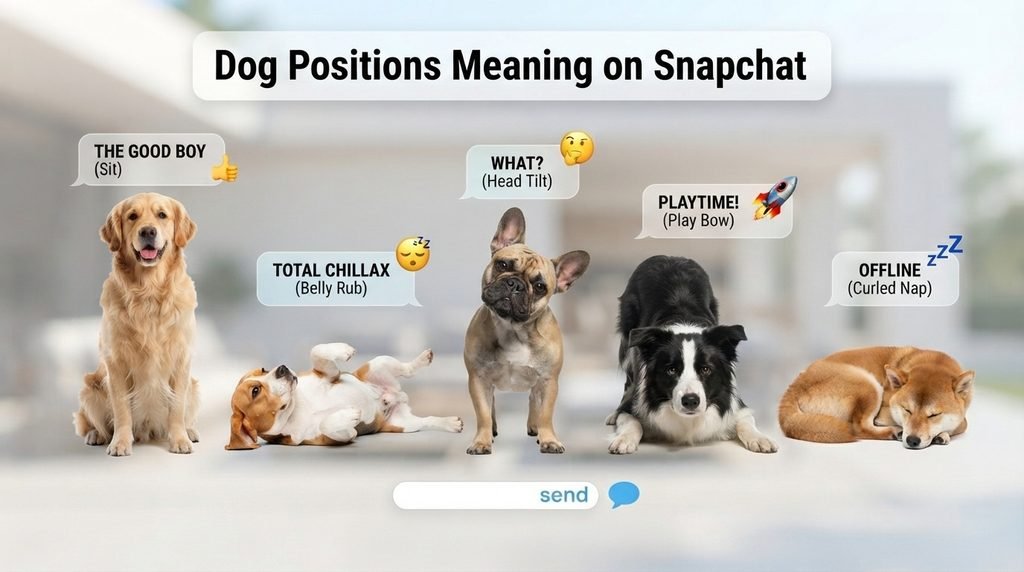
Have you ever looked at your dog sleeping in a strange position and wondered, “What is my furry friend trying to tell me?”
Dogs cannot explain their feelings with words, but they communicate constantly through their bodies. A curled-up puppy, a belly-up sleeper, a playful bow, or a stiff standing posture can reveal clues about their emotions, comfort level, and even health.
The dog positions meaning behind these movements helps owners understand whether their pets feel relaxed, excited, nervous, protective, or uncomfortable.
A dog’s body language is like a silent conversation. The way they sit, sleep, stand, stretch, or approach you often says more than their barking does.
In this updated 2026 guide, you’ll discover what common dog positions mean, why dogs choose certain poses, how different breeds may communicate differently, and when a posture might signal a problem.
What Does “Dog Positions Meaning” Mean?
Quick Answer
Dog positions meaning refers to the messages dogs communicate through their body postures, sleeping styles, and physical behaviors. These positions can show emotions like happiness, trust, fear, relaxation, alertness, or discomfort. Understanding these signals helps owners better interpret their dog’s needs.
Dogs use body language as their primary communication system. Unlike humans, dogs do not rely on spoken words to express emotions. Instead, they use posture, movement, facial expressions, ears, tails, and positioning.
A dog lying peacefully on its side communicates something very different from a dog standing stiffly with raised fur.
Every position gives owners a small clue.
Why Do Dogs Communicate Through Positions?
Dogs evolved as social animals. Their ancestors, wolves, depended on body signals to survive within groups.
Before barking became a common way to communicate with humans, body language helped dogs:
- Show submission
- Avoid conflicts
- Express confidence
- Signal danger
- Build social bonds
Modern dogs still carry many of these natural behaviors.
For example:
- A puppy rolling onto its back may be showing trust.
- A dog lowering its body during play may be inviting interaction.
- A stiff posture may indicate uncertainty or alertness.
Common Dog Positions and Their Basic Meanings
| Dog Position | Possible Meaning |
|---|---|
| Curled-up sleeping position | Comfort, warmth, security |
| Sleeping on side | Relaxation and trust |
| Belly-up sleeping | Confidence and feeling safe |
| Play bow position | Invitation to play |
| Head down position | Calmness, submission, or tiredness |
| Sitting upright | Attention or curiosity |
| Frozen standing posture | Alertness or concern |
| Stretching position | Comfort, excitement, or physical relief |
Remember: context matters.
A dog lying on its back during play is different from a dog showing its belly because it feels nervous.
Different Dog Sleeping Positions and What They Mean
Sleeping positions are among the easiest ways to understand dog positions meaning because dogs usually choose poses based on how safe and comfortable they feel.
1. The Curled-Up Position
This is one of the most common sleeping styles.
Your dog may sleep with its nose near its tail and its body forming a circle.
What it can mean:
- Seeking warmth
- Feeling secure
- Protecting vital organs
- Natural instinct from wild ancestors
Dogs often use this position in cooler environments because curling helps conserve body heat.
A puppy sleeping like this is usually showing normal comfort behavior.
2. The Side Sleeper Position
A dog lying flat on its side with relaxed legs usually feels comfortable.
This position often indicates:
- Trust
- Emotional relaxation
- Feeling safe in the environment
Dogs usually avoid exposing their vulnerable side when they feel threatened.
So when your dog naps beside you like this, it is often a sign that they feel secure around you.
3. The Belly-Up Position
The famous “legs in the air” sleeping pose makes many owners laugh.
A dog sleeping belly-up may be showing:
- Complete relaxation
- Confidence
- Trust toward owners
The stomach is a vulnerable area, so exposing it often means the dog does not feel the need to protect itself.
However, some dogs also sleep this way simply because it helps them cool down.
4. The Superman Position
This adorable pose happens when dogs lie flat on their stomach with their back legs stretched behind them.
It is especially common among puppies.
Possible meanings:
- Playful mood
- High energy
- Cooling down
- Comfortable resting
Many dogs jump up quickly from this position, making it popular among active breeds.
5. The Donut Position
The donut position is similar to curling up but tighter.
Dogs often choose this when:
- They want warmth
- They feel slightly cautious
- They are resting in unfamiliar places
It does not automatically mean your dog is scared.
How to Understand “Dog Positions Meaning” in Daily Life
Understanding dog posture is not just about memorizing a list of poses. The real skill is learning to read the whole picture.
A dog’s position works together with:
- Tail movement
- Ear position
- Eye contact
- Facial expression
- Breathing pattern
- Surrounding environment
For example, a wagging tail does not always mean happiness. A fast, stiff wag can show excitement or tension, while a loose wag usually suggests friendliness.
The same rule applies to positions.
A dog lying down could be:
- Relaxing after a walk
- Waiting patiently
- Feeling nervous
- Experiencing discomfort
The situation tells the story.
How to Use Dog Positions Meaning Correctly in Daily Observation
1. Look at the Entire Body, Not Just One Pose
Many new dog owners focus on one signal.
They may think:
“My dog is showing its belly, so it wants a belly rub.”
Sometimes that is true.
But sometimes a dog exposes its belly because it feels unsure and is trying to appear non-threatening.
Always combine body position with other signs.
Relaxed dog signs:
- Loose muscles
- Soft eyes
- Natural tail movement
- Open mouth
- Comfortable breathing
Stressed dog signs:
- Stiff body
- Avoiding eye contact
- Lip licking
- Yawning repeatedly
- Tucked tail
2. Consider the Environment
A dog’s posture changes depending on where it is.
A dog sleeping in its favorite bed may stretch out completely because it feels safe.
The same dog at a noisy event may curl up tightly because it feels overwhelmed.
3. Learn Your Own Dog’s Normal Behavior
Every dog has a personality.
Some dogs naturally sleep upside down.
Others rarely expose their stomach.
Some breeds are naturally more alert, while others appear relaxed almost all the time.
The best way to understand your dog is to notice what is normal for them.
Real Conversation Examples Using Dog Positions Meaning
Example 1: Between Friends
Friend: “Why is Max sleeping with all four paws in the air?”
You: “That usually means he feels really comfortable and safe.”
What it conveys:
The dog is likely relaxed and confident. The position shows trust rather than fear.
Example 2: New Puppy Owner Chat
Owner: “My puppy keeps sleeping curled into a tiny ball. Should I worry?”
Friend: “Not usually. Many puppies curl up because it feels warm and secure.”
What it conveys:
The curled position is often a natural comfort behavior.
Example 3: Family Conversation
Child: “Why does Bella bow down before running around?”
Parent: “That’s called a play bow. She’s asking you to play!”
What it conveys:
The dog is communicating excitement and friendliness.
Example 4: Dog Park Discussion
Owner: “My dog suddenly froze and stood still. What does that mean?”
Trainer: “A stiff posture can mean your dog is alert or unsure. Watch what happens next.”
What it conveys:
A frozen position may signal caution, not calmness.
Example 5: Online Pet Community
Post: “Why does my dog sleep pressed against me?”
Comment: “That’s usually a sign of bonding and comfort.”
What it conveys:
Physical closeness often shows attachment and trust.
Common Mistakes and Misunderstandings About Dog Positions
Mistake 1: Assuming Every Belly-Up Dog Wants Belly Rubs
A dog showing its stomach may be relaxed, but it can also be showing submission.
Look for additional signs.
A relaxed dog usually has:
- Loose body
- Soft eyes
- Relaxed mouth
A nervous dog may:
- Freeze
- Avoid looking at you
- Keep its body tense
Mistake 2: Believing Tail Wagging Always Means Happiness
Many people misunderstand this signal.
A moving tail simply means the dog is emotionally engaged.
The emotion could be:
- Happiness
- Excitement
- Nervousness
- Warning
The speed and position of the tail matter.
Mistake 3: Ignoring Sudden Changes
If your dog suddenly changes its favorite positions, pay attention.
Examples:
- Refusing to lie down
- Constantly changing sleeping spots
- Sitting unusually hunched
- Avoiding movement
These changes may suggest discomfort.
A single unusual position is not always a problem, but repeated changes deserve attention.
Dog Positions Meaning Across Different Dog Owners and Generations
How New Dog Owners Interpret Positions
First-time owners often search for answers because dogs can seem mysterious.
Common questions include:
- “Why does my dog sleep like this?”
- “Does my dog trust me?”
- “Is this behavior normal?”
Learning body language helps new owners feel more confident.
How Experienced Dog Owners Read Positions
Long-time owners often recognize small changes.
They notice:
- A different sleeping style
- A new walking posture
- Changes in energy level
They understand that small physical signals can reveal emotional changes.
Gen Z and Social Media Dog Culture
Dog body language has become extremely popular online.
Platforms like:
- TikTok
- YouTube Shorts
often feature funny sleeping poses and “what my dog is thinking” videos.
While these videos are entertaining, remember that viral explanations are not always accurate.
A funny pose does not always have one fixed meaning.
Are Dog Positions Formal or Informal?
The phrase dog positions meaning is mainly used in casual searches, pet blogs, training discussions, and social media.
It is not a technical veterinary term.
Professionals usually use terms like:
- Canine body language
- Behavioral signals
- Postural communication
However, everyday dog owners commonly search for simple explanations.
Related Dog Body Language Terms and Alternatives
| Term | Meaning |
|---|---|
| Canine body language | How dogs communicate through physical signals |
| Dog posture | The way a dog holds its body |
| Dog behavior signs | Visible clues about emotions and actions |
| Play bow | A pose inviting another dog or person to play |
| Tail language | Communication through tail movement |
| Dog calming signals | Behaviors showing stress reduction |
| Puppy behavior | Actions and habits of young dogs |
| Dog communication | Ways dogs express needs and feelings |
| Pet body language | Physical signals from animals |
| Canine emotions | Feelings expressed through behavior |
Related topics you may explore include:
- Dog sleeping habits
- Puppy behavior meanings
- Understanding pet communication
FAQs:
What does my dog’s sleeping position tell me?
Your dog’s sleeping position can reveal how comfortable and secure they feel. A relaxed side sleeper often feels safe, while a curled-up dog may be seeking warmth or protection. However, sleeping style should always be considered along with your dog’s overall behavior and environment.
Why does my dog sleep touching me?
Many dogs sleep close to their owners because physical contact provides comfort and security. This behavior can show bonding, trust, and attachment. Dogs are social animals, so staying near their favorite humans often makes them feel safe.
What does a dog lying on its back mean?
A dog lying on its back often means it feels relaxed and confident. It may also be trying to cool down or inviting interaction. Always check other signals, such as body tension and facial expression, before interpreting the behavior.
Why does my dog sit and stare at me?
Dogs may stare at owners because they want attention, expect something, or are trying to understand what happens next. A soft gaze usually indicates connection, while a tense stare combined with stiff posture may show alertness.
Can dog positions show pain or illness?
Yes, changes in posture can sometimes indicate discomfort. Signs like a hunched back, difficulty getting comfortable, avoiding certain positions, or unusual stiffness may require closer observation. If changes continue, consulting a veterinarian is recommended.
Conclusion:
Understanding dog positions meaning helps you communicate better with your furry companion. Every curl, stretch, bow, and sleeping pose gives you a small glimpse into your dog’s emotions.
Your dog may not speak your language, but their body is always sending messages. Learning these signals builds trust and creates a stronger relationship.
The next time your dog falls asleep in a funny position, take a closer look. That adorable pose might be telling you more than you think.
Have a unique dog sleeping position you want to decode? Share your favorite dog behavior story and keep exploring more pet communication guides!

I’m Lina Roys, a passionate writer behind Storevian, where I make words, phrases, slang, and everyday expressions easy to understand. I create clear, engaging, and reader-friendly content to help people find the meanings they’re looking for, quickly and confidently.


