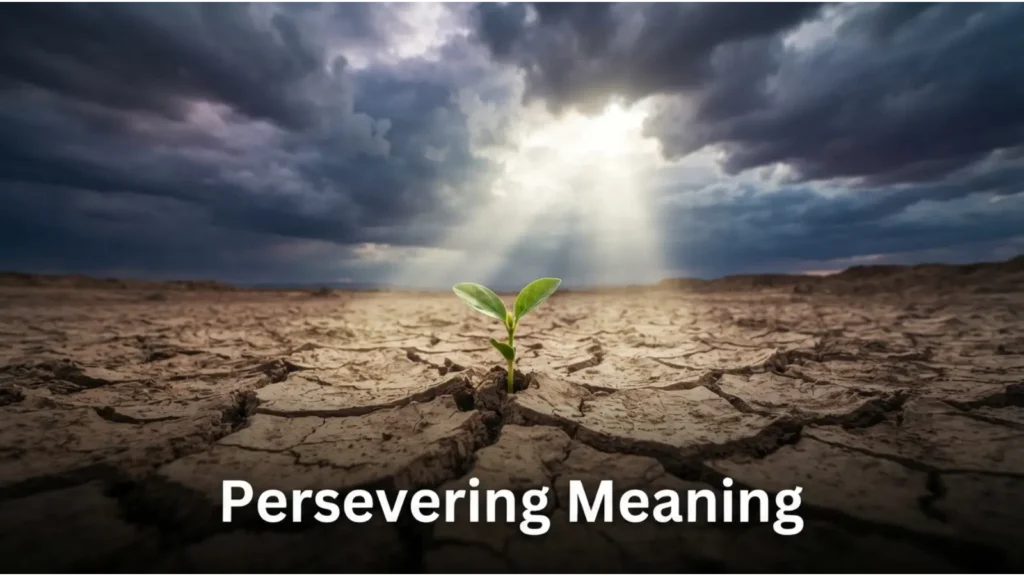
Have you ever watched someone fail again and again but still keep trying? Maybe it’s an athlete training after losing a competition, a student preparing after a disappointing grade, or someone chasing a dream despite countless setbacks. That powerful ability to continue is what the word persevering describes.
The persevering meaning is closely connected to persistence, determination, and refusing to give up when life gets challenging. It describes people who keep putting in effort even when success does not come quickly.
In today’s fast-moving world, where instant results are often expected, being persevering has become an important personal quality. Whether you are learning a new skill, building a career, improving relationships, or reaching a personal goal, perseverance often separates those who quit early from those who succeed.
This complete guide, updated for 2026, explains what persevering means, where the word comes from, how to use it correctly, real-life examples, common misunderstandings, and why this trait is admired across cultures.
What Does “Persevering” Mean?
Quick Answer Box
Persevering means continuing to make an effort toward a goal despite difficulties, delays, failures, or challenges. A persevering person remains determined and keeps going instead of giving up.
The word persevering is the present participle form of the verb persevere. It describes someone who is actively showing persistence and commitment.
For example:
- “She is a persevering student who studies every night.”
- “His persevering attitude helped him complete the difficult project.”
- “A persevering athlete keeps training even after losses.”
Simply put, a persevering person does not expect success to happen instantly. They understand that progress often requires patience, repeated effort, and emotional strength.
Origin and History of the Word “Persevering”
The word persevere comes from the Latin word perseverare, meaning “to continue steadfastly” or “to remain constant.”
It combines:
- per- → meaning “through” or “thoroughly”
- severus → meaning “strict, serious, or severe”
Over time, the meaning developed into the idea of staying committed through difficult situations.
The word entered English through Old French and became commonly used to describe people who showed strong determination.
How the Meaning Has Evolved
Historically, persevering was often connected with moral strength, bravery, and endurance. A person who continued through hardship was considered admirable.
Today, the meaning is broader. People use it in everyday situations such as:
- Education
- Sports
- Career growth
- Entrepreneurship
- Personal development
- Creative work
A writer finishing a novel after years of effort, a business owner recovering after failure, or a learner mastering a difficult language can all be described as persevering.
Pronunciation Guide
Persevering is pronounced:
per-suh-VEER-ing
Phonetic spelling:
/ˌpɜːr.səˈvɪr.ɪŋ/
The stress falls on the “VEER” sound.
Understanding the Core Meaning of Persevering
At its heart, persevering meaning is about staying committed when things become uncomfortable.
It is not simply working hard when everything feels easy. Anyone can stay motivated when results appear quickly.
Persevering happens when:
- Progress feels slow
- Problems appear unexpectedly
- Others doubt your ability
- Failure becomes part of the journey
A persevering person may feel frustrated or tired, but they continue moving forward.
Persevering vs. Giving Up
The difference becomes clearer when we compare behaviors:
| Persevering Person | Person Who Gives Up |
|---|---|
| Learns from mistakes | Avoids challenges |
| Keeps improving | Stops after failure |
| Adjusts strategies | Blames circumstances |
| Focuses on long-term goals | Wants instant results |
| Builds resilience | Avoids discomfort |
Being persevering does not mean blindly repeating the same action forever. True perseverance also involves learning, adapting, and finding better ways to succeed.
Why Being Persevering Matters Today
Modern life rewards people who can handle uncertainty.
Many successful individuals did not achieve their goals immediately. They faced rejection, mistakes, and setbacks before reaching success.
Examples include:
- An entrepreneur whose first business failed but tried again
- A student who improved after struggling academically
- An artist who practiced for years before gaining recognition
- An athlete who trained after repeated losses
The common factor is not perfection. It is persistence.
How to Recognize a Persevering Person
A persevering person usually shows these qualities:
1. Strong Determination
They have a clear goal and remain committed even when progress is slow.
2. Patience
They understand that meaningful achievements often take time.
3. Resilience
They recover after disappointment instead of allowing failure to stop them.
4. Positive Mindset
They focus on solutions rather than only problems.
5. Self-Discipline
They continue working even when motivation disappears.
How to Use “Persevering” Correctly in Texts & Writing
The word persevering is usually used to describe someone’s attitude, behavior, or effort. Unlike casual internet slang, it is a more formal English word that appears often in motivational writing, education, professional communication, and personal descriptions.
You can use persevering when talking about someone who continues working toward a goal despite difficulties.
Correct Examples:
✅ “She is a persevering student who never stops learning.”
✅ “His persevering efforts helped him achieve his dream.”
✅ “The team’s persevering attitude led them to success.”
In simple words:
Persevering = continuing even when things are difficult.
Tone and Context of “Persevering”
The word carries a positive and respectful feeling. It often suggests admiration because it highlights someone’s inner strength.
Common emotional meanings:
- Motivational: “Her persevering spirit inspired everyone.”
- Respectful: “He is a persevering leader who handles challenges calmly.”
- Encouraging: “Keep being persevering, and your hard work will pay off.”
It is rarely used in a negative way.
Is “Persevering” Used in Text Messages and Social Media?
Unlike short forms like “LOL” or “OMG,” persevering is not a common texting abbreviation. However, people use the word in captions, comments, and motivational posts.
Examples:
Instagram caption:
“Still learning. Still growing. Still persevering. 💪”
LinkedIn post:
“Success rarely happens overnight. Stay focused and persevering through every challenge.”
TikTok caption:
“The journey is hard, but I’m persevering. 🔥”
On social platforms, the word is often connected with:
- Self-improvement
- Fitness journeys
- Career goals
- Academic success
- Personal growth
When Should You Use “Persevering”?
Use persevering when describing:
Personal Growth
Example:
“After months of practice, she became a more confident and persevering musician.”
Education
Example:
“A persevering learner can overcome difficult subjects.”
Career Success
Example:
“His persevering approach helped him build a successful career.”
Sports
Example:
“The persevering player continued training after multiple injuries.”
When NOT to Use “Persevering”
Although the word is positive, it may sound too formal in some casual conversations.
For example, texting a friend:
❌ “You are such a persevering person for finishing your homework.”
This sounds unnatural.
A more natural message:
✅ “You really didn’t give up. That’s impressive!”
Or:
✅ “You’re seriously determined!”
Formatting Tips and Common Pairings
Because persevering is a descriptive word, it often appears with nouns that represent strength and effort.
Common combinations:
- persevering attitude
- persevering spirit
- persevering mindset
- persevering nature
- persevering individual
- persevering effort
- persevering student
- persevering worker
Popular emoji pairings on social media:
💪 Persevering through challenges
🔥 Persevering toward goals
🌱 Growing and persevering
🚀 Persevering until success
Real Conversation Examples Using “Persevering”
Example 1: Between Friends
Friend A:
“I failed my driving test again. I feel like quitting.”
Friend B:
“Don’t give up. You’re improving every time. Keep persevering!”
Meaning:
Here, persevering shows encouragement and reminds the person to continue despite failure.
Example 2: Student Conversation
Student A:
“Math is getting harder, and I don’t think I can pass.”
Teacher:
“You’re a persevering student. Keep practicing, and you’ll get there.”
Meaning:
The teacher uses persevering as praise for effort and determination.
Example 3: Workplace Chat
Manager:
“The project had many problems, but the team stayed focused.”
Employee:
“Yes, everyone’s persevering attitude helped us finish on time.”
Meaning:
In professional communication, persevering highlights teamwork and commitment.
Example 4: Social Media Comment
Post:
“Three years of training finally paid off!”
Comment:
“Your persevering journey is truly inspiring! 👏”
Meaning:
The commenter is praising someone’s patience and dedication.
Example 5: Gaming Community
Player 1:
“I lost the tournament again.”
Player 2:
“Keep practicing. Every great player started by losing. Stay persevering!”
Meaning:
The word expresses determination to improve after setbacks.
Common Mistakes & Misunderstandings
Even though persevering has a simple meaning, people sometimes misuse it.
Mistake 1: Confusing “Persevering” With “Perfect”
Some people think persevering means someone never fails.
That is incorrect.
A persevering person can fail many times. The important part is that they continue trying.
Example:
❌ “She is persevering because she never makes mistakes.”
✅ “She is persevering because she keeps improving after mistakes.”
Mistake 2: Using It for Short-Term Efforts
Persevering usually describes continued effort over time.
Example:
❌ “He was persevering for five minutes while solving a puzzle.”
This sounds unusual.
Better:
✅ “He was persevering for months while preparing for the competition.”
Mistake 3: Confusing Persevering With Stubbornness
Perseverance and stubbornness can look similar, but they are different.
A persevering person:
- Learns from feedback
- Changes strategies when needed
- Keeps the goal in mind
A stubborn person:
- Refuses advice
- Ignores problems
- Continues without adapting
Generational Understanding of “Persevering”
Different generations may use this word differently.
Gen Z Usage
Younger users often prefer simpler phrases like:
- “Keep pushing”
- “Don’t quit”
- “Stay strong”
- “Keep grinding”
They may use “persevering” mainly in inspirational captions or school writing.
Example:
“My biggest flex is persevering through everything life throws at me.”
Millennials Usage
Millennials often connect the word with:
- Career growth
- Entrepreneurship
- Personal development
- Long-term goals
Example:
“Building a career takes patience and a persevering mindset.”
Older Generations
Older speakers may use persevering more naturally in formal speech or writing.
Example:
“A persevering person can overcome many hardships.”
“Persevering” Across Different Platforms & Communities
On Instagram, persevering commonly appears in:
- Fitness transformations
- Success stories
- Inspirational quotes
- Personal achievements
Example caption:
“The results came slowly, but I kept persevering.”
TikTok
TikTok users often use the idea behind persevering rather than the exact word.
Popular alternatives:
- Keep going
- Trust the process
- Never give up
- Progress takes time
Reddit discussions often use persevering when talking about:
- Learning difficult skills
- Career struggles
- Mental toughness
- Personal challenges
Example:
“The only difference between beginners and experts is persevering through the hard stage.”
Discord and Gaming Communities
Gamers frequently discuss perseverance, although they may use casual words:
- Grind
- Practice
- Keep trying
- Stay committed
Example:
“Your improvement comes from persevering through every loss.”
Is “Persevering” Formal or Informal?
| Situation | Appropriate? |
|---|---|
| School essays | ✅ Yes |
| Professional emails | ✅ Yes |
| Motivational speeches | ✅ Yes |
| Social media captions | ✅ Yes |
| Casual texting | ⚠️ Sometimes |
| Memes/jokes | ❌ Rarely |
The word is flexible, but it sounds more polished than everyday phrases like “keep trying.”
Related Slang, Abbreviations & Alternatives to “Persevering”
Although persevering is not internet slang, many modern expressions communicate the same idea of persistence, determination, and continuing through challenges.
Here are related words and phrases readers commonly use:
| Term | Meaning | Example |
|---|---|---|
| Persistence | Continuing effort despite obstacles | “Her persistence helped her finish the project.” |
| Perseverance | The quality of never giving up | “Perseverance leads to long-term success.” |
| Determined | Having a strong desire to achieve something | “He is determined to reach his goal.” |
| Resilient | Able to recover after difficulties | “She remained resilient after failure.” |
| Keep pushing | Casual phrase meaning continue trying | “Keep pushing, you’re almost there!” |
| Keep grinding | Slang for working consistently toward success | “I’m just keeping grinding until I improve.” |
| Stay strong | Encouragement during difficult times | “Stay strong; better days are coming.” |
| Never give up | Common motivational phrase | “Never give up on your dreams.” |
| Trust the process | Believe progress will happen over time | “Results take time, trust the process.” |
| Grit | Mental strength and determination | “Grit helps people overcome setbacks.” |
Synonyms and Antonyms of Persevering
Synonyms
Words with similar meanings include:
- Persistent
- Determined
- Dedicated
- Hardworking
- Committed
- Tenacious
- Patient
- Resilient
- Steadfast
- Unwavering
Antonyms
Words with opposite meanings include:
- Giving up
- Lazy
- Careless
- Unmotivated
- Inconsistent
- Impatient
- Discouraged
FAQs:
What does persevering mean in simple words?
Persevering means continuing to try even when something is difficult. A persevering person does not quit easily and keeps working toward a goal despite problems, failures, or delays.
For example, someone who practices a skill every day after making mistakes is showing perseverance.
Is persevering a compliment?
Yes, calling someone persevering is usually a compliment.
When you describe someone as persevering, you are recognizing their:
- Determination
- Patience
- Hard work
- Courage
- Ability to overcome challenges
Saying “You are persevering” means you admire their willingness to keep going.
What is an example of a persevering person?
A persevering person could be a student who continues studying after failing an exam, an athlete who keeps training after losing competitions, or an entrepreneur who rebuilds after business failure.
The common quality is not avoiding challenges — it is continuing despite them.
What is the difference between persevering and persistent?
Both words describe continued effort, but they have slightly different focuses.
Persistent means continuing to pursue something.
Persevering emphasizes continuing despite difficulties or hardship.
Example:
- Persistent: “She kept applying for jobs.”
- Persevering: “She kept applying for jobs despite many rejections.”
How can someone become more persevering?
People can develop perseverance by:
- Setting realistic goals
- Learning from failures
- Building discipline
- Celebrating small progress
- Staying focused on long-term results
- Developing a positive mindset
Perseverance is not something only a few people have — it is a skill that grows with practice.
Conclusion:
The persevering meaning goes beyond simply trying hard. It represents the courage to continue when situations become challenging and the patience to keep working toward a goal.
Whether in school, career, relationships, sports, or personal growth, being persevering helps people overcome obstacles and create lasting success.
In a world where many people look for quick results, perseverance remains one of the most valuable qualities a person can develop.
Keep learning, keep improving, and keep persevering because progress often belongs to those who refuse to quit.
What’s your favorite word for staying motivated? Share it in the comments below!
Whether all matches are actually displayed and how they are displayed depends on your YARPP display options. Updating the post may change the matches.

I’m Lina Roys, a passionate writer behind Storevian, where I make words, phrases, slang, and everyday expressions easy to understand. I create clear, engaging, and reader-friendly content to help people find the meanings they’re looking for, quickly and confidently.


