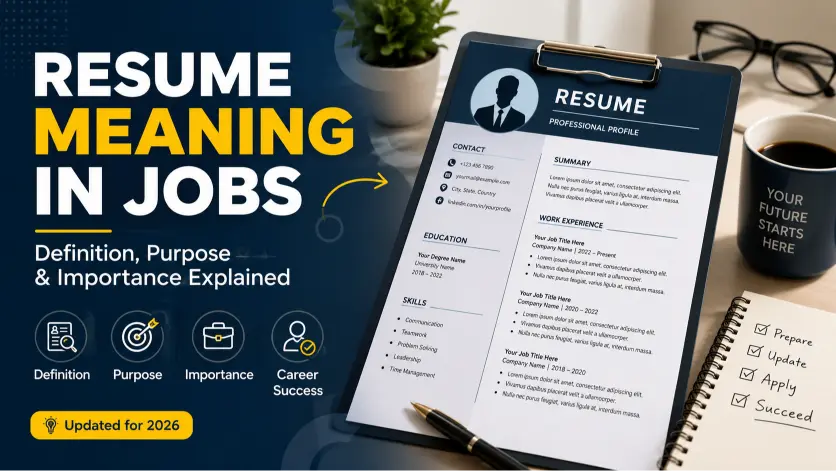
Applying for a job can feel overwhelming, especially when every employer asks for a resume. If you’ve ever searched for “resume meaning job” or wondered exactly what a resume is and why employers care so much about it, you’re not alone.
A resume is much more than a piece of paper or a PDF attachment. It’s your professional introduction. Before an employer meets you, your resume tells your story—your education, work experience, skills, achievements, and potential. In many cases, it determines whether you’ll receive an interview or be passed over.
Today, employers often receive hundreds of applications for a single position. That means your resume has only a few seconds to make a positive first impression. Understanding the resume meaning is the first step toward creating one that stands out.
In this guide, you’ll discover exactly what a resume means, where it originated, how it’s used in modern hiring, how it differs from a CV, and why it remains one of the most important career documents.
Whether you’re a student, recent graduate, or experienced professional, this guide will help you understand resumes with confidence.
What Does “Resume” Mean?
Quick Answer
Resume meaning: A resume is a concise document that summarizes your professional qualifications, including your education, work experience, skills, certifications, and accomplishments. It is used when applying for jobs to show employers why you’re a strong candidate.
Simply put, your resume is your personal marketing document.
Instead of telling your entire life story, it highlights the experiences and qualifications that are most relevant to the position you’re applying for.
Think of it like a movie trailer—it showcases the best parts and encourages the employer to learn more by inviting you for an interview.
Resume Definition
A resume is a formal employment document designed to provide hiring managers with a quick overview of your qualifications.
It usually includes:
- Contact information
- Professional summary
- Work experience
- Education
- Skills
- Certifications
- Awards
- Volunteer work (if relevant)
Unlike lengthy biographies, resumes focus only on information related to your career and the specific role you’re pursuing.
Pronunciation
Resume
Pronunciation (US):
REZ-uh-may
IPA:
/ˈrɛz.ə.meɪ/
Don’t confuse it with the verb resume, which means “to continue after stopping.”
For example:
- I will resume the meeting tomorrow.
- Please send your resume for the marketing position.
Although they’re spelled the same, context tells you which meaning is intended.
Origin of the Word “Resume”
The word resume comes from the French word résumé, meaning:
- summary
- brief account
- concise overview
The accent marks (é) are often omitted in English writing, so both résumé and resume are considered acceptable.
Originally, resumes were simply short summaries of a person’s education and employment history.
Over time, hiring practices evolved, and resumes became standardized documents used by employers worldwide.
Today, resumes are submitted digitally through:
- Company career websites
- LinkedIn Easy Apply
- Online job portals
- Email applications
- Applicant Tracking Systems (ATS)
Modern resumes are designed not only for recruiters but also for software that scans applications before a human even reads them.
How the Meaning Has Evolved
Decades ago, a resume was little more than a list of previous jobs.
Today’s resume serves many more purposes.
Modern resumes demonstrate:
- Professional value
- Measurable achievements
- Industry-specific skills
- Leadership experience
- Technical expertise
- Career growth
- Problem-solving ability
Instead of simply saying:
Worked as Sales Executive.
A modern resume says:
Increased annual sales by 32%, generated $450,000 in new business, and trained five new team members.
This shift reflects employers’ growing preference for measurable accomplishments over simple job descriptions.
Why Is a Resume Important?
Understanding the resume meaning also means understanding why employers ask for one.
A resume helps recruiters answer several important questions within seconds:
- Who is this candidate?
- What experience do they have?
- Do they have the required skills?
- Have they worked in similar roles?
- Are they worth interviewing?
Without a resume, employers would have no quick way to compare candidates fairly.
For job seekers, a strong resume can:
- Increase interview invitations
- Demonstrate professionalism
- Highlight achievements
- Showcase valuable skills
- Build credibility
- Differentiate you from other applicants
In competitive industries, even highly qualified candidates may struggle to secure interviews if their resumes are poorly organized or lack relevant details.
Resume vs CV: What’s the Difference?
One of the biggest sources of confusion is the difference between a resume and a CV.
| Resume | CV |
|---|---|
| 1–2 pages | Multiple pages |
| Tailored for each job | Comprehensive career history |
| Focuses on relevant experience | Includes all academic and professional achievements |
| Common in the US and Canada | Common in Europe, academia, and research |
| Used for most private-sector jobs | Used for academic, research, and medical positions |
Example
If you’re applying for a software developer role, your resume highlights:
- Programming languages
- Projects
- Technical skills
- Work experience
A CV, on the other hand, may also include:
- Research publications
- Conferences
- Teaching experience
- Grants
- Academic awards
- Full employment history
Because recruiters spend only a few seconds reviewing each application, resumes are intentionally concise and targeted.
Main Purpose of a Resume
A resume has one primary goal:
To convince an employer to invite you for an interview.
It is not meant to tell your entire life story.
Instead, it should quickly answer one question:
“Why should we hire you instead of someone else?”
A great resume accomplishes this by emphasizing your most relevant qualifications, measurable achievements, and the value you can bring to the organization.
How to Use a Resume Effectively for Job Applications
Understanding the resume meaning is only the beginning. Knowing how to use a resume correctly can dramatically improve your chances of getting hired.
A resume isn’t something you create once and send everywhere. The strongest resumes are tailored to each job. Even small changes—like updating your skills section or rewriting your professional summary—can make a big difference.
When Do You Need a Resume?
You’ll typically need a resume when applying for:
- Full-time jobs
- Part-time jobs
- Internships
- Apprenticeships
- Freelance opportunities
- Remote positions
- Government jobs
- Corporate careers
- Graduate programs
- Scholarships (in some cases)
Many employers now require resumes to be uploaded through online Applicant Tracking Systems (ATS), which automatically scan documents for relevant keywords before a recruiter reviews them.
Key Components of a Good Resume
A professional resume is usually divided into several sections. Each section has a specific purpose.
1. Contact Information
This should appear at the top of your resume and include:
- Full name
- Phone number
- Professional email address
- City and state (or country)
- LinkedIn profile (optional)
- Portfolio or personal website (if relevant)
Good Example
Sarah Johnson
Chicago, IL
(555) 123-4567
sarahjohnson@email.com
linkedin.com/in/sarahjohnson
2. Professional Summary
A professional summary is a short paragraph introducing your qualifications.
Example:
Results-driven marketing specialist with four years of experience in digital campaigns, SEO, and content strategy. Increased website traffic by 60% and managed successful campaigns for national brands.
Keep this section concise—typically three to five lines.
3. Work Experience
This is often the most important part of your resume.
Include:
- Job title
- Company name
- Location
- Employment dates
- Key achievements
Instead of listing responsibilities, focus on accomplishments.
Weak Example
- Managed customer service.
Better Example
- Resolved more than 150 customer inquiries weekly while maintaining a 98% customer satisfaction rating.
Numbers make your achievements more credible and memorable.
4. Education
Include:
- Degree
- School or university
- Graduation year
- Honors (if applicable)
Example:
Bachelor of Business Administration
University of Texas
Graduated: 2024
5. Skills
List skills relevant to the position.
Examples include:
Technical Skills
- Microsoft Excel
- SQL
- Python
- Adobe Photoshop
- Google Analytics
Soft Skills
- Communication
- Leadership
- Problem-solving
- Teamwork
- Time management
6. Certifications
Professional certifications can strengthen your application.
Examples:
- Google Data Analytics Certificate
- AWS Certified Cloud Practitioner
- PMP Certification
- HubSpot Content Marketing
- Meta Digital Marketing Associate
7. Awards and Achievements
Include accomplishments that demonstrate excellence.
Examples:
- Employee of the Month
- Dean’s List
- Salesperson of the Year
- Leadership Award
Different Types of Resumes
Not every job seeker should use the same format.
Chronological Resume
This is the most common format.
It lists your work history starting with the most recent position.
Best for:
- Professionals with consistent work experience
- Career growth within one industry
Functional Resume
Focuses on skills instead of employment history.
Best for:
- Career changers
- Students
- Recent graduates
- People returning to work after a career break
Combination Resume
Blends skills and work history.
Best for:
- Experienced professionals
- Technical careers
- Management positions
Targeted Resume
Customized specifically for one job.
This type often performs best because it closely matches the employer’s requirements.
How to Use “Resume” Correctly in Everyday Language
The word resume appears in many everyday conversations about employment.
Here are some common examples.
Between Friends
Alex: Did you apply for the marketing job?
Emma: Not yet. I’m updating my resume tonight.
Meaning: Emma is revising her job application document before applying.
Job Interview
Recruiter: Could you bring a printed copy of your resume?
Candidate: Absolutely. I’ll bring several copies.
Meaning: The employer wants a physical version for the interview.
College Career Center
Student: Can someone review my resume?
Advisor: Of course. Let’s improve your professional summary first.
Meaning: The student wants feedback before submitting job applications.
Family Conversation
Parent: Have you finished your resume?
Graduate: Almost. I just need to add my internship.
Meaning: The graduate is preparing to enter the workforce.
Remote Job Application
Hiring Manager: Please upload your resume in PDF format.
Applicant: Done! I’ve also included my portfolio.
Meaning: The employer requires a digital resume for consideration.
Tips for Writing a Strong Resume
A few best practices can significantly improve your resume’s effectiveness.
Keep It Short
One page is ideal for students and early-career professionals.
Two pages are acceptable for experienced candidates with extensive achievements.
Use Action Verbs
Instead of passive wording, begin bullet points with strong verbs such as:
- Managed
- Created
- Designed
- Increased
- Developed
- Improved
- Organized
- Implemented
- Led
- Achieved
These verbs make your accomplishments sound more impactful.
Quantify Your Results
Whenever possible, include measurable outcomes.
Instead of:
- Improved sales.
Write:
- Increased quarterly sales by 28%.
Numbers help recruiters understand the real impact of your work.
Tailor Each Resume
Customize your resume for every application by:
- Matching important keywords from the job description.
- Highlighting the most relevant experience.
- Reordering skills to align with the role.
- Updating your professional summary.
This approach improves your chances of passing ATS screenings and catching the recruiter’s attention.
Proofread Carefully
Spelling or grammar mistakes can create a negative impression.
Before submitting your resume:
- Check spelling.
- Verify dates.
- Confirm company names.
- Ensure formatting is consistent.
- Save the file as a PDF unless another format is requested.
Common Resume Mistakes
Many qualified candidates lose opportunities because of avoidable mistakes.
Here are the most common ones.
1. Using the Same Resume for Every Job
Each position has unique requirements.
Sending a generic resume often reduces your chances of being shortlisted.
2. Including Irrelevant Information
Avoid listing outdated or unrelated experiences that don’t support your application.
Keep your content focused on what matters to the employer.
3. Writing Long Paragraphs
Recruiters skim resumes quickly.
Use concise bullet points instead of lengthy blocks of text.
4. Ignoring ATS Keywords
Many companies use Applicant Tracking Systems.
If your resume lacks relevant keywords from the job description, it may never reach a human recruiter.
5. Using an Unprofessional Email Address
Instead of:
Use:
A professional email address reinforces your credibility.
6. Exaggerating Qualifications
Be honest about your experience and skills.
Employers often verify information during interviews or background checks.
False claims can damage your reputation and cost you the opportunity.
Related Job Search Terms and Career Vocabulary
Understanding the resume meaning becomes even easier when you know other common hiring and recruitment terms. These words often appear together in job postings and career advice.
| Term | Meaning | When It’s Used |
|---|---|---|
| CV (Curriculum Vitae) | A detailed record of your academic and professional history. | Academic, research, and international job applications. |
| Cover Letter | A personalized letter explaining why you’re the right fit for a job. | Sent alongside a resume for many applications. |
| Portfolio | A collection of work samples demonstrating your skills. | Common for designers, writers, developers, photographers, and marketers. |
| LinkedIn Profile | An online professional profile showcasing your experience and network. | Used by recruiters to learn more about candidates. |
| Reference | A person who can vouch for your skills and work ethic. | Requested during the later stages of hiring. |
| Applicant Tracking System (ATS) | Software employers use to organize and filter job applications. | Used by companies of all sizes. |
| Job Description (JD) | A document outlining the responsibilities and qualifications for a role. | Read before tailoring your resume. |
| Professional Summary | A brief introduction at the top of a resume highlighting your strengths. | Helps recruiters quickly understand your qualifications. |
| Work Experience | Your employment history, including job titles and achievements. | One of the most important resume sections. |
| Hard Skills | Technical or job-specific abilities, such as coding or accounting. | Frequently listed in job requirements. |
Synonyms
Depending on the country or context, a resume may also be referred to as:
- Employment profile
- Career summary
- Professional profile
- Job application document
- Résumé (French spelling)
Related Concepts
Although not exact synonyms, these are closely related:
- CV
- Curriculum Vitae
- Cover Letter
- Career Portfolio
- Professional Profile
FAQs:
What is the meaning of a resume in a job application?
A resume is a concise document that summarizes your qualifications, work experience, education, skills, and achievements. Employers review it to determine whether you’re a suitable candidate for a position and should be invited for an interview.
Is a resume required for every job?
Not always. Some entry-level, seasonal, or hourly jobs may only require a simple application form. However, most professional, corporate, technical, and management roles expect applicants to submit a resume.
What is the difference between a resume and a CV?
A resume is a brief, tailored document—usually one or two pages—focused on the qualifications most relevant to a specific job. A CV (Curriculum Vitae) is longer and provides a comprehensive overview of your academic background, publications, certifications, research, and full employment history.
How long should a resume be?
For most job seekers, a one-page resume is ideal. Candidates with significant experience, leadership roles, or specialized expertise may use a two-page resume if every section adds value.
Can students create a resume without work experience?
Absolutely. Students can include education, academic projects, internships, volunteer work, certifications, extracurricular activities, leadership roles, and relevant skills to demonstrate their potential to employers.
Should I customize my resume for each job?
Yes. Tailoring your resume to match the job description increases your chances of passing Applicant Tracking System (ATS) scans and catching the attention of hiring managers. Focus on highlighting the skills and experiences most relevant to the role.
What file format should I use when sending my resume?
PDF is generally the preferred format because it preserves formatting across different devices and operating systems. Only use another format, such as Microsoft Word, if the employer specifically requests it.
conclusion:
Understanding the resume meaning is the foundation of a successful job search. A resume is far more than a list of previous jobs it’s your professional introduction and one of the most powerful tools for showcasing your skills, experience, and achievements.
Whether you’re applying for your first internship, switching careers, or pursuing a leadership position, investing time in creating a clear, tailored, and well-organized resume can significantly improve your chances of landing interviews.
Remember, every resume should be customized for the role you’re applying for. Highlight measurable accomplishments, use strong action verbs, and keep your information concise and relevant. A polished resume doesn’t just tell employers what you’ve done—it shows them the value you can bring to their organization.
Ready to take the next step? Update your resume today, tailor it to your target job, and start applying with confidence. If you found this guide helpful, explore more career resources and share it with someone preparing for their next job opportunity.

I’m Lina Roys, a passionate writer behind Storevian, where I make words, phrases, slang, and everyday expressions easy to understand. I create clear, engaging, and reader-friendly content to help people find the meanings they’re looking for, quickly and confidently.


