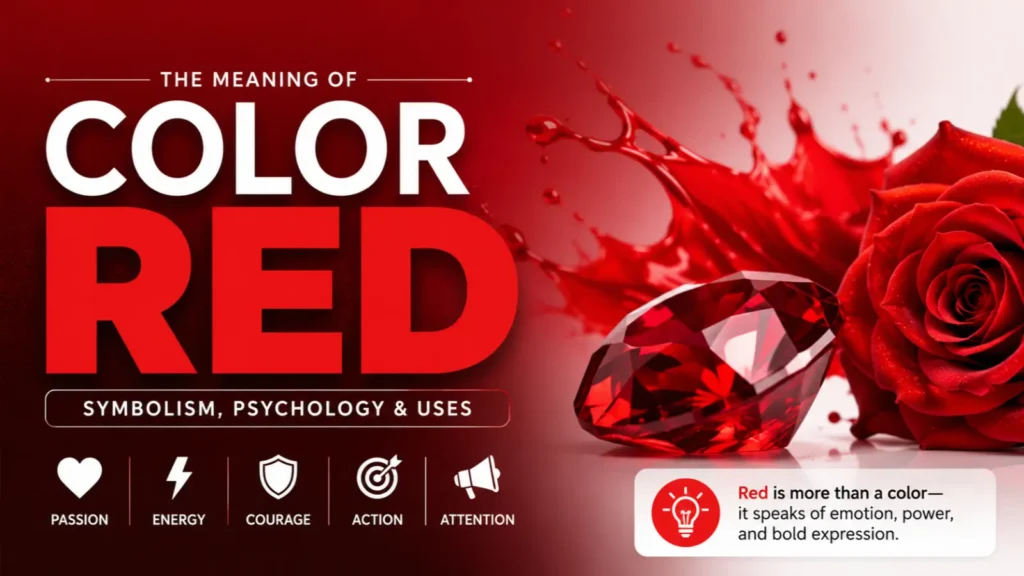
Have you ever wondered why a red rose instantly feels romantic, a red traffic light demands your attention, or athletes wearing red often seem more intimidating? That’s because the color red meaning goes far beyond simply being a bright shade it carries deep emotional, psychological, cultural, and spiritual significance that has influenced people for thousands of years.
From ancient civilizations to today’s digital world, red has remained one of the most powerful colors humans use to communicate emotion without saying a single word. It can symbolize passionate love, fearless courage, celebration, and confidence.
Yet in different situations, the very same color can also represent anger, danger, warning, or sacrifice.
Whether you’re curious about color psychology, choosing colors for branding, exploring spiritual symbolism, decorating your home, or simply trying to understand why red evokes such strong emotions, this guide covers everything you need to know.
This comprehensive resource explains the origins, symbolism, psychology, cultural meanings, and practical uses of red using clear language and real-world examples.
What Does the Color Red Mean?
Quick Answer
Color red meaning generally represents passion, love, strength, courage, excitement, power, and energy. However, depending on the culture or context, it can also symbolize danger, warning, anger, sacrifice, or good luck.
Red sits at one end of the visible light spectrum and naturally attracts the human eye more than almost any other color. Because of this, people have associated it with intense emotions and important events throughout history.
Unlike softer colors such as blue or green, red rarely goes unnoticed. It demands attention. That’s one reason emergency vehicles, stop signs, warning labels, and sale advertisements often use red.
At the same time, red is also deeply connected to human life itself. Blood, fire, and the beating heart have all contributed to the symbolic meaning of red across civilizations. These natural connections explain why the color often represents vitality, survival, and strong emotional experiences.
Pronunciation
Red /red/
Simple, short, and universally recognized, the word comes from the Old English term rēad, which has Germanic roots dating back more than a thousand years.
The Origin of Red Symbolism
Long before written language existed, humans were already using red pigments made from iron-rich ochre in cave paintings. Archaeologists have discovered red-colored artwork dating back over 40,000 years, making it one of humanity’s oldest symbolic colors.
Ancient Egyptians associated red with both life and destruction.
Romans connected it with military victory and strength.
Chinese culture embraced red as the color of prosperity and happiness.
Many Indigenous cultures viewed red as representing life, earth, and spiritual protection.
These diverse interpretations eventually shaped the modern understanding of red that we still recognize today.
Why Does Red Feel So Powerful?
Scientists believe red affects us more intensely than many other colors because our brains naturally associate it with survival.
Historically, seeing red could indicate:
- Fire
- Blood
- Ripe fruit
- Danger
- Physical strength
These associations developed over thousands of years, making red one of the most emotionally stimulating colors humans perceive.
Modern studies in color psychology also suggest that exposure to red may temporarily increase alertness, excitement, and even heart rate in some situations. While individual responses vary, there’s little doubt that red captures attention more effectively than most other colors.
Key Symbolic Meanings of Red
Depending on where and how it’s used, red can represent many different ideas.
❤️ Love
Red roses, Valentine’s Day decorations, and heart symbols have made red the universal color of romance and affection.
🔥 Passion
Whether discussing art, sports, careers, or relationships, red often symbolizes enthusiasm and intense emotional commitment.
💪 Strength
Throughout history, warriors, athletes, and leaders have worn red to communicate bravery, confidence, and determination.
⚡ Energy
Many sports brands and energy drink companies use red because it creates feelings of movement, excitement, and action.
🚨 Danger
Stop signs, warning labels, and emergency lights rely on red because the human eye notices it quickly.
😠 Anger
Expressions like “seeing red” show how the color has become closely connected with frustration and rage.
👑 Power
Kings, emperors, religious leaders, and political figures have historically worn shades of red to demonstrate authority and prestige.
Why the Meaning Changes
One fascinating aspect of color red meaning is that it isn’t fixed. Instead, its symbolism changes based on several factors:
- Culture
- Religion
- Personal experiences
- Historical traditions
- Social context
- Modern media
- Psychological associations
For example, wearing red to a wedding means celebration in China, while in many Western countries, brides traditionally wear white instead.
Similarly, a flashing red light on your dashboard signals danger, but a red carpet at an awards ceremony symbolizes honor and prestige.
These shifting meanings are exactly what make red one of the richest and most fascinating colors in human history.
Color Red Psychology
Color psychology explores how different colors influence human emotions, behaviors, and decision-making. Among all colors, color red meaning stands out because it often creates the strongest emotional response.
Red is considered a high-arousal color, meaning it can make people feel more alert, energetic, and emotionally engaged. While reactions vary from person to person, red consistently attracts attention faster than most other colors.
How Red Affects the Mind
When people see red, they often experience feelings associated with intensity rather than calmness.
Common emotional responses include:
- Excitement
- Confidence
- Passion
- Motivation
- Determination
- Urgency
- Alertness
This explains why red is widely used in sports uniforms, advertising, warning signs, and promotional sales.
For example, a red “Limited Time Offer” banner naturally feels more urgent than the same message displayed in gray or blue.
Why Brands Use Red
Many global companies incorporate red into their branding because it creates instant visual impact.
Red is often chosen to communicate:
- Energy
- Confidence
- Action
- Boldness
- Passion
- Appetite
- Speed
Fast-food restaurants frequently use red because studies suggest warm colors can encourage excitement and stimulate appetite. Retailers also rely on red during seasonal sales because it conveys urgency and encourages quick decision-making.
However, using too much red can overwhelm viewers. Successful brands usually balance it with neutral colors like white, black, or gray.
Red and Human Behavior
Research in color psychology suggests red may influence behavior in subtle ways.
Some studies indicate red can:
- Increase attention to detail
- Make warnings feel more serious
- Create a sense of urgency
- Encourage faster decision-making
- Enhance perceptions of confidence and dominance
At the same time, excessive exposure to bright red may contribute to feelings of stress or agitation for some people.
That’s why hospitals, spas, and meditation centers usually favor calming colors like blue or green instead of bright red.
Emotional Meanings of Red
The emotional symbolism of red changes depending on the situation.
| Situation | Common Meaning |
|---|---|
| Valentine’s Day | Love and romance |
| Sports | Power and determination |
| Emergency signs | Danger and caution |
| Graduation ceremonies | Achievement and celebration |
| Political events | Strength or ideology |
| Luxury branding | Prestige and confidence |
Context is everything. The same shade of red can communicate completely different emotions depending on where it’s used.
The Symbolism of Red Throughout History
The symbolism of red stretches back thousands of years, making it one of the oldest meaningful colors in human civilization.
Because red appears naturally in blood, fire, sunsets, and certain minerals, early humans gave it powerful symbolic significance long before written history.
Ancient Civilizations
Ancient Egypt
Egyptians viewed red as a color of both life and destruction.
It represented:
- Vitality
- Protection
- Fire
- Chaos
- The desert
Red pigments were commonly used in artwork, ceremonies, and sacred objects.
Ancient Rome
For Romans, red symbolized military success and authority.
Victorious generals often wore red garments during triumphal processions, while soldiers carried red standards into battle to project courage and strength.
Ancient China
Red became deeply connected with happiness and prosperity.
For centuries it has symbolized:
- Luck
- Wealth
- Celebration
- Joy
- Success
Even today, red decorations dominate Lunar New Year celebrations and traditional Chinese weddings.
Medieval Europe
During the Middle Ages, red carried religious significance.
It often represented:
- Sacrifice
- Martyrdom
- Divine love
- Courage
Kings and high-ranking clergy also wore rich crimson robes to display authority and status.
Spiritual Meaning of Red
Beyond psychology and culture, color red meaning also carries deep spiritual symbolism.
Many spiritual traditions associate red with physical life, grounding, courage, and protection.
Rather than representing higher consciousness like purple or white, red is closely tied to earthly existence and survival.
Red and the Root Chakra
In many Eastern spiritual practices, red is linked to the Root Chakra, the first of the body’s seven primary energy centers.
The Root Chakra is believed to govern:
- Stability
- Safety
- Physical health
- Survival
- Security
- Family
- Grounding
When this energy center feels balanced, people often experience confidence, resilience, and emotional stability.
When it’s blocked, they may feel anxious, insecure, or disconnected.
Because of this association, red gemstones, clothing, candles, and meditation tools are often used during grounding practices.
Red as a Symbol of Life Force
Across many cultures, red represents the energy that sustains life.
Its connection to blood naturally links it with:
- Vitality
- Strength
- Courage
- Physical endurance
- Determination
This symbolism explains why many warriors historically painted themselves red before battle or carried red banners into combat.
Protection and Courage
In various spiritual traditions, red is believed to provide protection against negative influences.
Many people wear:
- Red bracelets
- Red strings
- Red beads
- Red charms
as symbols of safety, strength, or good fortune.
While these practices vary by culture and belief system, the underlying idea remains remarkably consistent: red represents resilience and protection.
Red in Meditation
Although meditation is often associated with calming colors, red has its place as well.
People may meditate using red imagery when focusing on:
- Building confidence
- Increasing motivation
- Overcoming fear
- Feeling grounded
- Developing courage
The goal isn’t relaxation alone it’s strengthening one’s sense of stability and personal power.
What Red Means in Different Cultures
One reason color red meaning is so fascinating is that it changes dramatically across cultures.
While certain themes such as energy and importance appear worldwide, many interpretations are unique to specific traditions.
Western Cultures
In much of North America and Europe, red commonly symbolizes:
- Love
- Romance
- Passion
- Danger
- Anger
- Courage
- Celebration
Examples include:
- Valentine’s Day hearts
- Stop signs
- Fire trucks
- Red carpets
- Holiday decorations
China
In Chinese culture, red is one of the luckiest colors.
It represents:
- Prosperity
- Happiness
- Success
- Wealth
- Celebration
- Good fortune
Red envelopes filled with money are traditionally given during Lunar New Year and weddings as symbols of blessings and prosperity.
India
Red carries significant cultural and spiritual importance.
It often symbolizes:
- Marriage
- Fertility
- Purity
- Strength
- Prosperity
Many brides traditionally wear red wedding attire, reflecting joy, commitment, and new beginnings.
Japan
In Japan, red is associated with:
- Life
- Energy
- Protection
- Happiness
It is commonly seen in festivals, shrines, traditional architecture, and national symbols.
South Africa
Interestingly, red has a very different meaning in South Africa, where it may represent mourning and remembrance in certain national contexts.
This highlights how cultural symbolism can vary significantly around the world.
Middle Eastern Traditions
In different parts of the Middle East, red may symbolize:
- Courage
- Protection
- Sacrifice
- Strength
Interpretations differ by country, religion, and historical tradition.
A Universal Color With Different Stories
Although meanings vary, one pattern remains consistent:
Red is rarely viewed as an ordinary color.
Instead, it almost always represents something emotionally powerful whether that’s love, celebration, danger, courage, or spiritual strength.
That universal emotional intensity is what has made red one of humanity’s most meaningful colors for thousands of years.
Red in Love and Relationships
Perhaps no association is stronger than the connection between color red meaning and love. Across much of the world, red has become the universal color of romance, passion, and deep emotional connection.
From Valentine’s Day decorations to red roses and heart emojis, red communicates affection without needing words.
But why?
One reason is its connection to the human body. Blushing cheeks, a racing heartbeat, and increased blood flow are all physical signs of attraction and excitement. Over time, these natural responses helped establish red as a symbol of love and desire.
Romantic Love
In romantic settings, red often represents:
- Passion
- Desire
- Attraction
- Devotion
- Intimacy
- Emotional intensity
This is why gifts wrapped in red, bouquets of red roses, and red-themed celebrations are common expressions of love.
Example
A bouquet of white flowers may symbolize purity, while a bouquet of red roses sends a much stronger romantic message.
Friendship and Family
Although red is strongly associated with romance, it can also symbolize:
- Loyalty
- Protection
- Deep family bonds
- Courage
- Sacrifice
Many national flags use red to honor those who sacrificed for their country, showing that the color represents more than romantic feelings.
Red Heart Emoji ❤️ Meaning
In digital communication, the ❤️ emoji is one of the most recognizable symbols of love.
Depending on the conversation, it can express:
- Romantic affection
- Appreciation
- Gratitude
- Emotional support
- Friendship
- Excitement
Its exact meaning depends on the relationship between the people using it.
Red in Business, Branding, and Marketing
Businesses understand the psychology behind color red meaning, which is why many of the world’s most recognizable brands use it.
Red captures attention faster than most colors, making it highly effective in competitive markets.
Why Companies Choose Red
Red communicates:
- Confidence
- Energy
- Excitement
- Action
- Passion
- Urgency
That’s why you’ll often see red used for:
- Sale banners
- Call-to-action buttons
- Restaurant branding
- Sports brands
- Entertainment companies
A bold splash of red can guide customers’ eyes toward important information, encouraging them to take action.
Red in Advertising
Marketing campaigns often use red to create urgency.
Examples include:
- “Limited Time Offer”
- “Flash Sale”
- “Last Chance”
- “Buy Now”
These messages feel more immediate when displayed in red because the color naturally signals importance and action.
Red in Logos
Many famous brands incorporate red into their visual identity because it helps them appear:
- Energetic
- Memorable
- Bold
- Dynamic
- Confident
However, successful branding rarely relies on red alone. Designers typically pair it with white, black, silver, or other neutral colors to create balance and improve readability.
Positive and Negative Meanings of Red
Like many symbols, color red meaning has both uplifting and cautionary interpretations.
Understanding both sides helps explain why the color is so emotionally powerful.
Positive Meanings
Red often symbolizes:
- ❤️ Love
- 💪 Strength
- 🔥 Passion
- ⚡ Energy
- 🦁 Courage
- 🎉 Celebration
- 👑 Leadership
- 🏆 Success
- ❤️ Confidence
- 🌹 Romance
These meanings explain why red appears during celebrations, sporting events, and important ceremonies around the world.
Negative Meanings
In other situations, red can represent:
- Danger
- Anger
- Aggression
- Violence
- Warning
- Risk
- Stress
- Conflict
- Impulsiveness
- Emergency
Think about stop signs, emergency alarms, or warning labels they all use red because it immediately captures attention and signals caution.
Context Makes All the Difference
A red rose and a red stop sign communicate completely different messages.
Likewise:
- A red wedding dress may symbolize joy in one culture.
- A red warning light signals immediate attention.
- A red carpet represents honor and prestige.
- A red mark on a school paper often indicates a mistake.
The surrounding context determines which meaning people interpret.
Red in Dreams
Dreams often use colors symbolically, and red is one of the most emotionally charged colors that can appear.
While dream interpretations are personal and vary between traditions, red frequently reflects strong emotions or significant life events.
Common Dream Interpretations
Dreaming about red may symbolize:
- Passion
- Strong emotions
- Courage
- Anger
- Transformation
- Warning
- Personal energy
For example, dreaming of a bright red flower might represent love or new beginnings, while a flashing red light could symbolize caution or an unresolved issue demanding attention.
It’s important to consider the entire dream not just the color when interpreting its meaning.
Red Personality Traits
People who naturally gravitate toward red are often described as energetic, confident, and ambitious. While favorite colors don’t determine personality, color preference can sometimes reflect aspects of someone’s style or mood.
Individuals who love red are commonly associated with:
- Confidence
- Passion
- Determination
- Leadership
- Courage
- Enthusiasm
- Competitiveness
- Bold decision-making
They often enjoy taking initiative, embracing challenges, and expressing themselves openly.
On the other hand, an excessive attraction to intense red may occasionally reflect impatience or a preference for fast-paced environments.
Remember, personality is shaped by many factors, so favorite colors should be viewed as fun insights rather than scientific facts.
FAQs:
What does the color red symbolize?
The color red commonly symbolizes love, passion, courage, strength, energy, and power. Depending on the situation, it can also represent danger, warning, anger, or urgency. Its meaning changes based on culture, context, and personal interpretation.
Why is red associated with love?
Red has long been connected to love because it reflects passion, desire, and the symbolism of the human heart. Physical responses such as blushing and an increased heartbeat have also strengthened this association over time.
Is red a lucky color?
In many cultures, especially in China, red is considered a lucky color that represents prosperity, happiness, success, and celebration. However, not every culture assigns the same meaning to red.
What does red mean spiritually?
Spiritually, red often symbolizes vitality, protection, grounding, courage, and life force. It is closely linked to the Root Chakra in many spiritual traditions and represents stability and physical energy.
Why is red used for warning signs?
Red naturally attracts attention more quickly than many other colors. Because of this visibility and its association with danger, it is widely used for stop signs, emergency signals, hazard labels, and safety equipment.
Can red have both positive and negative meanings?
Yes. Red is a highly symbolic color with dual meanings. It can represent love, confidence, and celebration in one context while symbolizing anger, danger, or aggression in another.
Does the meaning of red vary across cultures?
Absolutely. In Western cultures, red often symbolizes romance and warning. In China, it represents luck and prosperity, while in India it is associated with marriage and celebration. Other cultures may connect red with courage, sacrifice, or remembrance.
Is wearing red associated with confidence?
Many people perceive red clothing as bold and confident because the color naturally stands out. Research in color psychology also suggests that red can influence how people perceive confidence and authority in certain situations.
Conclusion:
The color red meaning is far richer than simply representing love or danger. Across psychology, spirituality, history, and culture, red has become one of the world’s most powerful symbols, communicating everything from courage and celebration to urgency and sacrifice.
Whether you’re choosing colors for your brand, decorating a space, interpreting a dream, or simply curious about symbolism, understanding the many meanings of red can help you communicate more effectively and appreciate the stories colors tell.
Now it’s your turn! What does the color red mean to you? Share your thoughts in the comments below, and explore our other guides on color symbolism to discover the fascinating meanings behind blue, green, black, white, and more.

I’m Lina Roys, a passionate writer behind Storevian, where I make words, phrases, slang, and everyday expressions easy to understand. I create clear, engaging, and reader-friendly content to help people find the meanings they’re looking for, quickly and confidently.


