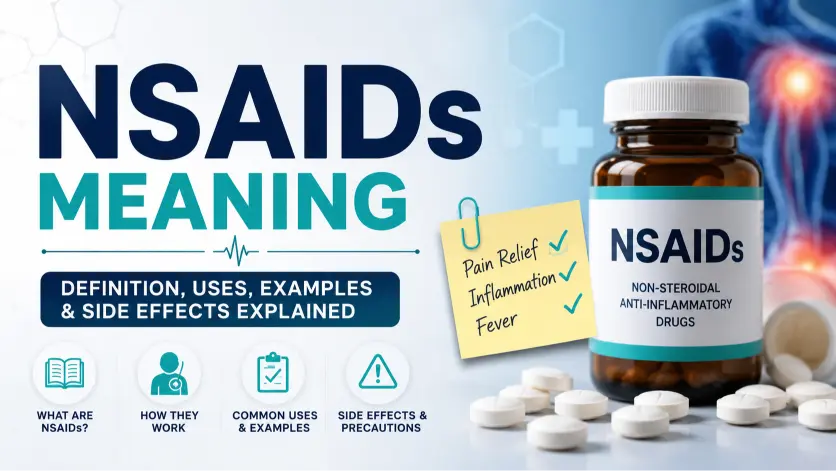
You’ve probably seen NSAIDs mentioned on a medicine bottle, prescription label, or health website and wondered what it actually means. Maybe your doctor recommended ibuprofen for back pain or suggested avoiding NSAIDs before surgery. But what exactly are they, and why are they so commonly used?
The NSAIDs meaning is much simpler than the medical name suggests. NSAIDs are a class of medications that help relieve pain, reduce inflammation, and lower fever without using steroid hormones. Millions of people rely on them every day to manage everything from headaches and sprained ankles to arthritis and menstrual cramps.
Updated for 2026, this guide explains what NSAIDs are, how they work, when they’re appropriate to use, common examples, potential risks, and frequently asked questions. Whether you’re a patient, caregiver, student, or simply curious, you’ll find clear, practical answers without confusing medical jargon.
What Does NSAIDs Mean?
Quick Answer: NSAIDs stands for Nonsteroidal Anti-Inflammatory Drugs. These medicines reduce pain, inflammation, and fever by blocking enzymes that produce prostaglandins—chemicals responsible for pain and swelling.
Unlike steroid medications such as prednisone, NSAIDs don’t contain steroid hormones. That’s exactly what the word “nonsteroidal” means.
They are among the most frequently prescribed and purchased medications worldwide because they are effective for many everyday aches and chronic inflammatory conditions.
NSAIDs Full Form
- N — Non
- S — Steroidal
- A — Anti-
- I — Inflammatory
- D — Drugs
Pronunciation:
EN-seds (commonly pronounced “en-sedz”)
Origin of the Term
The medical community introduced the term NSAID in the 1960s to distinguish these medicines from corticosteroids.
As more anti-inflammatory drugs became available, doctors needed a way to separate steroid-based treatments from medicines like aspirin and ibuprofen.
Today, “NSAID” is a standard medical abbreviation recognized worldwide.
How Do NSAIDs Work?
When your body experiences an injury or infection, it produces substances called prostaglandins.
These chemicals help cause:
- Pain
- Swelling
- Fever
- Redness
NSAIDs work by blocking enzymes known as COX-1 and COX-2.
Blocking these enzymes reduces prostaglandin production, leading to:
- Less pain
- Reduced inflammation
- Lower fever
- Improved movement
This is why NSAIDs are commonly recommended after injuries, dental procedures, or surgeries.
Common Examples of NSAIDs
Some of the most widely used NSAIDs include:
| Medication | Common Brand Examples | Primary Use |
|---|---|---|
| Ibuprofen | Advil, Motrin | Pain, fever, inflammation |
| Naproxen | Aleve | Arthritis and long-lasting pain |
| Aspirin | Bayer Aspirin | Pain relief and heart protection (low dose) |
| Diclofenac | Voltaren | Joint and muscle pain |
| Celecoxib | Celebrex | Arthritis with lower stomach irritation |
| Indomethacin | Indocin | Severe inflammatory disorders |
These medicines may be available over the counter or by prescription, depending on the country and dosage.
What Conditions Are NSAIDs Used For?
Doctors commonly recommend NSAIDs for:
- Arthritis
- Osteoarthritis
- Rheumatoid arthritis
- Back pain
- Neck pain
- Sports injuries
- Sprains and strains
- Muscle soreness
- Toothaches
- Migraines
- Headaches
- Fever
- Menstrual cramps
- Gout attacks
- Post-operative pain
They are especially useful when inflammation is contributing to pain.
Why Are NSAIDs So Popular?
NSAIDs are popular because they can treat multiple symptoms at once.
Instead of only masking pain, they also reduce inflammation, which often addresses the underlying cause of discomfort.
Benefits include:
- Fast pain relief
- Reduced swelling
- Lower fever
- Improved mobility
- Widely available
- Affordable
- Effective for short-term and many chronic conditions
How to Use NSAIDs Correctly
Using NSAIDs safely is just as important as knowing what they are. While these medications are highly effective, taking them incorrectly can increase the risk of side effects.
Follow the Recommended Dosage
Always use the smallest effective dose for the shortest time needed. Taking more than the recommended amount won’t necessarily provide better pain relief—it may only increase the chance of complications.
Take with Food or Milk
Many NSAIDs can irritate the stomach lining. Taking them after a meal or with milk may help reduce stomach discomfort.
Stay Hydrated
Proper hydration supports kidney function, especially if you’re taking NSAIDs for several days.
Avoid Mixing Multiple NSAIDs
Don’t take two NSAIDs together unless your healthcare provider specifically advises it. For example, avoid combining ibuprofen and naproxen, as this can raise the risk of stomach bleeding and other side effects.
Read Medicine Labels Carefully
Many cold, flu, and pain-relief products already contain an NSAID. Check the ingredients to avoid accidentally taking too much.
When Should You Avoid NSAIDs?
Although NSAIDs are generally safe when used correctly, they aren’t suitable for everyone.
Talk to a healthcare professional before using NSAIDs if you have:
- A history of stomach ulcers or gastrointestinal bleeding
- Kidney disease
- Severe liver disease
- Heart failure
- Uncontrolled high blood pressure
- Asthma triggered by NSAIDs
- A known allergy to aspirin or other NSAIDs
Pregnant individuals—especially during the later stages of pregnancy—should only use NSAIDs if advised by a healthcare provider.
Possible Side Effects of NSAIDs
Most people experience no serious problems when using NSAIDs occasionally. However, like all medicines, they can cause side effects.
Common Side Effects
- Upset stomach
- Heartburn
- Nausea
- Indigestion
- Mild dizziness
- Headache
- Bloating
These symptoms often improve when the medication is taken with food.
Serious Side Effects
Seek immediate medical attention if you experience:
- Black or bloody stools
- Vomiting blood
- Severe stomach pain
- Chest pain
- Difficulty breathing
- Swelling of the face or throat
- Sudden weakness or numbness
- Reduced urination
Although uncommon, these symptoms may indicate a serious reaction that requires urgent treatment.
Real-Life Examples of NSAID Use
Understanding real-world situations can make the NSAIDs meaning easier to remember.
Example 1: Headache
Sarah develops a tension headache after working on her computer all day.
Her pharmacist recommends ibuprofen to reduce both pain and inflammation.
Why it works: Ibuprofen blocks prostaglandins that contribute to headache pain.
Example 2: Sports Injury
James twists his ankle during a football match.
His doctor recommends resting the ankle, applying ice, and taking naproxen for a few days.
Why it works: Naproxen reduces swelling while easing pain, making recovery more comfortable.
Example 3: Arthritis
Linda has osteoarthritis in both knees.
Her physician prescribes celecoxib to help reduce joint inflammation and improve mobility.
Why it works: Chronic inflammation is one of the main causes of arthritis pain.
Example 4: Dental Pain
After having a wisdom tooth removed, Michael takes ibuprofen as directed by his dentist.
Why it works: NSAIDs help control pain and reduce swelling after dental procedures.
Example 5: Menstrual Cramps
Emma experiences painful menstrual cramps every month.
Her healthcare provider recommends an NSAID shortly before her symptoms usually begin.
Why it works: NSAIDs reduce the prostaglandins responsible for uterine contractions and cramping.
Common Mistakes and Misunderstandings
Many people misunderstand what NSAIDs are or how they should be used.
Mistake 1: Thinking All Painkillers Are NSAIDs
Not every pain reliever belongs to this group.
For example, acetaminophen (paracetamol) reduces pain and fever but is not an NSAID because it has very little anti-inflammatory effect.
Mistake 2: Taking NSAIDs for Longer Than Recommended
Some people continue using NSAIDs daily for weeks or months without medical supervision.
Long-term use can increase the risk of:
- Stomach ulcers
- Internal bleeding
- Kidney damage
- Heart-related complications
Mistake 3: Assuming Over-the-Counter Means Risk-Free
Medicines sold without a prescription are still powerful drugs.
Even common NSAIDs like ibuprofen can cause serious side effects if taken incorrectly or at high doses.
NSAIDs vs. Other Pain Relievers
| Feature | NSAIDs | Acetaminophen (Paracetamol) | Corticosteroids |
|---|---|---|---|
| Reduces pain | ✅ | ✅ | ✅ |
| Reduces fever | ✅ | ✅ | Sometimes |
| Reduces inflammation | ✅ | ❌ Very little | ✅ Strongly |
| Contains steroids | ❌ | ❌ | ✅ |
| Best for swelling | ✅ | ❌ | ✅ |
NSAIDs Across Different Groups
Adults
Adults commonly use NSAIDs for headaches, muscle strains, arthritis, and fever.
Older Adults
Healthcare providers may recommend lower doses because older adults have a greater risk of stomach bleeding and kidney problems.
Athletes
Sports medicine specialists frequently recommend short-term NSAID use for sprains, strains, and tendon inflammation alongside rest and rehabilitation.
People with Chronic Conditions
Patients with arthritis or inflammatory diseases may use prescription NSAIDs under regular medical supervision to balance symptom relief with long-term safety.
Related Medical Terms
Understanding these related terms will deepen your knowledge of NSAIDs meaning.
| Term | Meaning |
|---|---|
| Analgesic | Medicine that relieves pain |
| Anti-inflammatory | Reduces inflammation |
| Antipyretic | Lowers fever |
| COX Enzyme | Enzyme involved in producing prostaglandins |
| Prostaglandins | Chemicals that trigger pain and inflammation |
| Aspirin | One of the oldest NSAIDs |
| Ibuprofen | Common over-the-counter NSAID |
| Naproxen | Long-lasting NSAID |
| Diclofenac | Prescription or topical NSAID |
| Celecoxib | COX-2 selective NSAID with lower stomach irritation |
FAQs:
Can I take NSAIDs every day?
Daily NSAID use should only be done under the guidance of a healthcare professional. While these medicines are effective for managing chronic pain and inflammation, long-term use may increase the risk of stomach ulcers, gastrointestinal bleeding, kidney damage, and heart-related problems. Your doctor may recommend regular monitoring if long-term treatment is necessary.
Are NSAIDs antibiotics?
No. NSAIDs and antibiotics are completely different types of medicines. NSAIDs reduce pain, inflammation, and fever, while antibiotics treat bacterial infections. Taking an NSAID won’t cure an infection, although it may temporarily relieve symptoms like pain or fever.
Is paracetamol an NSAID?
No. Paracetamol (also called acetaminophen in some countries) is not an NSAID. It relieves pain and reduces fever but has very little anti-inflammatory effect. That’s why it’s often recommended for conditions where inflammation isn’t the main cause of pain.
Which NSAID is strongest?
There isn’t a single “strongest” NSAID because effectiveness depends on the condition being treated and the individual patient. Prescription NSAIDs, such as diclofenac or celecoxib, may provide stronger anti-inflammatory effects than some over-the-counter options, but they also require careful medical supervision.
Can NSAIDs cause stomach problems?
Yes. One of the most common side effects of NSAIDs is stomach irritation. Long-term or high-dose use can increase the risk of ulcers, bleeding, and indigestion. Taking NSAIDs with food and following the recommended dosage can help reduce this risk, but persistent symptoms should be evaluated by a healthcare professional.
Can I take NSAIDs with other medicines?
Some medicines interact with NSAIDs, including blood thinners, certain blood pressure medications, steroids, and some antidepressants. Always inform your healthcare provider or pharmacist about all prescription medicines, over-the-counter products, and supplements you’re taking before starting an NSAID.
Conclusion:
The NSAIDs meaning is straightforward: NSAIDs stands for Nonsteroidal Anti-Inflammatory Drugs, a widely used class of medicines that help relieve pain, reduce inflammation, and lower fever. From headaches and muscle strains to arthritis and menstrual cramps, these medications play an important role in everyday healthcare.
Although NSAIDs are highly effective, using them responsibly is essential. Following the recommended dosage, avoiding unnecessary long-term use, and understanding possible side effects can help you benefit from these medicines while reducing potential risks.
Now that you understand the NSAIDs meaning, you’ll be better equipped to recognise common NSAID medications, know when they’re appropriate, and discuss them confidently with your healthcare provider whenever questions arise.

I’m Lina Roys, a passionate writer behind Storevian, where I make words, phrases, slang, and everyday expressions easy to understand. I create clear, engaging, and reader-friendly content to help people find the meanings they’re looking for, quickly and confidently.


