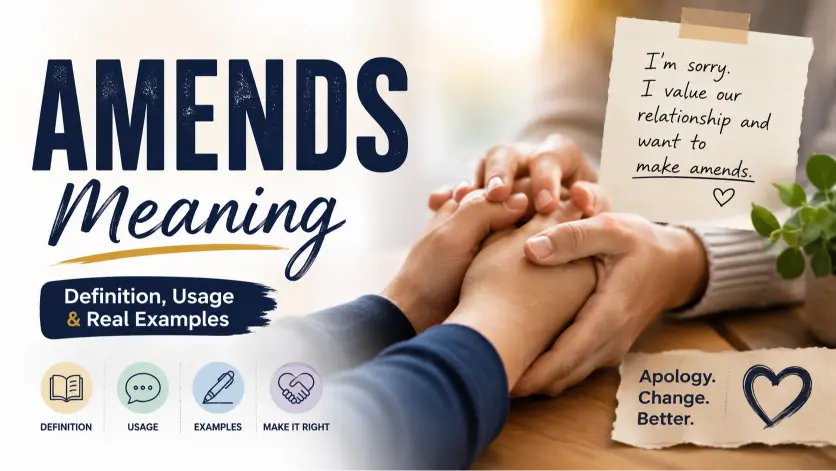
Have you ever heard someone say, “I need to make amends,” and wondered whether it simply means saying sorry?
You’re not alone. The make amends meaning is often misunderstood because many people assume it’s just another way to apologize. In reality, the phrase goes much deeper. It describes taking real responsibility for a mistake and actively working to repair the damage you’ve caused.
Whether you’ve come across this expression in everyday conversation, a movie, self-improvement books, Alcoholics Anonymous (AA), therapy sessions, or social media discussions, understanding its true meaning can help you communicate more honestly and build stronger relationships.
In this guide, you’ll discover exactly what make amends means, where the phrase originated, how to use it correctly, real-world examples, common misunderstandings, and similar expressions. By the end, you’ll know when saying “I’m sorry” is enough—and when it’s time to truly make amends.
What Does “Make Amends” Mean?
Quick Answer
Make amends means taking responsibility for something wrong you’ve done and making a genuine effort to repair the harm. It usually involves both sincere words and meaningful actions rather than an apology alone.
Simple Definition
The make amends meaning is:
To correct a mistake or repair the damage caused by your actions by doing something positive to restore trust or improve the situation.
Unlike a simple apology, making amends requires action.
For example:
- Returning money you borrowed.
- Fixing something you broke.
- Admitting your mistake publicly.
- Changing harmful behavior.
- Rebuilding someone’s trust over time.
The focus isn’t just on feeling guilty—it’s on making things better.
Pronunciation
Make amends
/meɪk əˈmɛndz/
Sounds like:
MAYK uh-MENDZ
Origin of the Phrase
The word amend comes from the Old French word amender, meaning to improve, repair, or correct. It ultimately traces back to the Latin emendare, meaning to remove faults or correct errors.
The expression make amends has existed in English for hundreds of years. Earlier legal writings used it when people compensated others after causing damage or injury.
Over time, the phrase expanded beyond legal situations and became common in everyday English.
Today, it’s frequently heard in:
- Personal relationships
- Family discussions
- Workplace conflicts
- Counseling and therapy
- Religious teachings
- Recovery programs such as Alcoholics Anonymous (AA)
In modern English, it usually refers to repairing emotional harm rather than financial damage.
Why “Make Amends” Is Different from Saying “Sorry”
Many learners confuse these expressions.
Here’s the key difference:
| Saying Sorry | Making Amends |
|---|---|
| Expresses regret | Repairs the damage |
| Uses words | Uses actions |
| Can happen immediately | Often takes time |
| May not rebuild trust | Shows commitment to change |
| Ends with an apology | Continues with positive action |
For example:
❌ “Sorry I broke your laptop.”
✅ “I’m sorry I broke your laptop. I’ll pay for the repairs.”
The second example is making amends because it includes action.
Examples of “Make Amends”
Here are some everyday examples:
Example 1
After missing his best friend’s wedding, Jake took him out for dinner and sincerely apologized to make amends.
Meaning: He tried to repair the friendship.
Example 2
Maria accidentally spread a rumor at work. She admitted her mistake to everyone to make amends.
Meaning: She corrected the damage she caused.
Example 3
After arguing with his parents, Liam spent the weekend helping around the house to make amends.
Meaning: His actions showed he wanted to rebuild trust.
Example 4
The company offered refunds to customers to make amends for delayed deliveries.
Meaning: The business tried to repair customer relationships.
Common Situations Where People Make Amends
People often make amends after:
- Hurting someone’s feelings
- Breaking a promise
- Telling a lie
- Damaging property
- Forgetting an important event
- Cheating in a relationship
- Making a poor business decision
- Saying something offensive
- Breaking trust
- Acting unfairly
The phrase applies to both personal and professional situations.
How to Use “Make Amends” Correctly in Texts & Chat
The phrase make amends is common in everyday English, but the way you use it depends on the situation. It generally carries a sincere and thoughtful tone, so it’s best used when someone genuinely wants to repair a relationship or fix a mistake.
Typical Tone
- ✅ Sincere
- ✅ Respectful
- ✅ Honest
- ✅ Reflective
- ✅ Empathetic
It is not usually used jokingly or sarcastically unless the speaker is being intentionally ironic.
Casual Text Messages
You might see messages like:
“I really messed up. Let me make amends.”
“How can I make amends for what happened?”
These sound natural between friends, partners, or family members.
The phrase is often used after misunderstandings.
Example:
Alex: I’m sorry I ignored your messages yesterday.
Sam: Thanks for reaching out.
Alex: I’d like to make amends. Can I take you out for coffee?
The phrase emphasizes that the speaker wants to do more than simply apologize.
Instagram & Facebook
People may use make amends in captions after sharing personal reflections or life updates.
Example:
“This year I’m focused on making amends and becoming a better person.”
X (Twitter)
Because of the platform’s short format, people often write:
“It’s time to make amends.”
or
“He finally made amends.”
The phrase is commonly seen during discussions about public apologies, celebrities, or sports controversies.
On Reddit, users frequently discuss making amends in relationship advice, recovery communities, and self-improvement threads. It usually refers to taking meaningful responsibility rather than offering empty apologies.
Discord
In gaming or community servers, someone might say:
“I’ll make amends for rage quitting yesterday.”
Even in casual spaces, the phrase signals accountability.
When NOT to Use “Make Amends”
Avoid using the phrase when:
- nothing harmful actually happened,
- you’re making a casual joke,
- you’re writing a highly technical document,
- you’re discussing something unrelated to mistakes or relationships.
For example:
❌ “I’ll make amends by bringing pizza because I’m hungry.”
Better:
✅ “I’ll bring pizza to make amends for being late.”
Here, the pizza is connected to repairing a mistake.
Formatting Tips
Unlike internet abbreviations, make amends is a standard English phrase.
- Usually written in lowercase.
- No periods are needed.
- No special capitalization unless it starts a sentence.
- Often paired with sincere emojis in casual chats:
- 🙏
- ❤️
- 🤝
- 😔
- 💙
Example:
Example 1: Between Friends
Emma: You never showed up for lunch yesterday.
Ryan: I know, and I’m really sorry. I completely lost track of time.
Emma: It really upset me.
Ryan: Let me make amends. Lunch is on me this weekend.
What it conveys:
Ryan isn’t just apologizing—he’s offering a meaningful gesture to rebuild trust.
Example 2: Dating Relationship
Sarah: You forgot our anniversary.
Mark: I feel terrible about it.
Sarah: It really hurt.
Mark: I know. I’d like to make amends. I’ve planned a special weekend for us.
What it conveys:
Making amends involves acknowledging the hurt and taking thoughtful action.
Example 3: Family Conversation
Mom: You were rude to your sister.
Jake: I know I was.
Mom: What are you going to do?
Jake: I’ll apologize and help her finish her project to make amends.
What it conveys:
The speaker accepts responsibility and follows it with positive action.
Example 4: Workplace Chat
Manager: The client wasn’t happy with yesterday’s meeting.
Employee: That’s on me.
Manager: What’s your plan?
Employee: I’ll call them today and prepare an updated proposal to make amends.
What it conveys:
In professional settings, making amends often means solving the problem instead of offering excuses.
Example 5: Gaming Community
Why did you leave the match?
My internet disconnected.
: We lost because of it.
: I know. I’ll help you rank up tonight to make amends.
What it conveys:
Even in casual gaming communities, the phrase expresses accountability and goodwill.
Example 6: Customer Service
Customer: My order arrived damaged.
Representative: We’re very sorry about that.
Customer: What happens now?
Representative: We’ll send a replacement today and refund your shipping costs to make amends.
What it conveys:
Businesses often use the phrase when correcting mistakes and rebuilding customer trust.
Common Mistakes & Misunderstandings
Although make amends is a common English expression, it’s frequently misunderstood. Here are the mistakes people make most often.
1. Thinking It Means Only “Say Sorry”
This is the biggest misconception.
Many learners believe that saying “I’m sorry” automatically means they’ve made amends.
Not quite.
Apology
- Expresses regret.
- Uses words.
Making Amends
- Includes an apology.
- Adds meaningful action.
For example:
❌ “Sorry.”
✅ “Sorry. I’ll replace what I damaged.”
The second response shows genuine effort to repair the situation.
2. Using It for Small Everyday Favors
Some people overuse the phrase.
For example:
❌ “I’ll make amends by bringing coffee.”
If no one was hurt or inconvenienced, the phrase sounds too dramatic.
Instead say:
- “I’ll treat you to coffee.”
- “I’ll make it up to you.”
Use make amends when there’s real harm or broken trust to repair.
3. Expecting Instant Forgiveness
Making amends doesn’t guarantee that someone will forgive you.
You can sincerely try to repair the relationship, but the other person may still need time.
Healthy communication means respecting that.
Generational Differences
Gen Z
Younger people often use shorter expressions like:
- My bad.
- That’s on me.
- I’ll make it up to you.
“Make amends” is understood but sounds slightly more serious or mature.
Millennials
Millennials commonly use the phrase in:
- Relationships
- Parenting
- Therapy discussions
- Self-improvement conversations
It’s considered natural and sincere.
Older Generations
Older adults may use make amends more frequently, especially in formal speech, religious settings, or discussions about personal responsibility.
Cultural Differences
The idea of making amends exists worldwide, but cultures express it differently.
In some cultures:
- Actions matter more than words.
- Public apologies are expected.
- Gifts symbolize reconciliation.
- Family mediation is preferred.
Regardless of culture, the central idea remains the same:
Accept responsibility and actively repair the damage.
How to Clarify the Phrase
If someone doesn’t understand what make amends means, explain it simply:
“It means trying to fix the problem instead of only saying you’re sorry.”
That one sentence usually clears up the confusion.
Make Amends Across Different Platforms & Demographics
Although make amends isn’t internet slang, it’s widely used across digital communication. The meaning stays consistent, but the context changes depending on where it’s used.
Gen Z
Gen Z tends to favor shorter phrases in everyday chats, but make amends appears when conversations become more serious.
Examples include:
- Relationship advice videos
- Mental health discussions
- Personal growth posts
- Accountability content
On TikTok, creators often encourage viewers to “make amends” with friends or family as part of healing and self-improvement.
Millennials
Millennials frequently use the phrase in discussions about:
- Parenting
- Marriage
- Workplace communication
- Therapy
- Emotional intelligence
It’s especially common in podcasts, blogs, and social media posts focused on healthy relationships.
Gen X and Baby Boomers
Older generations are more likely to use make amends in its traditional sense.
You’ll hear it in conversations about:
- Family conflicts
- Religion
- Community values
- Long-term friendships
The phrase often carries a deeper emotional weight.
TikTok
On TikTok, make amends usually appears in videos about:
- Self-improvement journeys
- Relationship advice
- Healing after conflict
- Personal accountability
- Recovery stories
Creators often stress that genuine change is more important than empty apologies.
Instagram users include the phrase in captions such as:
- Personal reflections
- Mental health awareness posts
- Life lessons
- Inspirational quotes
Example:
“Growth begins when you’re willing to make amends.”
On Reddit, the phrase is common in communities discussing:
- Relationships
- Family issues
- Recovery programs
- Career advice
- Ethical dilemmas
People often ask whether making amends is enough to rebuild trust, leading to thoughtful discussions about accountability and forgiveness.
Discord
Within Discord communities, the phrase appears after:
- Arguments
- Gaming conflicts
- Moderator disputes
- Community misunderstandings
Example:
“I’ll make amends by helping organize the next tournament.”
Is It Safe for Work?
Yes.
Make amends is:
Professional
Polite
Family-friendly
Workplace appropriate
It can be used in:
- Emails
- Meetings
- Business presentations
- School assignments
- Customer service
Unlike internet slang, the phrase is suitable in both formal and informal communication.
Is It Formal or Informal?
| Situation | Appropriate? |
|---|---|
| Friends | ✅ Yes |
| Family | ✅ Yes |
| Workplace | ✅ Yes |
| Academic writing | ✅ Yes |
| Business emails | ✅ Yes |
| Social media | ✅ Yes |
| Text messages | ✅ Yes |
Its flexibility is one reason the phrase has remained popular for centuries.
Related Slang, Abbreviations & Alternatives
If you’re learning the make amends meaning, these related expressions can help expand your vocabulary.
| Phrase | Meaning | When to Use |
|---|---|---|
| Make it up to someone | Compensate for a mistake | Casual conversations |
| Apologize | Express regret | Any setting |
| Own up | Admit responsibility | Informal speech |
| Right a wrong | Correct an injustice | Formal or literary |
| Repair the damage | Fix the consequences | Professional and personal |
| Seek forgiveness | Ask to be forgiven | Emotional or religious contexts |
| Atone | Make up for serious wrongdoing | Formal or religious writing |
| Reconcile | Restore a relationship | Family or friendship conflicts |
| Turn over a new leaf | Start behaving better | Personal growth |
| Bury the hatchet | End a disagreement | Informal conversations |
FAQs:
H3: What does “make amends” mean in simple words?
Make amends means taking responsibility for something you did wrong and trying to fix the harm it caused. Instead of only saying “sorry,” you show through your actions that you’re committed to making things right and rebuilding trust.
H3: Is making amends the same as apologizing?
No. An apology is an expression of regret, while making amends includes taking meaningful action. For example, apologizing for damaging someone’s property is important, but offering to repair or replace it is what truly counts as making amends.
H3: Can you make amends if someone doesn’t forgive you?
Yes. Making amends is about doing the right thing, not guaranteeing forgiveness. You can sincerely apologize, take responsibility, and repair the damage as much as possible, even if the other person isn’t ready to forgive.
H3: Is “make amends” a formal expression?
Yes. It’s suitable for both formal and informal situations. You can use it in conversations with friends, family, colleagues, business emails, school assignments, and professional communication.
H3: What is the difference between “make amends” and “make it up to someone”?
Both involve repairing a mistake, but make amends is generally more serious and sincere. Make it up to someone is more casual and often refers to smaller everyday situations, such as buying lunch after being late.
H3: Can businesses make amends?
Absolutely. Companies often make amends by issuing refunds, replacing faulty products, offering compensation, or publicly acknowledging mistakes. These actions help rebuild customer trust and demonstrate accountability.
Conclusion:
Understanding the make amends meaning is about more than learning another English phrase. It represents accountability, sincerity, and the willingness to repair relationships through meaningful action.
Whenever someone says they want to make amends, they’re expressing a desire to go beyond words. Whether it’s replacing something they damaged, rebuilding trust after a disagreement, or correcting a mistake at work, the focus is on genuine effort rather than empty promises.
The next time you hear or use this phrase, remember its simple message: real apologies are supported by real actions. That’s why make amends remains one of the most meaningful expressions in English.