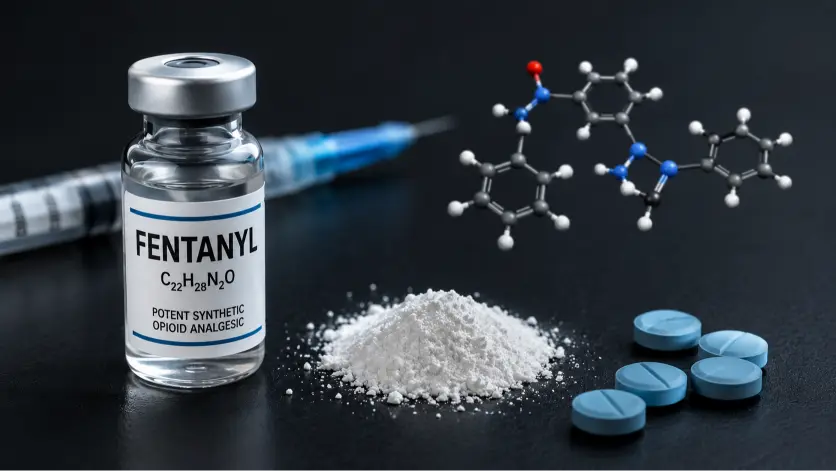
Have you ever seen the word “fentanyl” in a news headline, social media post, or medical discussion and wondered what it actually means?
You’re not alone. The fentanyl meaning has become one of the most searched health-related topics because the word appears everywhere—from hospital settings and healthcare articles to breaking news and public safety campaigns.
Understanding what fentanyl is isn’t just about learning another medical term. It can help you better understand conversations about pain treatment, prescription medicines, addiction, and overdose prevention.
Updated for 2026, this guide explains the meaning of fentanyl in simple language, where the term comes from, how it’s used in different contexts, common misconceptions, and real-world examples. Whether you’re a student, parent, healthcare learner, or simply curious, you’ll find clear, reliable answers without confusing medical jargon.
What Does Fentanyl Meaning ?
Simple Definition
Fentanyl is a synthetic opioid medication that doctors prescribe to treat severe pain, particularly after major surgery or for people living with advanced cancer who require strong pain relief.
Outside legitimate medical use, illegally manufactured fentanyl has become a serious public health issue because it is often mixed into other illegal drugs without a person’s knowledge, greatly increasing the risk of overdose.
Quick Answer
Fentanyl means a powerful synthetic opioid originally developed for medical pain management. While prescription fentanyl has important medical uses, illegally produced fentanyl has become one of the leading causes of opioid overdose deaths in many countries.
How Do You Pronounce Fentanyl?
Pronunciation:
FEN-tuh-nil
Phonetic spelling:
/ˈfɛn.tə.nɪl/
Where Did the Word Come From?
Fentanyl was first developed by Belgian chemist Dr. Paul Janssen in the late 1950s. The medication was introduced into medical practice during the 1960s to provide powerful pain relief for surgical procedures and patients experiencing severe chronic pain.
Over time, advances in medicine led to different prescription forms, including:
- Injectable fentanyl
- Transdermal patches
- Lozenges
- Nasal sprays
- Buccal tablets
While these pharmaceutical products remain important for carefully selected patients, illegally manufactured fentanyl emerged decades later and dramatically changed public awareness of the word.
Today, when many people hear “fentanyl,” they often think of news stories about overdoses rather than its original medical purpose.
Medical Meaning vs. Public Meaning
Understanding the difference is important.
Medical Context
Doctors use fentanyl because it works quickly and provides powerful pain relief for patients with serious medical needs.
Examples include:
- Major surgery
- Cancer pain
- Intensive care treatment
- Certain emergency situations
When prescribed and monitored correctly, pharmaceutical fentanyl has legitimate medical value.
Public Context
In everyday conversation and news reports, “fentanyl” often refers to illegally manufactured versions linked to overdose deaths and the illegal drug supply.
Because of this, the word now carries both a medical meaning and a public health meaning.
Why Is Fentanyl So Powerful?
Fentanyl belongs to a class of medicines called opioids, which affect receptors in the brain that control pain.
Compared with some other opioid medications, fentanyl is much more potent. That high potency is why medical professionals use it carefully and why illegal versions pose such serious risks.
Even tiny amounts of illegally manufactured fentanyl can be dangerous if someone is exposed unknowingly.
How to Use “Fentanyl” Correctly in Texts & Conversation
Unlike internet slang or abbreviations, fentanyl is a medical term rather than casual online shorthand.
People usually use it in discussions involving:
- Health
- Medicine
- News
- Public safety
- Education
- Scientific research
Appropriate Usage
Examples:
“The doctor explained how fentanyl is used after surgery.”
“Our health class discussed the opioid crisis and fentanyl.”
“The article explains the meaning of fentanyl.”
These examples use the word accurately and respectfully.
When Not to Use It Casually
Because fentanyl is associated with serious medical issues and overdose risks, joking about it or using it as slang can be insensitive.
Avoid statements that:
- make light of overdose
- encourage drug misuse
- spread misinformation
- exaggerate medical facts
Using the term accurately helps reduce confusion and supports informed conversations.
How the Word Appears Online
You may see “fentanyl” mentioned on:
News websites
Usually discussing:
- public health
- drug policy
- overdose statistics
- law enforcement
- healthcare
Users often ask questions like:
- What is fentanyl?
- Why is fentanyl dangerous?
- How does prescription fentanyl differ from illegal fentanyl?
Discussions vary in quality, so it’s best to rely on trusted medical sources for health information.
X (formerly Twitter)
Posts commonly include:
- breaking news
- public awareness campaigns
- healthcare updates
- emergency alerts
- policy discussions
The term often appears in:
- local community alerts
- health organization posts
- educational articles
- family awareness campaigns
YouTube
Many educational videos explain:
- how fentanyl works
- overdose prevention
- medical uses
- opioid safety
- addiction awareness
Choose content from reputable medical organizations whenever possible.
Formal vs. Informal Use
| Setting | Appropriate? | Notes |
|---|---|---|
| Hospital | ✅ Yes | Medical discussions |
| School | ✅ Yes | Educational context |
| Health article | ✅ Yes | Accurate information |
| News report | ✅ Yes | Common usage |
| Casual jokes | ❌ No | Can be harmful or insensitive |
| Professional workplace | ✅ Yes | If relevant to healthcare or news |
Capitalization Tips
Use “fentanyl” in lowercase unless it begins a sentence.
Examples:
✅ The doctor prescribed fentanyl.
✅ Fentanyl is a synthetic opioid.
Avoid writing it in all caps unless reproducing an official headline.
Is “Fentanyl” a Slang Term?
No.
Although the word appears frequently online, fentanyl is not internet slang, texting shorthand, or a chat abbreviation. It is the official name of a medication and a topic often discussed in healthcare, journalism, and public safety.
However, because of widespread media coverage, many people search for the fentanyl meaning simply to understand what the term refers to when they encounter it in headlines or conversations.
Real Conversation Examples Using “Fentanyl”
Seeing the word in context can make its meaning much easier to understand. The examples below show how fentanyl may come up in everyday conversations, news discussions, and healthcare settings.
Important: These examples are for educational purposes only. They illustrate how people use the term in conversation—they are not medical advice.
Example 1: Between Friends
Alex: Did you see the news about fentanyl today?
Jordan: Yeah. I looked up the fentanyl meaning because I wasn’t sure what it actually was.
Alex: It’s a very strong opioid that’s used medically but is also involved in many overdose cases when produced illegally.
What it conveys:
Someone is trying to understand a commonly discussed health term rather than using it as slang.
Example 2: Family Conversation
Parent: Your school mentioned fentanyl awareness this week. Do you know what fentanyl is?
Teen: I knew the name but not the details.
Parent: It’s a powerful prescription opioid, but illegallysyntheticis what many safety campaigns are warning about.
What it conveys:
A respectful conversation focused on education and safety.
Example 3: Classroom Discussion
Teacher: Today’s lesson is about opioid safety.
Student: Is fentanyl different from morphine?
Teacher: Yes. They’re both opioids, but fentanyl is much more potent and is prescribed only in specific medical situations.
What it conveys:
The word is used in an educational setting to explain medical concepts.
Example 4: Healthcare Setting
Patient: Why are you talking about fentanyl before my surgery?
Doctor: In some procedures, fentanyl may be used by trained medical professionals to manage pain during anesthesia.
Patient: Thanks for explaining.
What it conveys:
The term is used professionally and medically—not casually.
Example 5: Group Chat
Chris: I keep seeing articles about fentanyl.
Sam: Same here. I finally searched the meaning because it shows up in the news almost every week.
Taylor: It’s definitely one of those terms everyone should understand.
What it conveys:
Curiosity about current events rather than discussion of personal drug use.
Common Mistakes & Misunderstandings
Because fentanyl receives so much media attention, it’s also one of the most misunderstood drug-related terms. Here are some of the biggest misconceptions.
1. Thinking Every Mention Refers to Illegal Drugs
Many people assume the word “fentanyl” always refers to illegal substances.
That’s not true.
There are two very different contexts:
- Prescription fentanyl, manufactured under strict regulations and prescribed for severe pain.
- Illegally manufactured fentanyl, which is often associated with overdose risks and the illegal drug market.
Understanding the difference helps avoid confusion.
2. Believing It’s Used for Everyday Pain
Some people mistakenly think fentanyl is similar to common prescription pain relievers.
In reality, doctors generally reserve it for:
- major surgeries
- severe injuries
- advanced cancer pain
- intensive medical care
It isn’t intended for routine headaches, muscle soreness, or minor injuries.
3. Assuming All Online Information Is Accurate
Social media posts about fentanyl can be misleading or sensationalized.
For reliable information, consult trusted sources such as:
- national public health agencies
- hospitals
- licensed healthcare professionals
- peer-reviewed medical organizations
Always verify claims before sharing them.
Generational Differences
Gen Z
Many younger users first encounter the word through:
- TikTok awareness videos
- Instagram reels
- YouTube explainers
- online news clips
They often search “fentanyl meaning” after seeing headlines or discussions.
Millennials
Millennials are more likely to encounter the term through:
- parenting discussions
- health news
- podcasts
- documentaries
Many associate it with the broader opioid crisis.
Older Adults
Older generations may recognize fentanyl primarily as:
- a prescription medication
- a hospital treatment
- a topic discussed by healthcare providers
They may be less familiar with its prominence on social media.
Cultural Differences
The level of public awareness varies from country to country.
For example:
- In North America, fentanyl is frequently discussed due to ongoing public health concerns.
- In many other regions, people may recognize the name mainly from international news rather than personal experience.
Regardless of location, the medical definition remains the same.
How to Clarify If Someone Doesn’t Understand
If someone asks what fentanyl means, a simple explanation works best:
“Fentanyl is a very strong synthetic opioid used by doctors for severe pain. Illegal versions of it are responsible for many overdose deaths, which is why it’s often mentioned in the news.”
This brief explanation is accurate without being overly technical.
“Fentanyl” Across Different Platforms & Demographics
Although fentanyl is not internet slang, it appears frequently across digital platforms because of health education, public awareness campaigns, and news reporting.
Here’s how it’s commonly discussed online.
TikTok
Many TikTok videos focus on:
- drug awareness
- overdose prevention
- educational explainers
- news summaries
- healthcare professionals answering questions
Short-form videos often encourage viewers to learn what fentanyl is and why it’s dangerous when used illegally.
On Instagram, the term commonly appears in:
- health infographics
- awareness campaigns
- nonprofit organization posts
- educational carousels
- news graphics
The tone is usually informative rather than conversational.
X (Formerly Twitter)
Posts often include:
- breaking news
- public safety alerts
- policy discussions
- healthcare commentary
- research updates
Because of the platform’s fast-moving nature, users should verify information before sharing it.
Reddit discussions often include questions such as:
- What does fentanyl actually mean?
- Why is it so dangerous?
- How does prescription fentanyl differ from illegal fentanyl?
- Why is it mentioned so often in the news?
Community discussions can be helpful for understanding common questions, but medical advice should always come from qualified professionals.
YouTube
Educational creators publish videos covering topics like:
- opioid education
- pain management
- overdose prevention
- healthcare news
- interviews with medical experts
Choose videos from recognized medical institutions or public health organizations whenever possible.
Is Fentanyl Safe for Work?
Yes—when discussed in an educational, medical, or news context.
It is entirely appropriate to mention fentanyl in:
- classrooms
- healthcare settings
- research papers
- news articles
- public awareness campaigns
However, jokes or casual references about overdose or drug misuse are generally considered inappropriate and insensitive.
Is Fentanyl Formal or Informal?
Formal: ✅ Yes
Because fentanyl is the official name of a medication, it is considered a formal medical term.
You’ll commonly see it in:
- medical journals
- hospital documents
- educational materials
- government publications
- scientific research
Unlike internet abbreviations such as “LOL” or “BRB,” fentanyl is not a piece of online slang—it is a clinical term with significant public health importance.
Related Slang, Medical Terms & Alternatives
If you’re researching the fentanyl meaning, you’ll likely come across other opioid-related terms. Understanding how they differ helps you read news articles and health information more accurately.
| Term | Meaning | How It Relates to Fentanyl |
|---|---|---|
| Opioid | A class of drugs that relieve pain by acting on opioid receptors. | Fentanyl is an opioid. |
| Synthetic Opioid | A fully man-ssyntheticopioid created in a laboratory. | Fentanyl is a synthetic opioid. |
| Morphine | A naturally derived opioid used for severe pain. | Less potent than fentanyl. |
| Oxycodone | A prescription opioid for moderate to severe pain. | Another opioid medication with different potency and uses. |
| Naloxone | A medication that can rapidly reverse an opioid overdose. | Used in emergency overdose situations involving opioids, including fentanyl. |
| Overdose | A harmful or life-threatening reaction caused by taking too much of a drug. | A major public health concern associated with illegally manufactured fentanyl. |
| Pain Management | Medical treatment focused on controlling pain safely. | One of the primary reasons prescription fentanyl is used. |
| Prescription Medication | A medicine that requires authorization from a licensed healthcare provider. | Pharmaceutical fentanyl falls into this category. |
| Opioid Use Disorder (OUD) | A medical condition involving problematic opioid use. | Healthcare providers treat OUD with evidence-based approaches. |
| Tolerance | When the body becomes less responsive to a drug over time. | Can occur with prolonged opioid use under certain circumstances. |
Related Topics You May Also Want to Read
These articles make excellent internal linking opportunities:
- What Is an Opioid?
- Synthetic Opioids Explained
- Morphine vs. Fentanyl
- What Is Naloxone?
- Understanding Prescription Pain Medicines
FAQs:
What does fentanyl mean?
Fentanyl is a powerful synthetic opioid medication prescribed by healthcare professionals to treat severe pain in carefully selected patients. It is also widely discussed because illegally manufactured fentanyl has contributed to many overdose deaths, making it an important public health topic.
Is fentanyl a prescription drug?
Yes. Pharmaceutical fentanyl is a legal prescription medication used in hospitals and certain outpatient settings for severe pain. Because of its potency, it is prescribed only under strict medical supervision.
Why is fentanyl in the news so often?
Fentanyl frequently appears in news reports because illegally manufactured fentanyl has played a significant role in the opioid overdose crisis in several countries. Public health agencies, healthcare providers, and law enforcement regularly issue updates and educational information about it.
Is fentanyl stronger than morphine?
Yes. Fentanyl is considerably more potent than morphine, which is why it must be used with great care by trained medical professionals. Its high potency contributes to both its medical effectiveness and the dangers associated with illegal versions.
Is fentanyl considered internet slang?
No. Fentanyl is not slang, a text abbreviation, or an internet acronym. It is the official name of a prescription medication and a term commonly used in healthcare, journalism, education, and public safety discussions.
Can fentanyl be used safely?
Yes. When prescribed by a licensed healthcare professional and taken exactly as directed, fentanyl can be an effective treatment for severe pain. Problems most often arise with misuse or exposure to illegally manufactured fentanyl.
Why do people search for “fentanyl meaning”?
Many people encounter the word in news headlines, social media posts, documentaries, or public awareness campaigns and simply want to understand what it means. Search interest has increased as fentanyl has become a widely discussed public health topic.
Conclusion:
The fentanyl meaning is straightforward: it refers to a powerful synthetic opioid medication used by healthcare professionals to manage severe pain in specific medical situations. Although it has important and legitimate medical uses, the term is also closely associated with public health discussions because of the dangers posed by illegally manufactured fentanyl.
Knowing the difference between prescription fentanyl and illegal fentanyl helps you better understand news reports, medical information, and public awareness campaigns. Accurate knowledge can reduce misinformation and encourage informed conversations.
If you found this guide helpful, explore more health and terminology articles to expand your understanding of commonly searched medical terms. Staying informed is one of the best ways to navigate today’s fast-moving digital information landscape.

I’m Lina Roys, a passionate writer behind Storevian, where I make words, phrases, slang, and everyday expressions easy to understand. I create clear, engaging, and reader-friendly content to help people find the meanings they’re looking for, quickly and confidently.


