Imagine finishing a long, stressful workday with stiff shoulders, a sore back, and a mind that refuses to slow down. Someone recommends a Swedish massage, but you’re left wondering what that actually means. Is it simply a massage from Sweden, or is there something special about it?
The swedish massage meaning goes far beyond its name. It refers to one of the world’s most recognized massage therapies, known for helping people relax, ease muscle tension, improve circulation, and reduce everyday stress.
Whether you’re visiting a spa for the first time or exploring different massage styles, understanding Swedish massage helps you choose the right treatment for your needs.
Updated for 2026, this guide explains exactly what Swedish massage is, where it came from, how it works, and why millions of people choose it every year. You’ll also learn the five classic massage techniques, health benefits, common myths, and how Swedish massage compares with other popular massage styles.
What Does Swedish Massage ?
Simply put, Swedish massage is a therapeutic massage technique that focuses on relaxation, muscle recovery, and improved blood circulation through a series of gentle, rhythmic movements.
Unlike more intense massage styles that target deep muscle knots, Swedish massage uses smooth, flowing motions that help your body relax without causing unnecessary discomfort.
Quick Answer
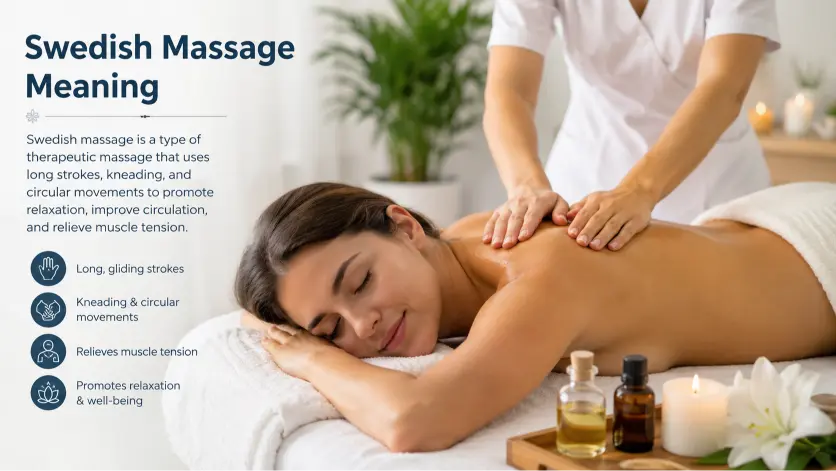
Swedish massage means a full-body therapeutic massage that uses long, gliding strokes, kneading, tapping, friction, and gentle stretching to relieve muscle tension, improve circulation, and promote physical and mental relaxation.
This style is considered the foundation of many Western massage therapies and is often the first type of massage people experience.
How Do You Pronounce Swedish Massage?
Pronunciation is simple:
Swedish Massage
SWEE-dish Muh-SAHZH
Many people mistakenly pronounce “massage” with a hard “g,” but the correct pronunciation ends with a soft “zh” sound.
The Origin of Swedish Massage
One of the biggest misconceptions is that Swedish massage originated in Sweden exactly as it’s practiced today.
The story is actually more interesting.
During the early 19th century, Per Henrik Ling, a Swedish educator and physical therapist, developed a system of therapeutic movement and physical exercise. His work heavily influenced modern massage therapy.
Later, Dutch physician Johann Georg Mezger introduced French terminology for many massage techniques that therapists still use today, including:
- Effleurage
- Petrissage
- Friction
- Tapotement
- Vibration
Because Ling’s rehabilitation system gained international recognition first, the massage style eventually became known as Swedish massage, even though modern practice evolved through contributions from several European experts.
Today, Swedish massage is taught in massage schools around the world and serves as the foundation for many professional massage certifications.
How Has Swedish Massage Evolved?
Originally, Swedish massage focused mainly on physical rehabilitation and improving mobility.
Today, it’s used for a much broader range of wellness goals, including:
- Stress reduction
- Mental relaxation
- Better sleep
- Muscle recovery
- Improved circulation
- Anxiety management
- Workplace fatigue
- General wellness
Modern spas often combine Swedish massage with aromatherapy, hot stones, essential oils, or soothing music to create a more relaxing experience.
Why Is It Called Swedish Massage?
Despite the name, the term doesn’t simply mean “a massage from Sweden.”
Instead, it represents a structured massage system inspired by Swedish therapeutic movement principles.
Today, when someone books a Swedish massage, they’re referring to a specific massage technique rather than the therapist’s nationality or the massage location.
The Five Core Swedish Massage Techniques
One reason Swedish massage remains so popular is its combination of five proven techniques. Each serves a different purpose while working together to relax the entire body.
1. Effleurage
Effleurage consists of long, smooth, gliding strokes performed with the palms or fingertips.
Its purpose is to:
- Warm up muscles
- Improve circulation
- Spread massage oil evenly
- Prepare deeper tissues for treatment
- Encourage relaxation
This is usually the first and last technique used during a Swedish massage session.
2. Petrissage
Petrissage involves kneading, lifting, squeezing, and rolling the muscles.
Think of it like gently kneading bread dough.
This technique helps:
- Release muscle tension
- Improve blood flow
- Increase flexibility
- Reduce muscle stiffness
- Encourage lymphatic drainage
It’s especially useful for people who spend long hours sitting at a desk.
3. Friction
Friction uses firm circular movements to target deeper layers of muscle and connective tissue.
Massage therapists often use this technique on areas with tight muscles or small knots.
Benefits include:
- Breaking down adhesions
- Improving tissue mobility
- Increasing local circulation
- Reducing muscle tightness
Although deeper than other Swedish techniques, friction should still remain comfortable.
4. Tapotement
Tapotement is a rhythmic tapping or percussion movement performed with cupped hands, fingertips, or the edge of the hands.
This technique helps:
- Stimulate muscles
- Increase alertness
- Boost circulation
- Wake up tired muscles
Sports therapists sometimes incorporate tapotement before athletic activities.
5. Vibration
Vibration involves rapid shaking or gentle oscillating movements applied by the therapist.
Although less commonly used than the other techniques, vibration can help:
- Relax tense muscles
- Reduce nervous tension
- Improve circulation
- Calm the nervous system
It often provides a soothing finish before the massage concludes.
How Swedish Massage Works
Rather than focusing on one painful muscle knot, Swedish massage treats the body as a whole.
A therapist typically works through major muscle groups using a sequence of relaxing strokes that encourage better circulation and reduce muscular tension.
The pressure usually ranges from light to medium, making Swedish massage suitable for:
- First-time massage clients
- Older adults
- People recovering from everyday stress
- Office workers
- Individuals seeking relaxation rather than deep muscle therapy
Instead of causing soreness, most people leave feeling lighter, calmer, and more refreshed.
Key Benefits of Swedish Massage
People often think Swedish massage is simply a luxury spa treatment. In reality, research and clinical experience suggest it offers several physical and mental wellness benefits.
Some of the most commonly reported benefits include:
✔ Relieves Muscle Tension
Gentle kneading helps loosen tight muscles caused by prolonged sitting, repetitive movements, or mild physical activity.
✔ Improves Blood Circulation
The massage strokes encourage healthy blood flow, delivering oxygen and nutrients more efficiently throughout the body.
✔ Reduces Stress
Swedish massage activates the body’s relaxation response, helping lower stress levels after busy days.
✔ Encourages Better Sleep
Many people report sleeping more deeply after a massage because their muscles and nervous system are more relaxed.
✔ Supports Mental Well-being
The calming environment, combined with rhythmic massage movements, may reduce feelings of anxiety and promote a greater sense of relaxation.
swedish-massage-meaning
Who Should Consider a Swedish Massage?
One of the biggest reasons Swedish massage is so popular is that it’s suitable for almost anyone looking to relax or ease everyday muscle tension. Unlike more intense massage styles, it doesn’t require you to be an athlete or have chronic pain to benefit.
Here are some people who may enjoy a Swedish massage:
Office Workers
Sitting at a desk for hours often leads to tight shoulders, neck stiffness, and lower back discomfort. Swedish massage gently loosens these muscles while improving circulation.
First-Time Massage Clients
If you’ve never had a professional massage before, Swedish massage is usually the best place to start. The pressure is light to medium, and your therapist can easily adjust it to your comfort level.
People Living with Stress
Modern life is busy. Whether it’s work, school, or family responsibilities, stress can build up physically and mentally. Swedish massage helps calm the nervous system and encourages deep relaxation.
Active Individuals
Even if you don’t play competitive sports, regular exercise can leave muscles feeling tired. Swedish massage supports recovery by increasing blood flow and reducing muscle tightness.
What Happens During a Swedish Massage Session?
If you’ve never booked a massage before, it’s natural to wonder what to expect.
A standard Swedish massage usually follows these steps:
Step 1: Consultation
Before the massage begins, the therapist will ask about:
- Areas of tension
- Any injuries
- Medical conditions
- Preferred pressure level
- Your wellness goals
Being honest helps the therapist customize your session.
Step 2: Preparation
You’ll be given privacy to lie on the massage table. Only the area being worked on is uncovered while the rest of your body remains draped with a sheet or towel.
Professional therapists prioritize your comfort and privacy throughout the session.
Step 3: Massage Techniques
The therapist applies massage oil or lotion before using a combination of:
- Long gliding strokes
- Gentle kneading
- Circular friction
- Rhythmic tapping
- Light stretching
Most sessions begin with lighter strokes before gradually addressing areas of muscle tension.
Step 4: Relaxation
Soft music, dim lighting, and a peaceful environment often enhance the experience. Many people become so relaxed that they nearly fall asleep.
Step 5: After the Massage
When the session ends, you may notice:
- Reduced muscle tightness
- A calmer mood
- Improved flexibility
- Less stress
- Increased energy later in the day
Many therapists also recommend drinking water afterward to stay hydrated.
How Long Does a Swedish Massage Take?
Session lengths vary depending on your goals.
| Session Length | Best For |
|---|---|
| 30 minutes | Neck, shoulders, or one problem area |
| 60 minutes | Full-body relaxation |
| 75 minutes | More detailed muscle work |
| 90 minutes | Complete relaxation with extra attention to tense areas |
| 120 minutes | Luxury spa treatments or multiple focus areas |
A 60-minute session is the most common choice for beginners.
Swedish Massage vs. Deep Tissue Massage
Many people confuse these two massage styles, but they serve different purposes.
| Feature | Swedish Massage | Deep Tissue Massage |
|---|---|---|
| Pressure | Light to medium | Firm to very firm |
| Goal | Relaxation | Muscle repair |
| Best For | Stress relief | Chronic pain |
| Comfort Level | Very relaxing | Can feel intense |
| Muscle Focus | Surface muscles | Deep muscle layers |
| Recovery | Usually none | Mild soreness possible |
Choose Swedish Massage If You Want:
- Stress relief
- Better sleep
- General relaxation
- Improved circulation
- A calming spa experience
Choose Deep Tissue Massage If You Have:
- Sports injuries
- Chronic muscle pain
- Persistent knots
- Limited mobility
- Rehabilitation needs
Swedish Massage vs. Thai Massage
These two therapies feel completely different.
| Swedish Massage | Thai Massage |
|---|---|
| Massage table | Floor mat |
| Massage oil | Usually no oil |
| Gentle strokes | Assisted stretching |
| Relaxation-focused | Flexibility-focused |
| Passive experience | Active participation |
Thai massage often feels like assisted yoga, while Swedish massage feels like a soothing, flowing massage.
Swedish Massage vs. Sports Massage
Although both help muscles recover, they’re designed for different audiences.
| Swedish Massage | Sports Massage |
|---|---|
| Everyday wellness | Athletic performance |
| Gentle pressure | Variable pressure |
| Full-body relaxation | Injury prevention |
| General stress relief | Training recovery |
Athletes may receive sports massage before or after competitions, whereas Swedish massage is ideal for routine self-care.
Is Swedish Massage Safe?
For most healthy adults, yes.
Swedish massage is considered one of the safest massage therapies when performed by a trained professional.
However, you should speak with your healthcare provider before scheduling a massage if you have:
- Severe osteoporosis
- Blood clotting disorders
- Recent surgery
- Open wounds
- Burns
- Skin infections
- High fever
- Contagious illnesses
- Certain heart conditions
- Pregnancy (prenatal massage may be more appropriate)
Always inform your therapist about your medical history before treatment.
Common Misunderstandings About Swedish Massage
Despite its popularity, several myths continue to circulate online.
Myth 1: Swedish Massage Comes Directly from Sweden
Not exactly.
While Swedish educator Per Henrik Ling inspired many therapeutic movement principles, modern Swedish massage developed through contributions from several European practitioners.
Myth 2: It’s Only for Luxury Spas
Many people think Swedish massage is purely a spa indulgence.
In reality, hospitals, rehabilitation centers, wellness clinics, and physical therapy practices also incorporate Swedish massage techniques to support recovery and relaxation.
Myth 3: More Pressure Means Better Results
This is one of the most common misconceptions.
A massage doesn’t need to be painful to be effective. Swedish massage focuses on gentle, consistent pressure that encourages relaxation and healthy circulation.
Myth 4: Swedish Massage Removes “Toxins”
You’ll often see claims that massage “flushes toxins” from the body.
While massage may support circulation and lymphatic movement, your liver and kidneys are primarily responsible for removing waste products from your body. Swedish massage shouldn’t be viewed as a detox treatment.
Myth 5: It’s Only for Older Adults
People of all ages enjoy Swedish massage.
College students, office workers, parents, athletes, and retirees all choose Swedish massage for different reasons—from easing stress to recovering after workouts.
Tips for Getting the Most Out of Your Massage
To make your session as relaxing and effective as possible:
- Arrive 10–15 minutes early.
- Avoid eating a heavy meal beforehand.
- Wear comfortable clothing.
- Tell your therapist if the pressure is too light or too firm.
- Silence your phone to avoid interruptions.
- Breathe slowly and naturally during the session.
- Drink water afterward.
- Allow yourself a few minutes to relax before jumping back into a busy schedule.
Simple preparation can make a noticeable difference in your overall experience.
Is Swedish Massage Worth It?
For many people, absolutely.
Whether you’re looking to unwind after a stressful week, ease mild muscle tension, or simply enjoy an hour of uninterrupted relaxation, Swedish massage offers a gentle and approachable option.
It’s especially well-suited for beginners, those with everyday aches, and anyone seeking a calming wellness practice rather than intensive therapeutic work.
FAQs:
Is Swedish massage good for beginners?
Yes. Swedish massage is widely considered the best massage for beginners because it uses gentle to medium pressure and focuses on relaxation rather than intense muscle work. If you’ve never had a massage before, it’s an excellent starting point.
Does Swedish massage hurt?
No. A Swedish massage should feel relaxing, not painful. You may notice mild pressure on tight muscles, but if anything feels uncomfortable, tell your therapist so they can adjust the pressure.
How often should you get a Swedish massage?
It depends on your goals:
- Once a month: General wellness and relaxation
- Every 2–3 weeks: Managing everyday muscle tension
- Weekly: High stress levels or physically demanding jobs
Your therapist can recommend a schedule based on your lifestyle and needs.
What should you wear to a Swedish massage?
Wear comfortable clothing to your appointment. During the massage, you’ll undress to your comfort level and remain covered with a sheet or towel except for the area being worked on. Professional therapists prioritize privacy and comfort throughout the session.
Can Swedish massage help with stress?
Absolutely. One of the primary reasons people choose Swedish massage is for stress relief. The slow, rhythmic strokes can help reduce muscle tension, encourage relaxation, and leave many people feeling calmer after the session.
Is Swedish massage the same as a full-body massage?
Not necessarily. A full-body massage describes the areas being treated, while Swedish massage refers to the massage technique. Most Swedish massages are full-body sessions, but they can also focus on specific areas like the back, neck, or shoulders.
Can Swedish massage improve sleep?
Many people report sleeping better after a Swedish massage. By relaxing the muscles and calming the nervous system, it may help you unwind before bedtime and improve overall sleep quality.
Is Swedish massage suitable during pregnancy?
Pregnant individuals should consult their healthcare provider before booking a massage. A therapist trained in prenatal massage can recommend the safest approach based on the stage of pregnancy and individual health needs.
How much does a Swedish massage usually cost?
Prices vary depending on location, therapist experience, and session length. In many areas, a 60-minute Swedish massage typically ranges from $60 to $150, with luxury spas often charging more.
Conclusion:
Understanding the swedish massage meaning helps you make informed choices about your wellness routine. More than just a relaxing spa treatment, Swedish massage is a structured therapeutic technique designed to reduce stress, ease muscle tension, and improve circulation through gentle, flowing movements.
Its combination of effleurage, petrissage, friction, tapotement, and vibration makes it one of the most versatile and beginner-friendly massage styles available. Whether you’re dealing with a stressful week, recovering from light physical activity, or simply looking for an hour of relaxation, Swedish massage offers a safe and enjoyable experience for most people.
If you’re new to massage therapy, Swedish massage is often the perfect place to start. Its adaptable pressure, calming techniques, and widespread availability have made it one of the most trusted massage methods worldwide.
Have you tried a Swedish massage before? Share your experience in the comments below!

I’m Lina Roys, a passionate writer behind Storevian, where I make words, phrases, slang, and everyday expressions easy to understand. I create clear, engaging, and reader-friendly content to help people find the meanings they’re looking for, quickly and confidently.


1 thought on “Swedish Massage Meaning: Benefits, Uses & More”