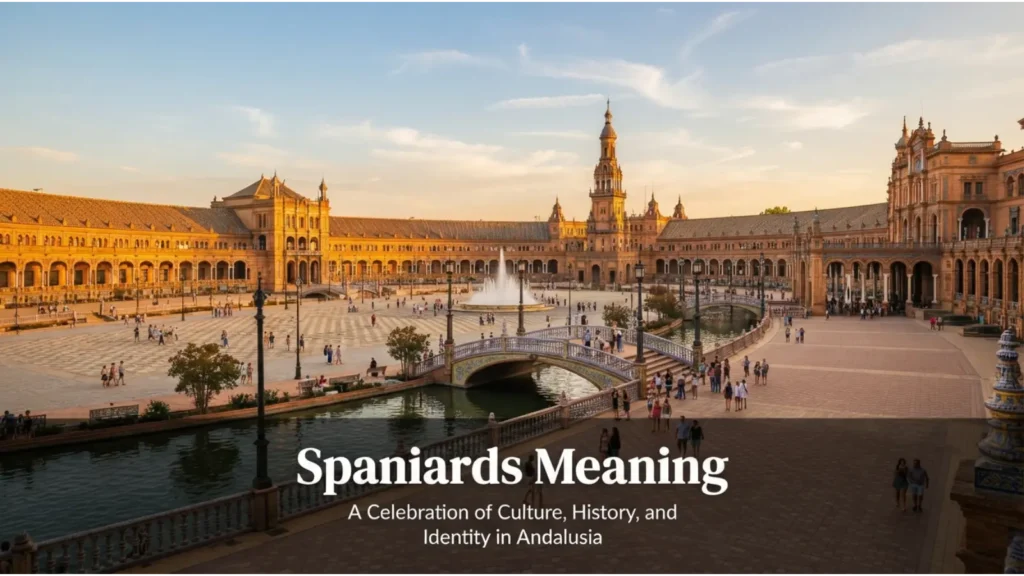
Have you ever heard someone say “He is a Spaniard” and wondered what that word actually means? You are not alone. Many people understand “Spanish” but feel unsure about the difference between Spaniards meaning and other nationality terms.
The word Spaniards simply refers to people who are from Spain or have Spanish nationality. But behind this simple definition is a fascinating story involving history, languages, regional cultures, and centuries of traditions.
Understanding the term helps you communicate more accurately, especially when discussing travel, history, international news, or cultural topics. Calling someone a Spaniard is not just about geography—it connects to a rich identity shaped by art, food, music, sports, and diverse regional backgrounds.
In this updated 2026 guide, we’ll explore what Spaniards means, where the word came from, how it is used in everyday conversations, common mistakes people make, and how Spanish identity has evolved over time.
Whether you’re a student, traveler, language learner, or simply curious, this complete guide will make the meaning crystal clear.
What Does “Spaniards” Mean?
Quick Answer
Spaniards are people who are from Spain or have Spanish nationality. The word is the plural form of “Spaniard,” which describes an individual person from Spain.
The term Spaniards meaning is closely connected with nationality and identity. A Spaniard is someone who belongs to Spain as a citizen, native, or person with a strong connection to the country.
For example:
- “Many Spaniards enjoy traditional festivals.”
- “The Spaniards introduced their culture to different parts of the world.”
- “She is a Spaniard living in Barcelona.”
In simple terms:
- One person = Spaniard
- More than one person = Spaniards
Origin and History of the Word “Spaniard”
The word “Spaniard” comes from the name Spain, which has roots in the ancient name Hispania.
The Romans used “Hispania” to describe the Iberian Peninsula, the region that includes modern-day Spain and Portugal. Over centuries, the name evolved through different languages before becoming “Spain” in English.
The English word “Spaniard” developed as a way to describe someone from Spain. Like many nationality words, it combines a country name with a suffix that identifies a person belonging to that place.
Examples:
- England → Englishman
- France → French person
- Spain → Spaniard
How the Meaning Has Changed Over Time
The meaning of Spaniard has remained relatively stable, but the identity behind the word has changed dramatically.
Hundreds of years ago, being a Spaniard was connected to kingdoms, empires, and regional identities. Spain was formed through the merging of different territories, including:
- Castile
- Aragon
- Navarre
- León
Today, being a Spaniard can mean having Spanish citizenship while also belonging to a specific regional culture.
For example:
- A person from Madrid may identify as Spanish.
- Someone from Catalonia may identify as both Catalan and Spanish.
- Someone from the Basque Country may emphasize their unique regional heritage.
This diversity is an important part of modern Spanish identity.
Pronunciation Guide
The word Spaniard is pronounced:
SPAN-yerd
/ˈspæn.jərd/
The plural form:
Spaniards
/ˈspæn.jərdz/
A common mistake is adding extra syllables, but the pronunciation is shorter and smoother than many learners expect.
Spanish vs. Spaniard: What’s the Difference?
Many English learners confuse these two words because they are closely related.
| Word | Meaning | Example |
|---|---|---|
| Spanish | Related to Spain, its culture, language, or people | “I love Spanish food.” |
| Spaniard | A person from Spain | “He is a Spaniard.” |
Think of it this way:
- Spanish = describes something
- Spaniard = describes someone
Correct:
✅ “She is a Spaniard.”
✅ “She speaks Spanish.”
✅ “Spanish culture is diverse.”
Incorrect:
❌ “She is a Spanish.”
You would say:
✅ “She is Spanish.”
or
How to Use “Spaniards” Correctly in Texts & Conversations
Using Spaniards correctly is simple once you understand that it refers specifically to people from Spain. Unlike many internet slang terms or abbreviations, this word is more common in educational, travel, cultural, and news-related conversations.
You will usually see it when people discuss:
- Spanish history
- Travel experiences
- Sports
- Food and traditions
- Politics and society
- Global events
For example:
“The Spaniards are famous for their passion for football and festivals.”
Here, “Spaniards” refers to Spanish people as a group.
Correct Context and Tone
The word Spaniards is generally:
✅ Neutral
✅ Respectful
✅ Appropriate for academic and professional writing
✅ Common in journalism and cultural discussions
It is not considered slang or informal. However, context matters.
Casual Conversation Example:
“I met some Spaniards during my trip to Madrid. They were very friendly.”
The speaker is simply describing people from Spain.
Formal Writing Example:
“Spaniards have contributed significantly to global art, literature, and science.”
The term works well in essays, reports, and research.
When to Use “Spaniards” vs. “Spanish”
This is where many people get confused.
Use “Spaniards” When Talking About People
Examples:
“Many Spaniards celebrate Christmas differently across regions.”
The Spaniards won the football match.”
“I spoke with two Spaniards at the airport.”
Use “Spanish” When Describing Things
Examples:
“Spanish cuisine is popular worldwide.
“Spanish architecture attracts millions of tourists.”
A quick memory trick:
People = Spaniards
Things = Spanish
Platform-Specific Usage
Although Spaniards is not a trending chat abbreviation, people use it across different online platforms when discussing Spain, culture, or international topics.
SMS & WhatsApp
In private messages, people often use “Spaniards” while sharing travel stories or discussing friends.
Example:
“The Spaniards I met in Barcelona were really welcoming.”
Tone:
- Friendly
- Conversational
- Personal
Instagram & TikTok
On visual platforms, the term often appears in captions about:
- Spanish travel
- Food videos
- Football
- Festivals
- Cultural content
Example captions:
“Learning about Spaniards and their amazing traditions 🇪🇸”
“A day exploring Spanish culture with locals.”
Twitter/X
The term often appears in discussions about:
- Spanish politics
- International events
- Sports competitions
- Social topics
Example:
“Many Spaniards reacted positively to the announcement.”
Reddit & Online Communities
Reddit users may use “Spaniards” when discussing:
- Living in Spain
- Moving abroad
- Language learning
- Cultural differences
Example:
“What do Spaniards think about tourists moving to Spain?”
Discord & Gaming Communities
In gaming communities, “Spaniards” may appear when discussing players from Spain.
Example:
“There are many talented Spaniards competing in esports.”
When NOT to Use “Spaniards”
Although the word is correct, avoid using it in situations where a more specific description is better.
1. Don’t Use It When Talking About Spanish Language
Incorrect:
❌ “I want to learn Spaniards.”
Correct:
✅ “I want to learn Spanish.”
2. Don’t Assume Every Person in Spain Has the Same Identity
Spain has many regional cultures.
Avoid:
❌ “All Spaniards have the same traditions.”
Better:
✅ “Many Spaniards share national traditions, while regions have their own customs.”
3. Don’t Confuse Nationality With Ethnicity
A Spaniard can have many different backgrounds.
Being Spanish may refer to:
- Citizenship
- National identity
- Family connection
- Cultural belonging
It does not describe one single ethnic appearance or background.
Real Conversation Examples Using “Spaniards”
Example 1: Between Friends (Travel Conversation)
Emma: “How was your trip to Spain?”
Jake: “Amazing! The Spaniards I met were incredibly welcoming.”
Meaning:
Here, “Spaniards” refers to local Spanish people Jake met during his visit. It creates a positive cultural reference.
Example 2: In a Group Chat (Food Discussion)
Mia: “I tried authentic Spanish food yesterday.”
Leo: “Yeah, Spaniards have some of the best traditional dishes.”
Meaning:
The word connects Spanish people with their culinary traditions.
Example 3: Sports Conversation
Alex: “Did you watch the football tournament?”
Sam: “Yes! The Spaniards played brilliantly.”
Meaning:
Here, “Spaniards” refers to Spanish athletes or a Spanish team.
Example 4: Family Conversation
Mom: “Your history project is about Spain?”
Child: “Yes, I’m learning how Spaniards influenced world history.”
Meaning:
The term refers to Spanish people throughout history.
Example 5: Online Discussion
User A: “What is life like in Spain?”
User B: “Many Spaniards enjoy a slower lifestyle with strong family connections.”
Meaning:
The speaker is describing common cultural observations about people in Spain.
Common Mistakes & Misunderstandings
Even though Spaniards meaning is straightforward, people often misunderstand how to use the term.
Mistake #1: Using “Spanish” as a Person’s Noun
Incorrect:
❌ “I met three Spanish at the hotel.”
Correct:
✅ “I met three Spaniards at the hotel.”
Why?
“Spanish” describes things, while “Spaniard” identifies a person.
Mistake #2: Thinking All Spaniards Are Identical
Spain has many unique regions, including:
- Catalonia
- Galicia
- Basque Country
- Andalusia
- Valencia
Each area has different:
- Traditions
- Food
- Languages
- Historical experiences
A person can be both regional and Spanish.
Example:
“She is a Catalan Spaniard.”
Mistake #3: Confusing Spanish With Hispanic
These words are related but not identical.
Spanish:
Usually refers to Spain or things connected with Spain.
Hispanic:
Usually refers to people or cultures connected with Spanish-speaking countries.
For example:
- Someone from Spain = Spanish / Spaniard
- Someone from Mexico = Hispanic but not Spanish
Generational Understanding of the Term
Unlike modern slang, “Spaniard” has been used for centuries, so different generations usually understand it.
However, younger generations may prefer more specific identities.
For example:
Older usage:
“He is a Spaniard.”
Modern usage:
“She is Spanish, but she is also Basque.”
Younger speakers often recognize that national identity can include multiple cultural layers.
Spaniards” Across Different Platforms & Demographics
The word Spaniards is not internet slang, but it appears frequently online whenever people discuss Spanish culture, travel, history, sports, and global events.
Its usage can vary depending on the audience and platform.
Gen Z Usage
Younger users often use “Spaniards” in discussions about:
- Travel experiences
- Football and sports
- TikTok cultural content
- Food trends
- Language learning
Example:
“Spaniards know how to enjoy life 🇪🇸”
On platforms like TikTok and Instagram, users may combine the term with emojis, hashtags, and casual language.
Common hashtags:
- #Spain
- #SpanishCulture
- #SpainTravel
- #SpanishFood
Millennials Usage
Millennials often use the term in:
- Travel blogs
- Social media posts
- Workplace discussions
- International conversations
Example:
“I worked with several Spaniards during my exchange program.”
The word often appears in conversations about studying abroad, immigration, and cultural experiences.
Older Generations Usage
Older generations may encounter “Spaniards” more often through:
- News reports
- History books
- Documentaries
- Literature
Example:
“The Spaniards explored many parts of the world during the Age of Exploration.”
Is “Spaniards” Formal or Informal?
Spaniards is considered a neutral word.
It works in:
✅ Academic writing
✅ News articles
✅ Professional communication
✅ Everyday conversations
Examples:
Professional:
“Many Spaniards work in Spain’s tourism industry.”
Casual:
“The Spaniards I met on vacation were awesome.”
It is generally safe for work and does not carry a negative meaning.
Related Slang, Terms & Alternatives
Here are related words and concepts connected to Spaniards meaning:
| Term | Meaning |
|---|---|
| Spaniard | One person from Spain |
| Spanish | Related to Spain, its people, language, or culture |
| Spainard | Common misspelling of Spaniard |
| Spanish people | Another way to refer to people from Spain |
| Hispanic | Connected to Spanish-speaking cultures |
| Latino/Latina | Usually refers to people from Latin America |
| Iberian | Related to the Iberian Peninsula |
| Castilian | Connected to the Castile region or Spanish language variety |
| Madrileño | A person from Madrid |
| Catalan | A person from Catalonia |
Similar Words and Opposites
Similar Terms
- Spanish citizen
- Person from Spain
- Spain native
- Spanish national
- Spanish resident
Opposite Ideas
There is no direct opposite of “Spaniard,” but examples include:
- Non-Spaniard
- Foreign visitor
- Person from another country
FAQs:
What does Spaniards mean?
Spaniards means people who are from Spain or have Spanish nationality. The singular form is Spaniard, while the plural form refers to multiple people from Spain. The term describes nationality or connection to Spain rather than a specific appearance, ethnicity, or regional culture.
Is Spaniard a nationality?
Yes, Spaniard can describe someone who is a citizen or native of Spain. It is a noun used to identify a person from Spain. However, Spanish identity can include many regional backgrounds, languages, and cultural traditions.
Are Spaniards and Spanish the same thing?
They are closely related but used differently. A Spaniard is a person from Spain, while Spanish describes anything connected to Spain, such as the Spanish language, Spanish food, or Spanish culture.
Example:
✅ “She is a Spaniard.”
✅ “She speaks Spanish.”
What is the difference between Spaniards and Hispanics?
Spaniards are people from Spain. Hispanics usually refers to people connected with Spanish-speaking countries, especially in Latin America. A person from Spain can be Hispanic, but many Hispanics are not Spaniards because they come from other Spanish-speaking nations.
How do you use Spaniard in a sentence?
You can use “Spaniard” when talking about one person from Spain.
Examples:
- “He is a Spaniard living in London.”
- “The Spaniard won the tennis competition.”
- “I met a Spaniard during my vacation.”
Do all Spaniards speak the same language?
No. While Spanish is the main national language, Spain has several recognized regional languages, including Catalan, Basque, and Galician. Many Spaniards speak more than one language depending on their region.
Conclusion:
The meaning of Spaniards is simple: it refers to people from Spain. But the identity behind the word represents centuries of history, diverse cultures, and regional traditions.
A Spaniard can be someone from Madrid, Barcelona, Valencia, Galicia, or any other part of Spain. The term describes a connection to Spain while recognizing that Spanish identity is rich and varied.
Understanding the difference between Spaniards, Spanish, and related terms helps you communicate more clearly and respectfully.
Want to explore more interesting word meanings? Check out other guides about nationality terms, cultural words, and modern language expressions.
What other confusing words should we explain next? Share your suggestions below!

I’m Lina Roys, a passionate writer behind Storevian, where I make words, phrases, slang, and everyday expressions easy to understand. I create clear, engaging, and reader-friendly content to help people find the meanings they’re looking for, quickly and confidently.


