Have you ever opened a tiny packet of shampoo at a hotel, squeezed ketchup from a small pouch, or received a free skincare sample in a miniature package? That little container has a name: a sachet.
The sachet meaning is simple it refers to a small sealed packet or pouch designed to hold a specific amount of a product.
These tiny packages are everywhere, from kitchens and bathrooms to pharmacies and cosmetic stores.
But sachets are more than just “small packets.” Their design solves real world problems by making products affordable, portable, and easy to use. A traveler can carry a shampoo sachet without bringing a full bottle. A food company can offer sample portions without expensive packaging.
This guide explains the complete meaning of sachet, its history, pronunciation, everyday uses, and examples you’ll recognize.
As packaging trends continue shifting toward convenience and smaller portions, sachets remain one of the most common forms of product packaging worldwide.
What Does “Sachet” Mean?
Quick Answer Box
A sachet is a small sealed packet or pouch that contains a product such as liquid, powder, cream, or fragrance. It is commonly used for single-use packaging because it is lightweight, affordable, and convenient.
The word sachet describes a small container made from materials like plastic, foil, paper, or fabric. Unlike ordinary bags, sachets are usually sealed tightly to protect the contents and maintain freshness.
For example:
- A shampoo sample packet = a sachet
- A ketchup packet = a sachet
- A small perfume pouch = a sachet
- A seasoning packet = a sachet
The term is commonly used in packaging, retail, cosmetics, food industries, and everyday conversations.
Origin and Etymology of Sachet
The word sachet comes from the French word sachet, meaning a “small bag” or “little sack.”
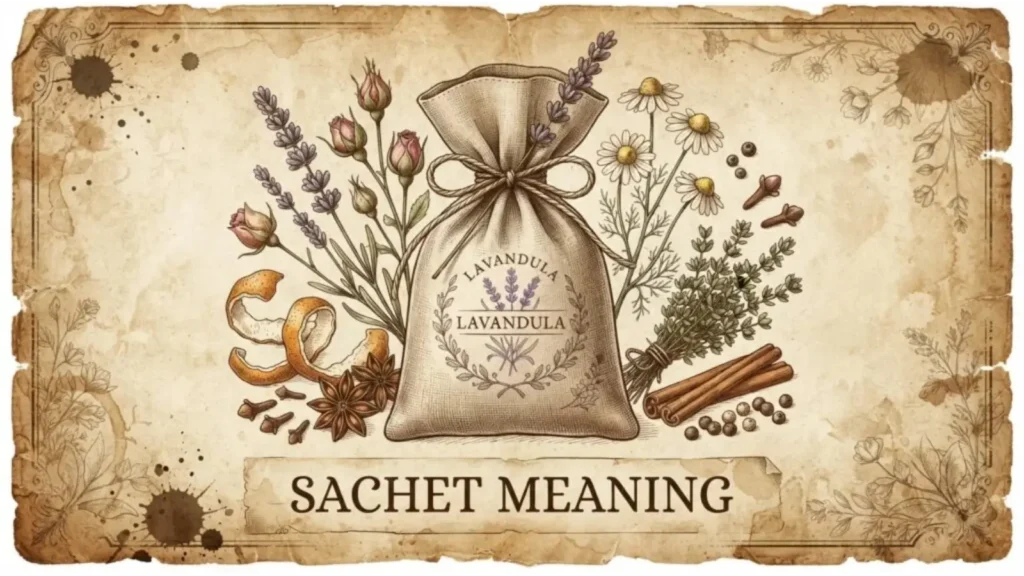
Historically, sachets were not mainly used for commercial products. In earlier times, people used small cloth bags filled with dried flowers, herbs, or spices to create pleasant smells.
A classic example is a lavender sachet — a small fabric pouch filled with dried lavender used to make clothes, drawers, and rooms smell fresh.
Over time, the meaning expanded. Today, sachet commonly refers to modern sealed packaging used for commercial products.
How the Meaning of Sachet Has Changed
The meaning of sachet has evolved from a decorative fragrance pouch to a practical packaging solution.
Traditional meaning:
A small cloth bag containing scented materials.
Example:
“My grandmother kept lavender sachets in her wardrobe.”
Modern meaning:
A small sealed packet containing a usable product.
Example:
“I bought a shampoo sachet while traveling.”
Today, when most people hear “sachet,” they think about small product packets rather than scented bags.
How to Pronounce Sachet
The correct pronunciation is:
Sachet = sa-SHAY
Phonetic spelling:
/sæˈʃeɪ/
The ending sounds like “shay,” not “chet.”
❌ Incorrect: sa-chet
✅ Correct: sa-SHAY
How to Use “Sachet” Correctly in Everyday Language
The word sachet is usually used as a noun. It describes the physical package, not the product inside.
Correct examples:
✅ “I bought a sachet of shampoo.”
✅ “Add one sachet of sauce to the meal.”
✅ “The company provides coffee in individual sachets.”
Incorrect examples:
❌ “I sacheted my shampoo.”
(“Sachet” is not normally used as a verb.)
Sachet in Different Contexts
The meaning stays similar, but the type of product changes depending on the situation.
1. Beauty and Personal Care
In cosmetics, sachets are extremely common.
Examples:
- Shampoo sachets
- Conditioner packets
- Face cream samples
- Hair treatment packs
A beauty brand may provide a sachet sample so customers can test a product before buying a full-size version.
2. Food and Beverages
Food companies use sachets for convenience and portion control.
Examples:
- Sugar sachets
- Sauce packets
- Coffee sachets
- Spice sachets
A restaurant may provide small ketchup or mayonnaise sachets because they are cleaner and easier to distribute.
3. Medicine and Healthcare
Some medicines and supplements are packaged in sachets.
Examples:
- Oral rehydration powder
- Vitamin powder
- Medical creams
Sachets help protect the product and make carrying individual doses easier.
4. Fragrance and Home Products
The original idea of sachets still exists today.
Examples:
- Lavender sachets
- Closet freshener sachets
- Drawer fragrance pouches
These are often made from fabric rather than plastic.
How to Use “Sachet” Correctly in Everyday Communication
Unlike internet slang or chat abbreviations, sachet is a standard English noun used in everyday speech, shopping conversations, product descriptions, and professional packaging discussions.
You normally use it when talking about a small sealed packet containing a specific amount of something.
Here are some natural examples:
- “This hotel provides shampoo sachets instead of bottles.”
- “Add one sachet of instant coffee to hot water.”
- “The skincare company sent me a free sachet sample.”
- “I bought several sauce sachets for my trip.”
The word sounds slightly formal compared with words like “packet” or “pack,” but it is widely understood internationally.
Sachet vs Packet: What’s the Difference?
Many people use sachet and packet as if they mean exactly the same thing. While they overlap, there is a small difference.
| Word | Meaning | Example |
|---|---|---|
| Sachet | A small sealed package usually containing a measured amount | A shampoo sachet |
| Packet | A broader term for any small package | A packet of chips |
| Pouch | Usually larger and sometimes reusable | A juice pouch |
| Bag | General container with many sizes | A shopping bag |
A sachet is technically a type of packet, but not every packet is called a sachet.
For example:
✅ Small ketchup package → sachet
✅ Coffee powder package → sachet
❌ Large cereal package → packet, not usually sachet
Real-Life Examples of Sachet Usage
Example 1: Between Friends
Friend 1: “I forgot my shampoo while traveling.”
Friend 2: “No problem. The store nearby sells shampoo sachets.”
Meaning:
Here, “sachet” refers to a small, affordable, single-use shampoo packet.
Example 2: Shopping Conversation
Customer: “Do you have smaller skincare sizes?”
Shopkeeper: “Yes, we have face cream sachets for testing.”
Meaning:
The sachet allows customers to try a product before buying a full-size container.
Example 3: Restaurant Situation
Customer: “Can I get extra ketchup?”
Staff: “Sure, here are some ketchup sachets.”
Meaning:
The sachet provides a hygienic single portion.
Example 4: Workplace Discussion
Manager: “We need cheaper packaging for our new product.”
Designer: “A sachet option could reduce packaging costs.”
Meaning:
Here, sachet refers to a business packaging solution.
Example 5: Travel Situation
Traveler: “I always carry coffee sachets when I go camping.”
Meaning:
The small packets make products easier to transport.
Common Mistakes & Misunderstandings About Sachet
Even though “sachet” seems simple, people often misunderstand how to use the word.
Mistake 1: Thinking Sachet Only Means Perfume Bags
Because the original French meaning involved scented pouches, some people think sachets only contain fragrance.
That is outdated.
Modern sachets can contain:
- Food products
- Cosmetics
- Medicine
- Cleaning products
- Drinks
- Spices
A perfume sachet is only one type.
Mistake 2: Pronouncing It Incorrectly
Many English learners pronounce it as:
❌ “sa-chet”
The correct pronunciation is:
✅ “sa-SHAY”
The French influence changes the ending sound.
Mistake 3: Using Sachet for Every Small Package
Not every small package is a sachet.
For example:
A chocolate wrapper is not usually called a sachet.
A sealed shampoo packet is.
The key idea is that sachets usually contain a measured amount of a product and are designed for convenience.
Cultural and Regional Differences in Sachet Usage
The popularity of sachets differs across countries and industries.
In Developing Markets
Sachets are especially common because they allow customers to buy products in affordable quantities.
For example:
- Shampoo sold in small daily-use packets
- Small detergent portions
- Individual food seasonings
This approach makes branded products accessible without requiring customers to purchase large containers.
In Western Markets
Sachets are often associated with:
- Hotel amenities
- Product samples
- Travel-size items
- Premium skincare testing
Many companies use sachets as a marketing tool to introduce customers to new products.
Generational Differences
Older generations may associate the word “sachet” with traditional scented bags.
Younger consumers are more likely to connect it with:
- Beauty samples
- Food packets
- Travel products
- Online shopping samples
The meaning depends heavily on the context.
“Sachet” Across Different Industries and Demographics
The word sachet appears in many fields, but its meaning stays consistent: a small, convenient package.
Sachets in Beauty and Skincare
Beauty companies frequently use sachets for:
- Face masks
- Serums
- Moisturizers
- Hair products
Why?
Because customers can test expensive products without purchasing a full bottle.
Sachets in Food Manufacturing
Food brands use sachets because they:
- Preserve freshness
- Control portions
- Reduce waste
- Improve portability
Common examples:
- Tea sachets
- Sauce sachets
- Spice mixes
- Instant drink powders
Sachets in Travel
Travelers love sachets because they save space.
A traveler may pack:
- Toothpaste sachets
- Shampoo sachets
- Coffee sachets
- Lotion sachets
They are lightweight and easy to carry.
Are Sachets Environmentally Friendly?
This is a growing discussion in packaging.
Advantages:
✅ Less material than large containers
✅ Easy transportation
✅ Reduced product waste
✅ Convenient portion sizes
Concerns:
❌ Many sachets use plastic layers
❌ Recycling can be difficult
❌ Single-use packaging creates waste
Many companies are now exploring biodegradable and recyclable sachet materials.
Related Terms, Synonyms & Alternatives
| Related Term | Meaning |
|---|---|
| Packet | A small container holding a product |
| Pouch | A flexible bag-like container |
| Sample pack | A small amount provided for testing |
| Mini pack | A smaller version of a product |
| Single-use package | Designed for one-time use |
| Portion pack | A measured amount for individual use |
| Wrapper | Material covering a product |
| Container | General term for holding something |
| Capsule | A small enclosed form, often for medicine |
| Sachet pouch | Another term for a small sealed packet |
FAQs:
What does sachet mean?
A sachet means a small sealed packet or pouch containing a product such as liquid, powder, cream, or fragrance. Sachets are commonly used for single portions because they are convenient, lightweight, and easy to transport.
Is sachet a French word?
Yes, sachet comes from the French word sachet, meaning a small bag or little sack. The original meaning referred to small fabric bags filled with scented herbs, but today it usually refers to sealed product packaging.
What is a sachet used for?
A sachet is used for packaging many products, including shampoo, coffee, spices, sauces, cosmetics, medicines, and perfumes. Businesses use sachets because they provide controlled portions and make products easier to distribute.
How do you pronounce sachet?
Sachet is pronounced “sa-SHAY.” The second syllable sounds like the English word “shay.” The pronunciation comes from its French origin.
Is a sachet the same as a packet?
A sachet is a type of packet, but the terms are not identical. A sachet usually refers to a small sealed package containing a measured amount of a product, often intended for one-time use.
Conclusion:
The sachet meaning is simple: a sachet is a small sealed packet designed to hold a specific amount of a product. From shampoo samples to coffee portions, sachets have become a major part of modern packaging.
Although the word originally described scented fabric pouches, its meaning has expanded into everyday products found around the world.
Next time you open a tiny packet of sauce, skincare cream, or shampoo, you’ll know exactly what it is a sachet.
Have you used an interesting sachet product recently? Share your favorite example and explore more everyday word meanings!

I’m Lina Roys, a passionate writer behind Storevian, where I make words, phrases, slang, and everyday expressions easy to understand. I create clear, engaging, and reader-friendly content to help people find the meanings they’re looking for, quickly and confidently.


