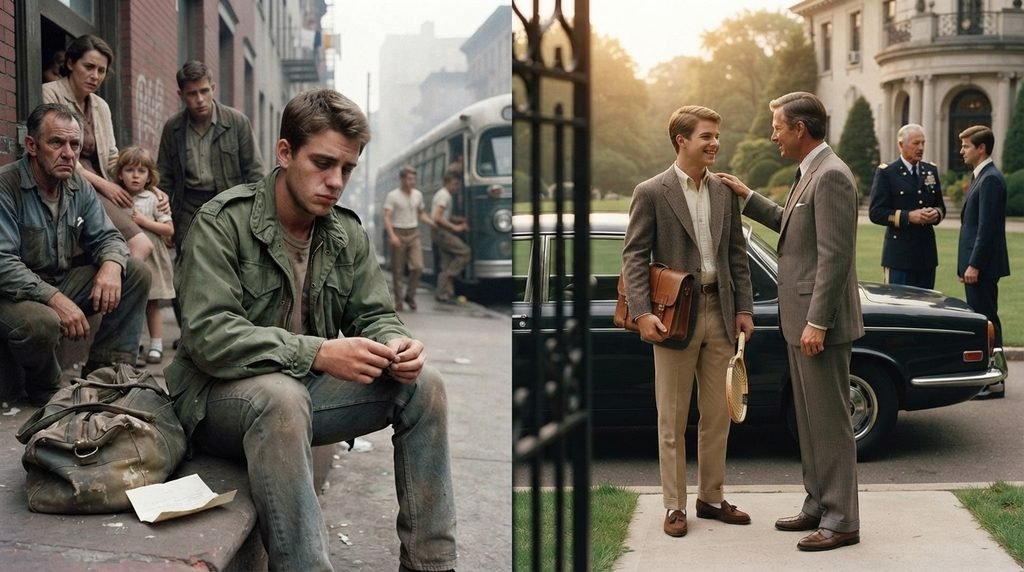
Ever heard a song in a movie, game, commercial, or social media clip and wondered, “Wait… what does fortunate son meaning actually refer to?” If so, you are not alone.
Creedence Clearwater Revival’s “Fortunate Son” sounds energetic and rebellious, but its message goes much deeper than a catchy classic-rock chorus. Released in 1969, the song became closely associated with the Vietnam War era and the growing anger over class privilege, political power, and who was expected to make sacrifices.
The title can sound positive at first. After all, being “fortunate” normally means being lucky. But in this song, the phrase is deliberately ironic. The “fortunate son” is someone born into privilege and protected by wealth, influence, or connections.
The song was written by John Fogerty and later became part of the U.S. Library of Congress National Recording Registry. The Library of Congress explains that the song was aimed not simply at the Vietnam War itself, but at the system determining who would fight it.
In this guide, we’ll break down the Fortunate Son meaning, its history, symbolism, cultural impact, and why people still use the phrase today.
What Does “Fortunate Son”
Quick Answer
“Fortunate Son” describes a privileged person who benefits from wealth, family connections, or political status while ordinary people carry the costs or risks created by powerful institutions.
The phrase is best known from Creedence Clearwater Revival’s famous 1969 song “Fortunate Son.”
John Fogerty wrote the song while thinking about the political and social inequality surrounding the Vietnam-era draft. The song contrasts ordinary young men with the sons of powerful or wealthy families who appeared better positioned to avoid the dangers of military service.
The Library of Congress describes the song as a protest against the system that determined who would fight, rather than simply a protest against the war itself. It also notes that Fogerty originally connected the title to the political expression “favorite son.”
Who Wrote “Fortunate Son”?
John Fogerty wrote, sang, arranged, and produced “Fortunate Son” with Creedence Clearwater Revival. The song was released as a single in September 1969 and appeared on the band’s album Willy and the Poor Boys later that year.
The song was eventually selected for the National Recording Registry in 2013, recognizing its cultural and historical significance.
Why Is the Title Ironic?
The word “fortunate” normally suggests someone who has good luck.
Fogerty flips that idea.
The “fortunate son” is fortunate because he has access to privilege. His family name, money, or political connections can shield him from consequences that affect people with fewer resources.
So the title is not really praise.
It is sarcasm.
How “Fortunate Son” Connects to the Vietnam War
To understand the song, you need a little historical context.
During the Vietnam War era, the U.S. military draft became a major source of public anger. Many young men faced the possibility of being drafted, while people with greater resources or connections could sometimes obtain deferments or other forms of favorable treatment.
Fogerty later explained that he was angry about the apparent contrast between politically connected families and ordinary young men who faced military service. In an interview with Pitchfork, he described his frustration with the perception that privileged children could receive safer assignments while less privileged young men faced combat.
That distinction matters.
“Fortunate Son” is often casually labeled an “anti-war song,” but its target is more specific. It attacks inequality surrounding war and sacrifice.
The basic argument is:
If powerful people can influence decisions about war while their own families avoid the consequences, ordinary people end up paying the price.
That idea gave the song its emotional punch.
How to Use “Fortunate Son” Correctly in Conversation
Unlike modern texting abbreviations such as “LOL” or “IMO,” fortunate son is not primarily internet slang.
It is a cultural phrase.
People generally use it when talking about someone who appears to benefit from family wealth, political influence, social connections, or inherited privilege.
Casual Example
Someone might say:
“He was born a fortunate son and never had to worry about money.”
Here, “fortunate son” means a man who grew up with significant advantages.
Political or Social Context
The phrase can also describe someone who receives opportunities because of family connections.
For example:
“He got the position because his father knew everyone in the industry. Talk about a fortunate son.”
The phrase is usually sarcastic or critical.
When You Should Avoid It
Be careful using it in formal professional writing unless you are discussing the song or the historical concept directly.
For example, this would sound odd in a business email:
“Our new manager is a fortunate son.”
In a formal setting, terms such as privileged, well-connected, or born into wealth are usually clearer.
Capitalization Matters
When referring to the song, write:
“Fortunate Son”
When using the phrase generically, lowercase is usually appropriate:
“He was born a fortunate son.”
The quotation marks and capitalization help readers understand when you mean the specific CCR song.
Real Conversation Examples Using “Fortunate Son”
1. Between Friends
Alex: “He bought his first house at 22.”
Sam: “His parents paid the down payment. Fortunate son, I guess.”
What it conveys:
This use is sarcastic. The speaker is pointing out that the person had a major financial advantage.
2. Talking About Family Wealth
Mia: “She inherited three properties from her grandparents.”
Jordan: “Wow. Definitely born into the fortunate-son life.”
What it conveys:
Here, the phrase describes inherited wealth rather than military privilege.
3. Political Discussion
Chris: “Some politicians talk about sacrifice, but their families never seem to experience the same risks.”
Taylor: “That’s basically the whole idea behind ‘Fortunate Son.’”
What it conveys:
This use connects directly to the song’s original criticism of privilege and unequal sacrifice.
4. Movie or TV Discussion
Lena: “Why does everyone use that song in Vietnam War scenes?”
Mark: “Because ‘Fortunate Son’ became strongly associated with the Vietnam era and its criticism of privilege.”
What it conveys:
The phrase is being used as a cultural reference rather than everyday slang.
5. Group Chat
Ryan: “My cousin got a job at his dad’s company without even applying.”
Jess: “Bro unlocked fortunate son mode 😂”
What it conveys:
This modern use is humorous and informal. The speaker borrows the cultural meaning of the song to joke about nepotism or inherited advantages.
Common Mistakes & Misunderstandings
Mistake 1: Thinking “Fortunate Son” Is a Compliment
The biggest misunderstanding is taking the title literally.
A “fortunate son” might sound like someone who is simply lucky. But in the song, the phrase is heavily ironic.
The song criticizes the advantages that come with privilege.
Mistake 2: Assuming the Song Is Simply “Anti-America”
That interpretation misses an important part of Fogerty’s message.
The song criticizes political and class inequality rather than attacking ordinary citizens or soldiers.
Fogerty has discussed the distinction between supporting his country and criticizing government decisions. His comments emphasize that the song’s anger came from perceived inequality and the unequal distribution of sacrifice.
Mistake 3: Treating It as Modern Internet Slang
“Fortunate Son” is not an abbreviation or chat acronym.
You won’t normally see it used like “BRB,” “LOL,” or “FR.”
Instead, people use the phrase as a cultural reference, especially when discussing privilege, inherited wealth, nepotism, or political power.
Generational Differences
Older listeners may immediately recognize the CCR song.
Younger audiences may know the phrase because it appears in movies, television, video games, memes, short-form videos, and historical discussions.
That can create an interesting disconnect: someone may use “fortunate son” as a joke without knowing the original Vietnam-era context.
“Fortunate Son” Across Different Platforms & Demographics
TikTok
On TikTok and other short-form platforms, the phrase may appear alongside videos about wealth, nepotism, politics, military history, or ironic demonstrations of privilege.
A creator might pair the song with a humorous video showing someone receiving an expensive gift from their parents.
The original political meaning can remain intact, but the tone may become comedic.
Instagram users may use “Fortunate Son” as a song in Reels, especially for historical footage, military-themed content, road-trip edits, or deliberately ironic videos.
Its instantly recognizable guitar-driven sound makes it useful when creators want a rebellious or old-school American-rock atmosphere.
X
On X, the phrase is more likely to appear in political or social commentary.
Someone discussing inherited wealth, political families, economic inequality, or privilege might call a person a “fortunate son” as a sarcastic reference to the CCR song.
Reddit discussions often give the phrase more context.
Users may discuss the Vietnam War, classic rock, political history, military service, or the meaning behind the lyrics. In those conversations, “fortunate son” usually carries its original criticism of privilege.
Discord and Gaming Communities
Gaming communities sometimes use the phrase humorously.
For example:
“He bought the premium bundle on day one. Fortunate son 😂”
In this setting, the expression is usually playful rather than political.
Is “Fortunate Son” Formal or Informal?
The phrase is generally informal and culturally loaded.
It is perfectly suitable for an article about the song, history, politics, music, or popular culture.
However, if you’re writing a formal workplace document, use more precise language such as:
- privileged individual
- wealthy heir
- politically connected person
- beneficiary of family wealth
- person born into privilege
Why “Fortunate Son” Still Matters Today
More than five decades after its release, “Fortunate Son” continues to resonate because its central theme is broader than Vietnam.
The song asks a question that remains relevant in many societies:
Who gets to make decisions, and who has to live with the consequences?
That question can apply to war, politics, wealth, education, employment, and social mobility.
The song has also remained deeply embedded in popular culture. The Library of Congress selected it for the National Recording Registry in 2013, and official music releases and performances have continued to introduce it to new generations.
Its meaning has therefore expanded without completely losing its original message.
Related Slang, Abbreviations & Alternatives
| Term | Meaning |
|---|---|
| Silver spoon | Being born into wealth or privilege |
| Privileged | Having advantages unavailable to many others |
| Nepotism | Favoring family members in jobs or opportunities |
| Old money | Wealth inherited through generations |
| Trust fund kid | Informal term for someone financially supported by inherited wealth |
| Daddy’s money | Money provided by wealthy parents |
| Born lucky | Someone who starts life with major advantages |
| Well-connected | Having influential social or professional relationships |
| Elite | People with significant wealth, status, or power |
| Favorite son | A favored person, especially in political or organizational contexts |
“Fortunate Son” vs. “Silver Spoon”
These expressions overlap, but they are not identical.
Silver spoon focuses mainly on wealth and privileged upbringing.
Fortunate Son carries a stronger historical and political association because of the CCR song.
“Fortunate Son” vs. “Nepotism”
Nepotism describes a practice or behavior: giving opportunities to relatives.
“Fortunate son” describes the person who may benefit from family privilege.
FAQs:
What does “Fortunate Son” mean?
“Fortunate Son” refers to a privileged person who benefits from wealth, family influence, or political connections while ordinary people face greater risks or sacrifices. The phrase became famous through Creedence Clearwater Revival’s 1969 song, where John Fogerty used it ironically to criticize class inequality and unequal burdens during the Vietnam War era.
Is “Fortunate Son” about the Vietnam War?
Yes, but the song’s message is more specific than simply opposing the Vietnam War. It criticizes the system surrounding military service and the unequal burden placed on ordinary people. The Library of Congress describes the song as a protest against the system that determined who would fight, rather than simply a protest against the war itself.
Who wrote “Fortunate Son”?
John Fogerty wrote “Fortunate Son” for Creedence Clearwater Revival. He also performed and produced the recording. The song appeared on Willy and the Poor Boys, which was released in 1969. Fogerty later explained that the song developed rapidly; the Library of Congress records his account that he wrote the lyrics in about twenty minutes.
Why is “Fortunate Son” considered a protest song?
The song is considered a protest song because it challenges the relationship between political power, wealth, patriotism, and personal sacrifice. Rather than accepting the idea that everyone shares the same burden, Fogerty highlights the advantages available to privileged families during the Vietnam era. Its sharp lyrics and aggressive rock sound helped turn it into a major counterculture anthem.
Why is “Fortunate Son” still popular today?
The song remains popular because its themes are easy to recognize: privilege, inequality, inherited advantages, and unequal sacrifice. It also has an instantly recognizable rock sound and has become strongly associated with Vietnam-era imagery in popular culture. The Library of Congress included it in the National Recording Registry in 2013 because of its cultural and historical significance.
Is “fortunate son” an insult?
It can be, depending on context. When someone calls another person a “fortunate son,” they may be sarcastically pointing out that the person benefits from wealth, family connections, or privilege. However, it can also be used neutrally when discussing the CCR song or its historical meaning. Tone and context determine whether the phrase sounds humorous, critical, or descriptive.
Can I use “fortunate son” in everyday conversation?
Yes, but it is more of a cultural reference than everyday slang. You can use it jokingly to describe someone who receives major advantages from wealthy or influential parents. For example, calling a friend a “fortunate son” after their parents buy them an expensive car can be playful, especially if both people understand the reference.
Conclusion:
The Fortunate Son meaning is ultimately about privilege, inequality, and unequal sacrifice. Although the phrase sounds positive, John Fogerty used it ironically to criticize people whose wealth or connections could protect them from consequences faced by ordinary citizens.
The 1969 Creedence Clearwater Revival song became a defining protest track of its era, but its message didn’t stay trapped in the Vietnam War. Today, “fortunate son” can also describe inherited wealth, nepotism, political privilege, or someone who seems to have life on easy mode.
That is what makes the phrase so memorable: it is short, sarcastic, and loaded with history. The next time you hear “Fortunate Son” blasting from a movie scene or a social-media video, you’ll know there’s much more behind those words than a classic-rock soundtrack.
Know another slang phrase or song title whose meaning deserves a deeper explanation? Drop it in the comments and explore more language guides.

I’m Lina Roys, a passionate writer behind Storevian, where I make words, phrases, slang, and everyday expressions easy to understand. I create clear, engaging, and reader-friendly content to help people find the meanings they’re looking for, quickly and confidently.


