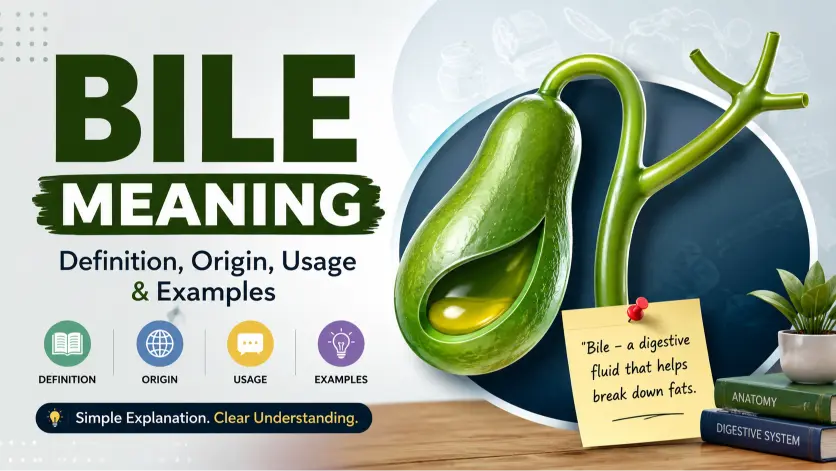
Have you ever heard a doctor mention bile or read the word in a medical report and wondered what it actually means? You’re not alone. Although it’s a common biological term, many people aren’t sure what bile does or why it’s so important for digestion.
Bile meaning goes beyond a simple dictionary definition. It’s a vital digestive fluid that helps your body process fats, absorb important vitamins, and remove waste products. Interestingly, the word “bile” also has a figurative meaning, describing bitterness, resentment, or harsh language.
Whether you’re a student, reading your health records, or simply curious about how your digestive system works, this guide explains everything in clear, everyday language.
Updated for 2026: This guide reflects current medical understanding and common English usage to give you accurate, easy-to-understand information.
What Does Bile Meaning Mean?
Quick Answer
Bile is a yellow-green digestive fluid produced by the liver and stored in the gallbladder. It helps digest fats, absorb fat-soluble vitamins, and remove waste from the body. The word can also describe extreme bitterness or anger in speech or writing.
Simple Definition
The bile meaning in medicine refers to a natural digestive fluid created by the liver. Unlike stomach acid, bile doesn’t contain digestive enzymes. Instead, it contains bile salts that break large fat droplets into tiny ones, making them easier for the body to digest.
Without bile, eating fatty foods would become much more difficult because your digestive system couldn’t process fats efficiently.
Pronunciation
Bile is pronounced:
/baɪl/
It sounds like “while” without the w.
Origin of the Word “Bile”
The word bile comes from the Latin word bilis, meaning “gall” or “bitter fluid.”
Ancient physicians believed excess bile influenced a person’s emotions. This idea became part of the ancient theory of the four humours, where yellow bile was associated with anger and an irritable personality.
Although modern medicine no longer supports that theory, the figurative meaning survived. That’s why people still say someone is “spitting bile” when speaking with extreme bitterness or hostility.
Bile Meaning in the Human Body
From a medical perspective, bile performs several essential functions.
1. Helps Digest Fats
Bile breaks large fat droplets into much smaller ones. This process, called emulsification, allows digestive enzymes to work much more effectively.
2. Helps Absorb Vitamins
Bile enables your body to absorb fat-soluble vitamins, including:
- Vitamin A
- Vitamin D
- Vitamin E
- Vitamin K
Without enough bile, these vitamins may not be absorbed properly.
3. Removes Waste
Bile also carries waste materials, including:
- Excess cholesterol
- Bilirubin (a breakdown product of red blood cells)
- Certain toxins
These wastes eventually leave the body through the digestive tract.
4. Supports Healthy Digestion
By improving fat digestion, bile contributes to smoother digestion and healthier nutrient absorption after meals.
Literal vs. Figurative Meaning of Bile
The word bile has two common meanings depending on the context.
| Meaning | Example |
|---|---|
| Medical | The liver produces bile to digest fats. |
| Figurative | His speech was filled with bile and resentment. |
In health-related articles, “bile” almost always refers to the digestive fluid. In literature, news articles, or everyday conversations, it often symbolizes anger, hatred, or bitterness.
Everyday Examples
Medical Example
“My doctor explained that bile helps my body digest fatty foods.”
Meaning: Refers to the digestive fluid.
Health Example
“Gallstones blocked the flow of bile.”
Meaning: Discusses the normal movement of bile through the digestive system.
Figurative Example
“The politician’s speech was full of bile.”
Meaning: The speech contained harsh, hateful, or bitter language.
Literature Example
“The novel describes the villain speaking with bile and resentment.”
Meaning: Emotional bitterness rather than the digestive fluid.
Why Understanding Bile Matters
Knowing the bile meaning helps you better understand:
- Medical reports
- Digestive health
- Liver function
- Gallbladder diseases
- Nutrition and fat digestion
- Health articles and doctor consultations
It also prevents confusion when the word appears in books or news stories with its figurative meaning of bitterness or hostility.
How to Use Bile Correctly in Medical and Everyday English
Unlike internet slang or text abbreviations, bile is a standard English word. You’ll mostly encounter it in medical discussions, biology classes, health articles, and occasionally in books or news stories where it refers to bitterness or hatred.
Understanding the context makes it easy to know which meaning is intended.
In Medical Contexts
Use bile when talking about the digestive system, liver, gallbladder, or digestion.
Examples:
- “The liver produces bile every day.”
- “Bile helps digest fats after you eat.”
- “The ultrasound showed a blockage in the bile duct.”
- “Too little bile can make it harder to absorb certain vitamins.”
These are the most common uses you’ll see in healthcare.
In Everyday Language
Outside medicine, bile is often used metaphorically to describe extreme anger, resentment, or hateful words.
Examples:
- “She responded with bile instead of kindness.”
- “His online comments were full of bile.”
- “The article was written with obvious bile toward the company.”
Here, bile doesn’t refer to digestion—it symbolises emotional bitterness.
When NOT to Use the Word
People sometimes confuse bile with similar-sounding words.
Avoid using it when you actually mean:
- Acid reflux
- Stomach acid
- Vomit
- Heartburn
- Indigestion
Although bile may sometimes be present in vomit, the two words are not interchangeable.
❌ “Bile is stomach acid.”
✅ “Bile is a digestive fluid produced by the liver.”
Medical Terms Related to Bile
You’ll often see bile combined with other medical terms.
| Term | Meaning |
|---|---|
| Bile duct | A tube that carries bile from the liver and gallbladder to the small intestine. |
| Bile salts | Natural chemicals that help break down fats. |
| Bile acid | Acids found in bile that aid digestion. |
| Bile reflux | When bile flows backward into the stomach. |
| Biliary system | The organs and ducts that produce, store, and transport bile. |
| Gallbladder | Organ that stores bile until it’s needed. |
| Gallstones | Hardened deposits that may block bile flow. |
Knowing these related terms makes medical reports much easier to understand.
How Bile Works During Digestion
To understand the bile meaning, it helps to know what happens after you eat.
Step 1: The Liver Produces Bile
Your liver constantly makes bile—even when you’re not eating.
Step 2: The Gallbladder Stores It
Instead of immediately entering the intestine, bile is stored and concentrated inside the gallbladder.
Step 3: You Eat Fatty Food
When you eat foods containing fat—such as cheese, eggs, nuts, fish, or avocado—the digestive system signals the gallbladder.
Step 4: Bile Is Released
The gallbladder squeezes bile through the bile ducts into the small intestine.
Step 5: Fat Is Broken Down
Bile surrounds fat droplets and breaks them into tiny particles. This process is called emulsification.
Digestive enzymes can then easily break the fat down.
Step 6: Nutrients Are Absorbed
Your body absorbs:
- Healthy fats
- Vitamin A
- Vitamin D
- Vitamin E
- Vitamin K
These nutrients are essential for vision, immunity, bone health, and blood clotting.
What Happens When Bile Doesn’t Flow Properly?
Problems with bile can affect digestion and overall health.
Gallstones
Gallstones may block the flow of bile, causing:
- Sudden pain in the upper abdomen
- Nausea
- Vomiting
- Fever (if infection develops)
Bile Duct Blockage
A blocked bile duct prevents bile from reaching the intestines.
Possible symptoms include:
- Yellow skin (jaundice)
- Dark urine
- Pale stools
- Itchy skin
Bile Reflux
Bile can sometimes travel backward into the stomach.
Symptoms may include:
- Burning stomach pain
- Frequent nausea
- Vomiting green or yellow fluid
- Ongoing indigestion
Liver Disease
Conditions affecting the liver can reduce bile production.
Examples include:
- Hepatitis
- Cirrhosis
- Fatty liver disease
Signs Your Body May Have Bile Problems
Although only a healthcare professional can diagnose bile disorders, some symptoms may suggest something isn’t working properly.
Common warning signs include:
- Persistent pain below the right ribs
- Yellow eyes or skin
- Oily or greasy stools
- Difficulty digesting fatty meals
- Chronic nausea
- Unexpected weight loss
- Pale bowel movements
- Dark-coloured urine
If these symptoms continue, medical evaluation is important.
Common Mistakes & Misunderstandings About Bile
Even though bile is a common medical term, it’s often misunderstood.
1. Thinking Bile Is Stomach Acid
This is the most common mistake.
Reality:
- Bile is made in the liver.
- Stomach acid is made in the stomach.
They perform completely different jobs.
2. Believing the Gallbladder Produces Bile
Many people assume bile is made inside the gallbladder.
Actually:
- The liver produces bile.
- The gallbladder stores it.
Think of the gallbladder as a storage tank rather than a factory.
3. Assuming Everyone Needs a Gallbladder Forever
People often worry that removing the gallbladder means they can’t digest food.
In reality:
- The liver continues producing bile.
- Bile simply flows directly into the small intestine instead of being stored.
Most people can eat normally after recovery, although some may need temporary dietary adjustments.
Figurative Meaning: Why Does “Bile” Mean Bitterness?
Centuries ago, doctors believed emotions were controlled by bodily fluids called the four humours.
One of these was yellow bile, which was thought to cause anger and irritability.
Modern medicine has disproved this theory, but the language remains.
That’s why phrases like these still exist:
- “He spat bile.”
- “Her words dripped with bile.”
- “The article was full of bile.”
In modern English, these expressions simply describe bitterness, hostility, or hatred—not the digestive fluid.
Bile Meaning in Different Contexts
| Context | Meaning |
|---|---|
| Medicine | Digestive fluid produced by the liver |
| Biology | Helps digest fats |
| Anatomy | Part of the digestive system |
| Literature | Symbol of bitterness |
| News | Harsh criticism or hateful language |
| Everyday English | Extreme resentment or hostility |
Understanding the surrounding sentence usually makes the intended meaning immediately clear.
Bile Across Different Contexts & Demographics
Unlike internet slang, bile is understood across all age groups because it’s a standard English word. However, the way people encounter it differs depending on their interests and daily life.
Students
Students usually learn about bile in:
- Biology classes
- Human anatomy lessons
- Medical entrance exams
- Health textbooks
Here, bile is presented purely as a digestive fluid.
Healthcare Professionals
Doctors, nurses, pharmacists, and dietitians frequently use the word when discussing:
- Liver diseases
- Gallbladder conditions
- Digestive disorders
- Medical imaging
- Surgery
For healthcare professionals, “bile” is an everyday medical term.
General Readers
Most people come across bile when searching online about:
- Gallstones
- Stomach pain
- Liver health
- Digestive problems
- Medical test results
Many searches begin with simple questions like:
- “What does bile mean?”
- “Why is bile important?”
- “Can bile cause stomach pain?”
Writers and Journalists
In books, newspapers, and opinion articles, bile often has a figurative meaning.
For example:
“His speech was filled with bile.”
This means the speech contained hatred, resentment, or harsh criticism—not digestive fluid.
Is “Bile” a Formal or Informal Word?
The answer depends on how it’s used.
| Context | Formal or Informal? |
|---|---|
| Medical reports | Formal |
| Science textbooks | Formal |
| Doctor consultations | Formal |
| News articles | Formal |
| Everyday conversations | Neutral |
| Literary descriptions | Formal/Figurative |
Unlike slang, bile is perfectly acceptable in professional and academic writing.
Related Medical Terms & Alternatives
If you’re learning the bile meaning, these related terms can help you better understand digestive health.
| Term | Meaning |
|---|---|
| Gallbladder | Stores bile until digestion begins. |
| Liver | Produces bile continuously. |
| Bile duct | Carries bile to the small intestine. |
| Bile salts | Help digest dietary fats. |
| Bilirubin | Yellow pigment removed through bile. |
| Gallstones | Hardened deposits that may block bile flow. |
| Jaundice | Yellowing of the skin caused by excess bilirubin. |
| Emulsification | Process of breaking fat into tiny droplets. |
| Digestive enzymes | Chemicals that break down food. |
| Small intestine | Where bile helps digest fats. |
Related Health Topics
You may also want to learn about:
- Gallstones
- Gallbladder removal
- Liver function
- Jaundice
- Bilirubin
- Digestive enzymes
- Fat digestion
- Hepatitis
These topics naturally build on your understanding of bile and the digestive system.
FAQs
What does bile mean in simple words?
Bile is a yellow-green digestive fluid produced by the liver. It helps your body digest fats, absorb certain vitamins, and remove waste. In everyday English, the word can also describe extreme bitterness or anger.
What colour is bile?
Healthy bile is usually yellow, green, or yellowish-green. Its exact colour depends on its concentration and the pigments it contains.
Is bile the same as stomach acid?
No. They are completely different.
- Bile is made in the liver and helps digest fats.
- Stomach acid is produced in the stomach and helps break down food while killing harmful bacteria.
Why is bile important for digestion?
Bile breaks large fat droplets into much smaller ones, making them easier for digestive enzymes to process. It also helps the body absorb vitamins A, D, E, and K.
Can a person live without a gallbladder?
Yes. The liver continues to produce bile even after the gallbladder is removed. Instead of being stored, bile flows directly into the small intestine. Most people can live healthy, normal lives without a gallbladder.
What causes bile problems?
Common causes include:
- Gallstones
- Liver disease
- Bile duct blockages
- Infections
- Certain inherited conditions
These issues can interfere with the normal flow or production of bile.
Why do people use “bile” to mean anger?
The figurative meaning comes from ancient beliefs that yellow bile caused anger and irritability. Although modern medicine no longer accepts this theory, the expression remains common in English to describe bitter or hateful speech.
Can bile appear in vomit?
Yes. Vomiting yellow or green fluid may indicate the presence of bile, especially if the stomach is empty. Persistent vomiting of bile should be evaluated by a healthcare professional.
Conclusion:
Understanding the bile meaning is useful whether you’re reading a medical report, studying biology, or simply trying to understand how your digestive system works. Bile is far more than just another body fluid it plays a vital role in breaking down fats, absorbing essential vitamins, and removing waste from the body.
It’s also worth remembering that bile has two meanings. In medicine, it refers to a digestive fluid produced by the liver. In literature and everyday English, it often symbolises bitterness, resentment, or harsh language. The surrounding context will usually make the intended meaning clear.
Now that you know what bile meaning is, you’ll be able to recognise the term confidently in health articles, medical discussions, and everyday English.
Have another medical or English word you’re curious about? Keep exploring our meaning guides to expand your vocabulary and better understand the language used in healthcare and daily life.

I’m Lina Roys, a passionate writer behind Storevian, where I make words, phrases, slang, and everyday expressions easy to understand. I create clear, engaging, and reader-friendly content to help people find the meanings they’re looking for, quickly and confidently.


