Walk into a supermarket, browse an online store, or scroll through your favorite brand’s websiteeverything you see for sale is considered merchandise. Yet many people still wonder about the exact merchandise meaning, especially when they encounter the term in business, retail, accounting, or eCommerce.
Is merchandise the same as products? Does it only refer to clothing? And why do businesses use the word so often instead of simply saying “items” or “goods”?
Understanding this term is more useful than you might think. Whether you’re a student, shopper, entrepreneur, or someone improving their English vocabulary, knowing what merchandise means helps you better understand retail, marketing, inventory management, and everyday conversations.
In this guide, you’ll learn the merchandise meaning, where the word comes from, how it’s used in different industries, common examples, and how it differs from similar terms like goods and products. By the end, you’ll be able to use the word naturally and confidently.
What Does “Merchandise Meaning“?
The merchandise meaning is simple:
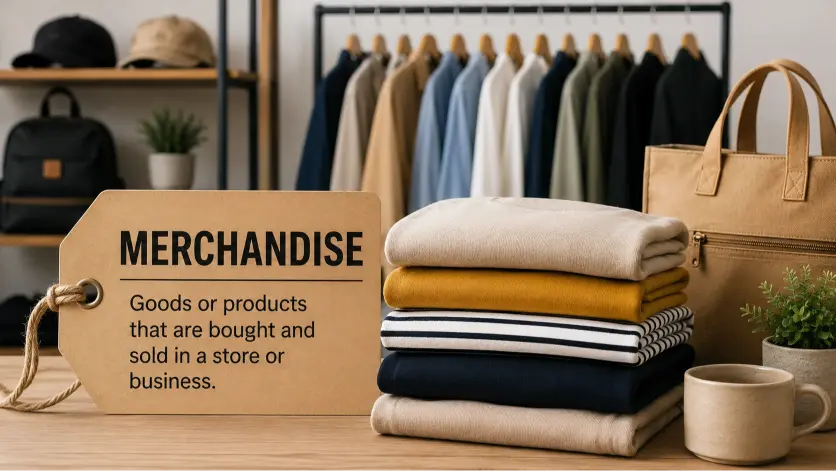
Merchandise refers to any goods or products that are bought and sold for profit. These items are offered to customers by retailers, wholesalers, manufacturers, or online sellers.
In everyday English, merchandise includes almost anything you can purchase from a store or website.
Examples include:
- Clothing
- Shoes
- Smartphones
- Books
- Toys
- Furniture
- Groceries
- Cosmetics
- Sports equipment
- Home appliances
If a business sells it to customers, there’s a good chance it’s considered merchandise.
Quick Answer
Merchandise is any product or item that a business sells to customers for profit, whether in a physical store or online.
Origin of the Word “Merchandise”
The word merchandise has existed for hundreds of years.
It originates from the Old French word marchandise, meaning “trade” or “goods for sale.” That term came from the word merchant, referring to someone who buys and sells goods.
Over time, the meaning evolved into the modern definition we use today:
Goods that are available for sale.
As global trade expanded, the word became common in commerce, retail, shipping, accounting, and international business.
Today, you’ll hear it everywhere—from Amazon product listings to clothing brands and supermarket chains.
Pronunciation
Merchandise
UK & US Pronunciation:
/ˈmɜːr.tʃən.daɪz/
Say it like:
MER-chuhn-dize
Breaking it down:
- MER
- chuhn
- dize
Merchandise Definition in Business
In business, merchandise has a slightly more specific meaning.
It refers to inventory that a company purchases or manufactures with the intention of selling to customers.
Businesses keep track of merchandise because it directly affects:
- Sales
- Revenue
- Inventory
- Profit
- Taxes
- Financial reporting
For example:
A clothing retailer buys 500 jackets from a supplier.
Those jackets become the store’s merchandise inventory until customers purchase them.
Once sold, they contribute to the company’s revenue.
This is why accountants frequently use terms like:
- Merchandise inventory
- Merchandise sales
- Merchandise purchases
- Merchandise returns
These phrases all relate to products intended for resale.
Merchandise vs Goods vs Products
Many people use these words interchangeably, but they have subtle differences.
| Term | Meaning | Example |
|---|---|---|
| Merchandise | Items specifically offered for sale | Shoes in a retail store |
| Goods | Physical tangible items | Furniture, groceries |
| Products | Anything created for consumers, physical or digital | Software, books, clothing |
Merchandise
This word emphasizes selling.
If a retailer stocks 1,000 T-shirts, those shirts are merchandise.
Goods
Goods usually refer to physical items.
For example:
- Fresh fruit
- Television
- Desk
- Bicycle
Services like haircuts or consulting are not goods.
Products
Products are broader.
A product can be:
- A physical item
- A digital download
- An online course
- Software
- A subscription
That’s why every merchandise item is generally a product, but not every product is merchandise.
For instance, a Netflix subscription is a product, but it isn’t merchandise in the traditional retail sense.
Types of Merchandise
Retailers organize merchandise into different categories to make inventory management easier.
Some common types include:
Apparel Merchandise
- Shirts
- Jeans
- Jackets
- Dresses
- Shoes
- Hats
Fashion retailers rely heavily on apparel merchandise.
Grocery Merchandise
Supermarkets stock thousands of grocery merchandise items, including:
- Fruits
- Vegetables
- Snacks
- Dairy products
- Frozen foods
- Beverages
Electronic Merchandise
Technology stores sell merchandise such as:
- Smartphones
- Tablets
- Laptops
- Headphones
- Smartwatches
- Gaming consoles
Home Merchandise
Home improvement and furniture stores offer:
- Sofas
- Beds
- Lamps
- Kitchenware
- Curtains
- Decorative items
Seasonal Merchandise
Some merchandise is sold only during specific times of the year.
Examples include:
- Christmas decorations
- Halloween costumes
- Valentine’s Day gifts
- Easter baskets
- School supplies during back-to-school season
Retailers often introduce seasonal merchandise to increase sales during holidays and special occasions.
How to Use Merchandise Correctly
Knowing the merchandise meaning is only half the story. The next step is understanding how to use the word naturally in conversations, writing, business, and everyday situations.
Unlike internet slang or abbreviations, merchandise is a standard English noun. It’s commonly used in retail, eCommerce, marketing, accounting, and even casual conversations when talking about items for sale.
When to Use the Word “Merchandise”
Use merchandise when referring to products or goods that are available for purchase.
“The store received new merchandise this morning.”
“All holiday merchandise is 30% off.”
“The merchandise sold out within two hours.”
“Customers loved the new merchandise collection.”
In each example, the word refers to products intended for sale.
When NOT to Use “Merchandise”
Although the term is broad, it doesn’t fit every situation.
Avoid using merchandise when talking about:
- Services
- Digital subscriptions
- Experiences
- Skills
- Ideas
For example:
❌ “Netflix merchandise”
Better:
✅ “Netflix subscription”
However, if Netflix sells T-shirts, hoodies, or mugs with its logo, those physical items are Netflix merchandise.
Merchandise in Everyday Conversations
You don’t have to own a business to use this word.
People often say:
- “Did you see the new merchandise at the mall?”
- “The band’s merchandise looks amazing.”
- “Their official merchandise is expensive.”
- “I bought some merchandise after the concert.”
In these cases, merchandise simply means products being sold.
Merchandise in Retail
Retail businesses use the word constantly.
Examples include:
- New merchandise arrivals
- Discounted merchandise
- Damaged merchandise
- Premium merchandise
- Imported merchandise
Retail employees also talk about:
- Stocking merchandise
- Displaying merchandise
- Organizing merchandise
- Pricing merchandise
Merchandise in eCommerce
Online stores also rely on merchandise.
For example:
- Amazon merchandise
- Etsy merchandise
- Shopify merchandise
- Brand merchandise
An online clothing store might announce:
“Check out our newest merchandise collection.”
That tells customers new products are available.
Merchandise in Accounting
Accountants use the word in a very specific way.
You’ll often hear terms like:
Merchandise Inventory
Products currently in stock that will be sold.
Merchandise Purchases
Items bought from suppliers.
Merchandise Sales
Revenue generated from selling inventory.
Merchandise Returns
Products customers send back for refunds or exchanges.
These terms appear frequently in accounting textbooks and financial statements.
Real-Life Examples of Merchandise
Here are some practical examples from different industries.
Clothing Store
Merchandise includes:
- Jeans
- Jackets
- Shoes
- Hoodies
- Dresses
- Accessories
Grocery Store
Merchandise includes:
- Milk
- Bread
- Vegetables
- Rice
- Snacks
- Soft drinks
Electronics Store
Merchandise includes:
- Smartphones
- Laptops
- Smart TVs
- Gaming consoles
- Chargers
- Earbuds
Bookstore
Merchandise includes:
- Books
- Journals
- Pens
- Calendars
- Educational materials
Sports Store
Merchandise includes:
- Footballs
- Cricket bats
- Tennis rackets
- Running shoes
- Jerseys
Merchandise in Different Industries
The exact meaning stays the same, but the products change depending on the business.
Retail Industry
Merchandise refers to all products available for customers.
Example:
A supermarket has over 20,000 merchandise items.
Fashion Industry
Fashion merchandise includes:
- Clothing
- Footwear
- Jewelry
- Bags
- Sunglasses
Entertainment Industry
You’ll often hear the phrase:
Official Merchandise
Examples include:
- Band T-shirts
- Movie posters
- Action figures
- Character mugs
- Hoodies
Fans buy these items to support their favorite creators or franchises.
Sports Industry
Professional teams sell merchandise such as:
- Jerseys
- Caps
- Scarves
- Water bottles
- Team flags
This merchandise helps generate additional revenue beyond ticket sales.
Corporate Businesses
Companies also order promotional merchandise, including:
- Branded pens
- Coffee mugs
- Tote bags
- USB drives
- Notebooks
These products are often given away during marketing campaigns or business events.
Common Mistakes People Make
Many learners confuse merchandise with similar words.
Here are the biggest mistakes.
Mistake 1: Thinking Merchandise Means Only Clothing
Many people believe merchandise only refers to apparel.
That’s incorrect.
Merchandise includes almost anything sold in a store.
Example:
A supermarket sells groceries as merchandise.
Mistake 2: Confusing Merchandise with Goods
These words are similar but not identical.
Goods are tangible physical items.
Merchandise emphasizes items intended for sale.
Every merchandise item is generally a good, but the word focuses on commercial selling.
Mistake 3: Assuming Digital Products Are Merchandise
People often ask whether apps or online courses are merchandise.
Usually, no.
Digital products are generally referred to simply as products or digital goods.
Traditional merchandise usually means physical items sold to customers.
Merchandise vs Inventory
These two business terms often appear together.
| Merchandise | Inventory |
|---|---|
| Products intended for sale | Everything a business has in stock |
| Usually customer-facing | May include raw materials |
| Common in retail | Used across manufacturing and retail |
Example:
A furniture company has:
- Wood (inventory)
- Nails (inventory)
- Tables ready for customers (merchandise)
Synonyms of Merchandise
Depending on the context, you can replace merchandise with words like:
- Goods
- Products
- Stock
- Inventory
- Items
- Wares
- Commodities
- Supplies
- Retail goods
Each has slightly different usage, but all relate to things being sold.
Related Business Terms
Learning these words alongside merchandise meaning will strengthen your business vocabulary.
| Term | Meaning |
|---|---|
| Inventory | Stock a business owns |
| Retail | Selling directly to customers |
| Wholesale | Selling in bulk to retailers |
| Supplier | Company providing merchandise |
| Consumer | Person who buys merchandise |
| Stock | Goods available for sale |
| SKU | Unique product identification code |
| Retailer | Business selling merchandise |
| Distributor | Business moving products between companies |
| Merchandising | Planning and displaying products to increase sales |
These terms frequently appear in business studies, retail management, and eCommerce.
Merchandise in Sentences
Here are more natural examples.
- The store introduced new merchandise before the holiday season.
- Customers lined up early to purchase limited-edition merchandise.
- All damaged merchandise was removed from the shelves.
- The retailer imports merchandise from several countries.
- Summer merchandise usually arrives in early spring.
- The warehouse stores thousands of merchandise items.
- Official concert merchandise sold out before the show ended.
- The business reduced prices to clear old merchandise.
These examples show how flexible the word is in everyday English.
Is “Merch” the Same as Merchandise?
Yes—merch is simply a shortened, informal version of merchandise.
You’ll often hear:
- “I bought some merch.”
- “New merch drops Friday.”
- “Official merch available now.”
The word merch is especially popular among:
- YouTubers
- Streamers
- Musicians
- Sports teams
- Clothing brands
- Influencers
While merchandise is more formal and commonly used in business, merch is perfect for casual conversations and marketing campaigns.
FAQs:
What does merchandise mean in simple words?
Merchandise means goods or products that are available for sale. These items are sold by businesses to customers through physical stores, online shops, or marketplaces. Examples include clothing, electronics, books, toys, and groceries.
Is merchandise the same as products?
Not exactly. All merchandise is generally considered a product, but not every product is merchandise. Merchandise usually refers to physical items offered for sale, while products can also include digital goods, software, subscriptions, or services.
What is merchandise in retail?
In retail, merchandise includes all the products displayed and sold to customers. This can range from fashion and home décor to food, electronics, and beauty products. Retailers organize merchandise into categories to make shopping easier and improve sales.
What is merchandise inventory?
Merchandise inventory is the stock of goods a business owns and plans to sell. It is recorded as a current asset on a company’s balance sheet and plays an important role in accounting, inventory management, and financial reporting.
Can merchandise be digital?
Traditionally, merchandise refers to physical goods. However, some businesses may use the term more broadly to include downloadable products or digital collectibles. In most retail and accounting contexts, merchandise means tangible items sold to customers.
What is official merchandise?
Official merchandise includes products that are licensed or approved by a brand, company, sports team, musician, or movie franchise. Examples include branded T-shirts, hoodies, mugs, action figures, posters, and accessories sold through authorized retailers.
What is the difference between merchandise and goods?
The terms are closely related, but they have different emphasis:
- Goods refers to tangible physical items.
- Merchandise refers to goods specifically intended for sale.
For example, a television in a store is both a good and merchandise, but the word merchandise highlights its commercial purpose.
Why is merchandise important in business?
Merchandise is the foundation of most retail businesses. It generates revenue, attracts customers, builds brand recognition, and directly impacts profitability. Effective merchandising also improves customer experience by making products easier to find and more appealing to purchase.
Conclusion:
Whether you’re shopping online, studying business, or improving your English vocabulary, understanding the merchandise meaning is valuable. At its core, merchandise refers to goods or products that are bought and sold for profit, making it one of the most common terms in retail and commerce.
While many people confuse merchandise with goods, products, or inventory, each term has its own purpose. Merchandise specifically emphasizes items that are available for sale, whether in a local store, a supermarket, or an online marketplace.
The next time you see phrases like “new merchandise,” “official merchandise,” or “merchandise inventory,” you’ll know exactly what they mean and how they’re used in real-world business and everyday conversations.
What’s your favorite piece of official merchandise you’ve ever purchased? Share it in the comments below!

I’m Lina Roys, a passionate writer behind Storevian, where I make words, phrases, slang, and everyday expressions easy to understand. I create clear, engaging, and reader-friendly content to help people find the meanings they’re looking for, quickly and confidently.


